



Hardwood Flooring Options by Lifestyle: How to Choose What Fits Your Home

When deciding on hardwood flooring, one question comes first, how will the wood perform and where you plan to install it?
- If a room has a steady temperature and humidity, solid hardwood is often the better long-term choice. It can be refinished multiple times and maintains its value for decades.
- In areas exposed to more moisture or temperature fluctuations, such as kitchens, lower levels, or over concrete, engineered hardwood offers greater stability with less movement through the seasons.
Once you know which construction type makes sense, the next step is choosing the right wood species. Each one behaves differently, both in appearance and performance. For a deeper look at how construction affects performance and longevity, see our post on The Long-Term Difference Between Solid and Engineered Hardwood Floors.
Oak: The Everyday Workhorse
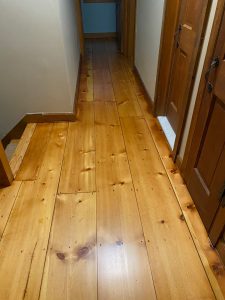
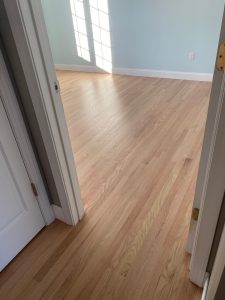
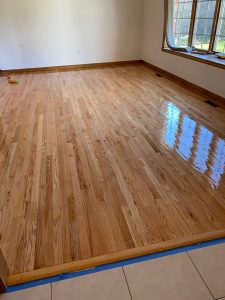
Oak remains the most widely used hardwood flooring in American homes because it strikes the best balance between strength, versatility, and timeless appearance. It’s available in two distinct varieties, each with its own character.
- Red Oak- Red oak has warm undertones and a visible grain pattern that naturally hides small scratches, dents, and dust, making it practical for active homes with pets or children. It stains evenly, from light honey to deep walnut tones, and maintains a welcoming feel in traditional and transitional spaces.
- White Oak- White oak has a smoother grain and a neutral base that fits easily into modern or classic designs. Its closed grain structure resists moisture better than red oak and accepts cool gray or natural finishes beautifully.
If you’re deciding between the two, see our detailed comparison in Differences Between Red Oak and White Oak Hardwood for a closer look at how each wears and ages over time.
Oak in either form refinishes beautifully, which is why many older homes still have original oak floors that continue to perform well after decades of use.
Hickory: The Durable Choice for Active Households
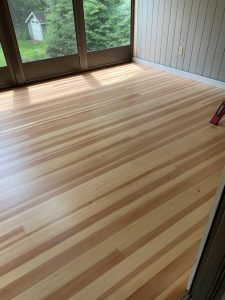
Hickory is one of the hardest domestic hardwoods and a popular choice for homes that see heavy daily traffic.
Its bold grain pattern and color variation help disguise dents and wear, making it ideal for hallways, kitchens, and family rooms. The strong contrast between light and dark areas gives it a rustic, lived-in look that complements casual or country-inspired interiors.
For homes with pets, children, or constant activity, hickory offers a durability level few woods can match. Some homeowners find the pattern too strong for minimalist designs, but for families who value longevity and scratch resistance, it’s a practical and forgiving option.
Maple: Clean, Bright, and Modern
Maple’s fine, uniform grain gives it a clean, bright appearance that works well in contemporary spaces. Its naturally light color reflects light, helping rooms feel larger and more open.
- Because the surface is smooth and less textured, maple shows scratches a bit more easily than oak or hickory. Regular cleaning and protective pads help maintain its finish.
- It’s best suited to spaces where you want a refined, polished look, such as bedrooms, offices, or formal living areas.
Maple can be stained to match a wide range of styles, from pale blonde to dark espresso, offering both versatility and modern appeal.
Walnut: Warm, Rich, and Distinctive
Walnut is chosen for its rich brown tone and natural elegance. It makes a statement without needing heavy staining. The smooth, flowing grain adds warmth and sophistication to rooms like dining areas, studies, and formal living spaces.
While walnut is slightly softer than other hardwoods, proper care, such as using felt pads and rugs in high-traffic areas, keeps it looking beautiful for many years. It’s a good choice for homeowners who value design depth and color richness over maximum hardness.
Where Engineered Hardwood Fits In
Many of these premium species are available in both solid and engineered forms. Engineered hardwood combines a real wood surface with a layered base for added stability. It handles temperature and humidity shifts better than solid wood while maintaining the same appearance.
Engineered hardwood is often a good fit when:
- The floor is over a concrete slab
- The room experiences moisture or temperature variation
- You want wide planks that might move more as solid wood
If you’re comparing color options, our guide on Light Wood vs. Dark Wood Floors explains how tone influences brightness, maintenance, and overall design.
A Brief Perspective Before You Decide
Choosing hardwood isn’t only about style, it’s about how your floors will look and perform in daily life. Oak offers reliability and balance, hickory brings strength, maple delivers modern clarity, and walnut adds depth and character. Each has a role, depending on where it’s placed and how the space is used.
The right choice is the one that supports your home’s rhythm, durable enough for daily life, but flexible enough to evolve with you over time. Our team helps homeowners understand not just how each species looks, but how it behaves, because what works in one home may not be ideal in another.
If you’re comparing options or want to see how different wood types perform in your space, we’re always glad to share expert insight based on decades of experience.
Patrick Daigle Hardwood Flooring, four generations of craftsmanship, care, and flooring built to last.