
Hardwood Floor Layout and Width: The Hidden Details That Shape Every Room
When most people think about new hardwood floors, they focus on the color or the type of wood species. But the details that often make the biggest difference come later, the width of each board and the direction they run.
These two choices define how your hardwood flooring behaves, how it feels underfoot, and how the room looks when everything is in place.
Board Width: How Scale Affects Both Look and Performance
Narrow Strip Flooring (2-2.25 inches)
Narrow boards create a steady, detailed pattern across a room. Because each plank moves less with changes in humidity, the solid hardwood floor stays more consistent through the seasons.
What You’ll Notice:
- A classic, traditional look that feels timeless
- Smaller boards make a room appear longer and more connected
- Subtle seasonal movement that’s barely visible
Narrow strips have a busier surface, but that same texture helps hide minor scratches and wear. They’re common in older homes because they age well and reduce visible movement along floor joists.
Wide Plank Flooring (4-8 inches or more)
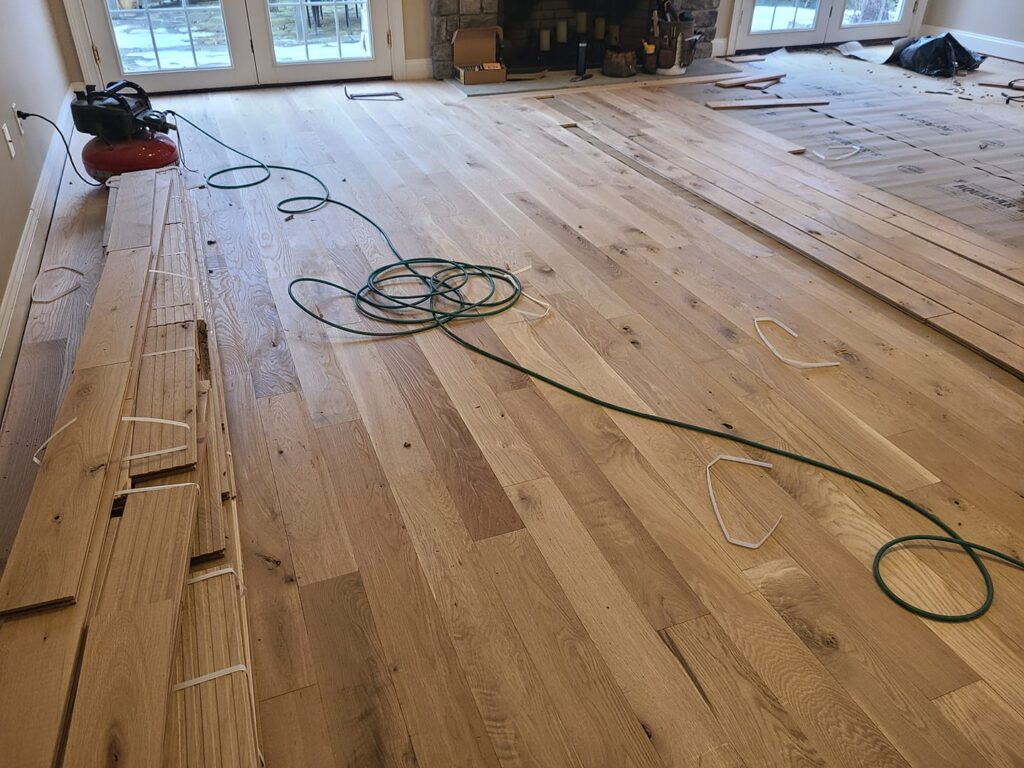
Wide planks create a more open, continuous look with fewer seams. They show the character of the wood more clearly, grain patterns, color shifts, and knots stand out beautifully.
Because each board is larger, it reacts more visibly to humidity changes. In dry months, you might see small expansion gaps that close when humidity rises again. It’s normal movement and part of the appeal of solid wood.
What You’ll Notice:
- A smooth, expansive look with fewer seams
- Clearer grain detail and natural variation
- A relaxed, modern feel that works well in open layouts
If you love the wide-plank look but want less movement, high-quality engineered hardwood flooring can add stability without losing the real-wood surface. For a closer look at how flooring options, layout and construction types work together, see Options for Layout and Construction of Your Wood Floors.
Direction and Layout: How Orientation Changes the Room
Boards Along the Longest Wall
Running the boards parallel to a room’s longest wall helps guide the eye naturally through the space. It’s one of the most common flooring installation choices because it feels balanced and makes the installation process straightforward.
Boards Across the Width
Running boards across a room’s shorter span can make the space feel broader and more defined. It’s less common but works well when you want to emphasize width or visually anchor a focal point like a fireplace or window wall.
Diagonal or Patterned Layouts
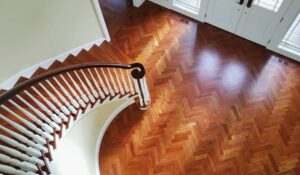
Diagonal, Herringbone pattern, Chevron pattern, or other hardwood floor Installation patterns add movement and formality. These layouts take more planning and precision, but in the right spaces, like entryways or dining rooms, they become architectural details on their own. Many patterns are inspired by classic parquet flooring or older wood floor patterns used in historic homes.
How Wood Actually Moves
Every hardwood floor responds to its environment. When the air is dry, boards shrink slightly. When the humidity rises, they expand.
- Narrow boards have more seams, each moving a little, so the floor stays visually steady.
- Wide boards have fewer seams, but each gap opens or closes more noticeably.
Neither is “better”, it’s simply a matter of which look feels natural to you and how much seasonal change you’re comfortable with.
For an overview of how solid hardwood flooring and Engineered Wood differ in movement, see The Long-Term Difference Between Solid and Engineered Hardwood Floors.
Matching Design to Proportion
The floor’s layout has as much to do with proportion as with design.
- Narrow boards create a familiar, structured rhythm that feels traditional and refined.
- Wide planks bring openness and a softer, more spacious feel.
- Patterned layouts add craft and detail where you want the floor itself to be a feature.
The goal isn’t to pick what’s trendy, it’s finding what fits the scale and character of your home and your flooring project.
Cost, Refinishing, and Maintenance
Narrow-strip installations take more time and labor but waste less flooring materials. Wide planks install faster, though the boards must be acclimated with a moisture meter and sorted carefully to reduce material waste. Patterned layouts require additional cutting, alignment, and precise installation methods, which can raise both labor and square footage cost.
When it’s time to refinish, narrow boards tend to sand evenly and stain consistently. Wide planks require a more careful touch to maintain uniform color. For more on what to expect during that process, see Hardwood Floor Refinishing Expectations.
A Thought to Keep in Mind
There isn’t a single “right” way to design a hardwood flooring layout. Some homeowners prefer the consistency of narrow boards; others love the visual space that wide planks bring. What matters most is how the floor feels when you live with it, not just how it looks the day it’s installed.
For over four generations, our family has helped homeowners make thoughtful choices about floors that will be part of their homes for decades. If you’re exploring design options or want to see how different installation patterns might look before work begins, we’re always glad to share expert advice and insights from past projects.
Patrick Daigle Hardwood Flooring, craftsmanship and care passed down through generations.