
Seasonal Changes in Hardwood Floors: What’s Normal and What Needs Attention
Gaps in winter. Tight seams in summer. It’s one of the first things homeowners notice about their hardwood floors, and one of the most misunderstood. Seasonal changes in wood flooring are natural, expected, and in most cases, nothing to worry about.
The key is knowing what’s part of the wood’s normal movement and what signals a deeper problem that needs professional care.
Why Hardwood Moves with the Seasons
Hardwood flooring isn’t fixed in place, it expands and contracts gently with changes in the air. Because wood naturally absorbs and releases moisture, it responds to changes in indoor humidity throughout the year.
In Winter
- Indoor air dries out from constant heating.
- The relative humidity often drops to 20–30%.
- Wood loses moisture and contracts slightly, leaving visible gaps between boards.
In Summer
- The air becomes more humid, the humidity levels are often between 50 to 70%.
- Wood reabsorbs moisture and expands.
- The gaps close naturally as the boards return to their normal size.
This expansion and contraction are part of how solid wood stays stable over time. When installed correctly, it moves safely within the space designed for it.
Why Some Floors Shift More Than Others
Not all floors move the same way. The difference comes down to a few key factors:
Board Width
Wide planks show more visible change than narrow strips because each board covers more surface area. A 6-inch plank moves more than a 2-inch strip, but the total expansion gap across a room may be the same.
Wood Species
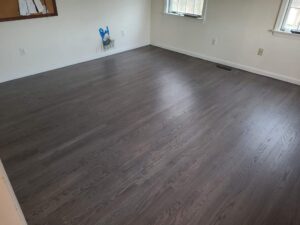
Some wooden floors disguise movement better. Red oak’s open grain makes minor gaps less visible, while maple’s tight, smooth grain highlights even the smallest changes. Light finishes soften the contrast, while dark stain flooring options can make gaps appear more pronounced.
Installation Quality
A skilled installer plans for seasonal changes by leaving expansion space at walls and using materials that allow natural movement. Poor flooring installation, either too tight or too loose, can make those seasonal shifts more dramatic.
For a closer look at how installation and layout choices affect floor performance, see Options for Layout and Construction of Your Wood Floors.
What’s Normal, and What’s Not
Most hardwood floors follow a predictable seasonal pattern. The challenge is knowing when that pattern changes.
Normal Signs
- Gaps appear in winter and close again in summer.
- Gaps are small (under 1/8 inch) and consistent across the room.
- The floor stays flat, no cupping or buckling.
- You feel solid footing underfoot with no sponginess.
Signs That Need Attention
- Gaps that don’t close when humidity rises.
- Gaps that grow wider every year.
- Edges lifting or centers dipping (cupping or crowning).
- Soft spots or hollow areas under the surface.
- Cracks running through boards rather than along seams.
These issues usually point to moisture problems under the surface or improper installation rather than seasonal change.
How to Reduce Seasonal Gaps
Completely stopping movement isn’t possible, but minimizing it is.
Most Reliable: A whole-home humidifier connected to your HVAC system. It keeps indoor air within a comfortable 40–55% humidity range with little effort.
Moderately Effective: Portable humidifiers in key rooms, paired with a digital hygrometer to monitor humidity. This approach works but requires consistency.
Occasional Help: Everyday adjustments, like leaving bathroom doors open during showers or air-drying laundry indoors, can help moisture levels during dry months, but results vary.
The goal is balance, not saturation. Too much humidity and moisture content causes its own problems, from sticky solid wood floors to potential mold growth.
A Closing Note from Patrick Daigle
Every hardwood floor tells its own seasonal story. At Patrick Daigle Hardwood Flooring, we help homeowners understand that movement, maintain balance in their environment, and step in only when it crosses the line from natural to concerning.
If you’re unsure whether your solid wood floor’s changes are normal or worth investigating, our team is always glad to take a look and offer expert guidance.
Patrick Daigle Hardwood Flooring, four generations of craftsmanship, care, and perspective built on real-world floors.