





For users with yahoo email accounts, please click here to email us directly.

Hardwood Floors as Design Foundation: How Wood Shapes the Feeling of Home

When people think about hardwood floors, they often focus on what they can see, color, grain, or finish. But hardwood flooring influences far more than appearance. It changes how a home behaves, how sound moves, how light reflects, and how a room feels to live in.

Wood flooring has a way of grounding a space. It connects one room to the next, softens echoes, and balances the visual weight of walls and furniture. A well chosen floor does not try to stand out; it quietly holds the home together. Over time, that sense of balance becomes part of the environment, not something you notice, but something you feel every day.

The Foundation Beneath Every Design Decision

Everything inside a home sits on the floor, so it naturally shapes how everything else looks and feels. Walls, paint, and furniture may change, but wood floors stay constant, setting the tone for years.

Hardwood floors affects the way we perceive space:

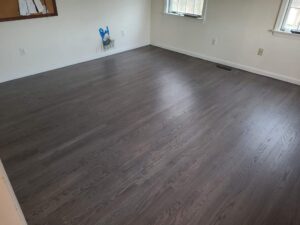
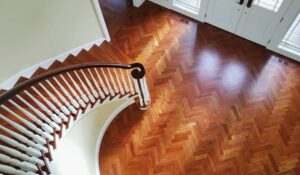
  • Color: The warmth or coolness of the wood influences how paint and décor read in natural light. Species like White Oak and Red Oak flooring respond differently to stain colors, creating either a softer neutral base or a warmer, more traditional feel.
  • Light: Grain patterns and finish determine how light reflects throughout the day. Wider plank floors highlight natural variation, while narrower planks create a steadier rhythm across the surface.
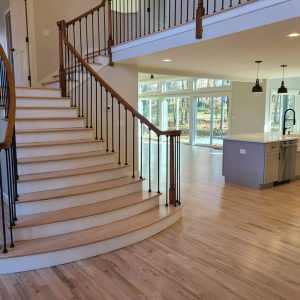
  • Flow: When flooring materials continues between rooms, especially with consistent flooring installation, the home feels larger and more connected.

A consistent flooring solution creates harmony. You do not think about transitions, you simply move through the home. That quiet continuity is what gives well designed spaces their ease.

The Role of Light and Time

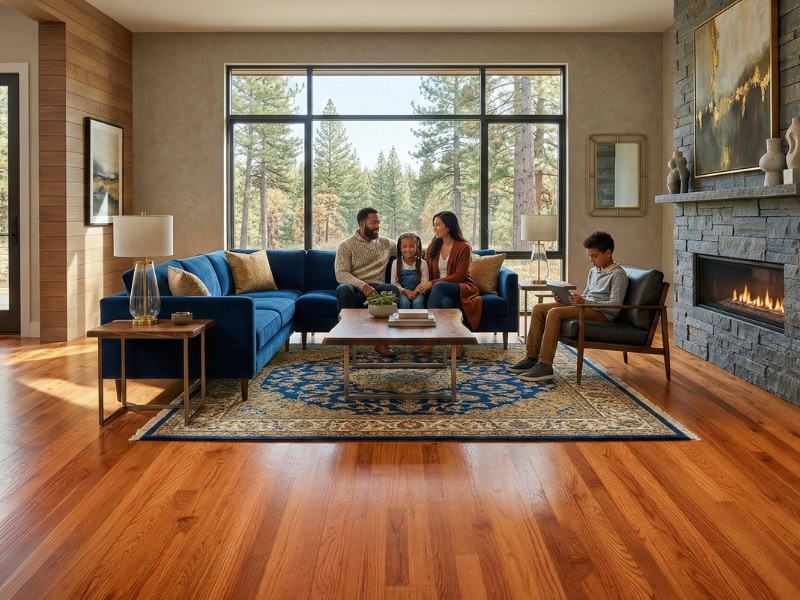
Wood and light have a relationship that changes slowly but constantly. Morning light brings out soft, golden tones in the grain; evening light deepens the color and highlights detail.

Over time, exposure to light changes the wood naturally. Red Oak can shift from pale gold to honey brown. Cherry deepens into a richer tone. These changes are not wear, they are part of how authentic hardwood floors age.

Even subtle differences tell a story: a lighter area where a rug once sat or a deeper tone near a window. Unlike synthetic materials, real wood records daily life rather than resisting it.

For more on how tone and light influence a room’s character, see Light Wood vs. Dark Wood Floors: Finding Your Perfect Fit.

Why Authentic Materials Still Matter

Homeowners continue to choose genuine hardwood flooring because it feels right. The solid weight underfoot, the way it responds to seasonal humidity level changes, and the warmth of the surface create a physical connection to the home.

Natural wood species bring variation that cannot be replicated. Every plank has its own grain, tone, and texture. That individuality is what gives a floor character rather than repetition.

Both solid hardwood flooring and engineered hardwood flooring offer long term flexibility. With proper care, they can be refinished, allowing the same floor to evolve as styles change. That adaptability is one reason hardwood remains a trusted Type of Flooring across generations.

Our post on The Long-Term Difference Between Solid and Engineered Hardwood Floors explains how construction choices make that flexibility possible.

How Flooring Shapes Atmosphere

You experience your floor through sound, texture, and temperature as much as sight. Hardwood feels warmer and steadier than many other flooring options, creating a calm presence in a room.

It absorbs sound just enough to soften footsteps, reflects light without glare, and brings balance to open spaces. A well installed floor supports daily life quietly, with easy maintenance and floor care.

That is the lasting influence of hardwood, not simply a surface, but a foundation that shapes how a home is lived in.

The Patrick Daigle Perspective

After four generations of working with wood, we’ve learned that a good floor doesn’t just complete a room, it shapes how the entire home feels. The way light moves across colors and finishes, the way it sounds underfoot, even how furniture settles on it, these details quietly influence how people experience a space.

Our approach to floor installation and restoration is guided by respect for the material and the homes it belongs to. Every board carries its own grain patterns and history. Our role is to honor that, not mask it.

When homeowners ask what makes a floor feel right, the answer is balance. The balance between material, light, movement, and real life. That balance is what we focus on with every project.

If you are planning new floors or restoring existing ones, the right hardwood flooring choice can quietly transform how your home feels for years to come.

Patrick Daigle Hardwood Flooring, craftsmanship shaped by experience, guided by care.

Share your love

For users with yahoo email accounts, please click here to email us directly.