

Hardwood Floor Refinishing in Farmington, CT: Rescuing a Difficult Red Oak Floor in Devonwood
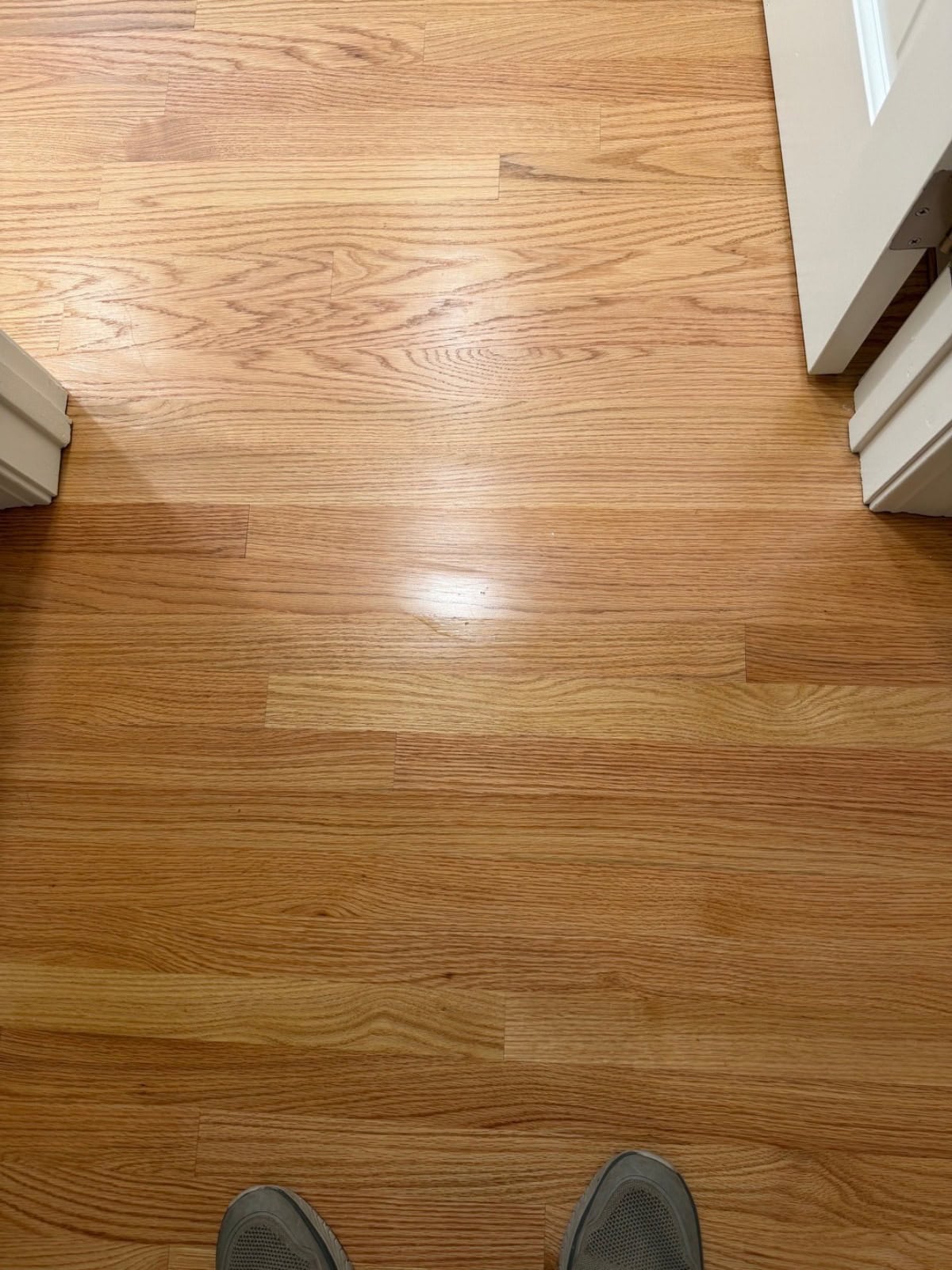
Some hardwood floors need refinishing.
Some need repairing.
And every once in a while, we walk into a house where the homeowner looks at us and essentially says:
“Do you really think you can fix this?”
That's what happened on a recent hardwood floor refinishing project in Devonwood in Farmington, Connecticut.
The homeowners had recently purchased the house and had another hardwood flooring contractor refinish the existing red oak floors.
Unfortunately, things didn't go as planned.
After three attempts to correct the floor, the homeowners were still looking at visible sanding marks, uneven areas and puddling in the finish.
By the time we arrived, they weren't simply disappointed.
They were understandably skeptical that anyone could make the floor look right.
We were up for the challenge.
When a Hardwood Floor Has Already Been Refinished Three Times
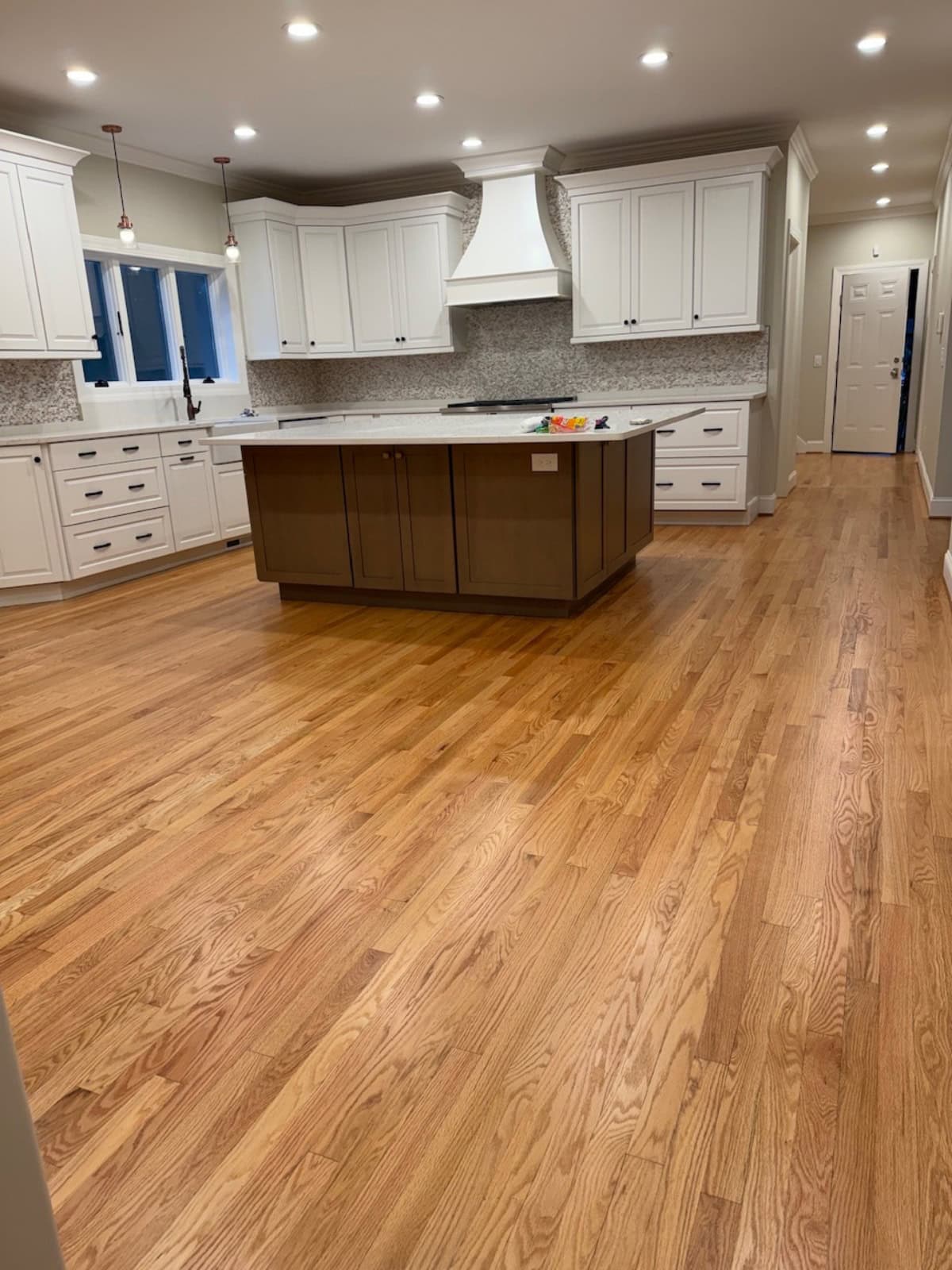
A project like this is different from walking into a house with an old, worn polyurethane finish.
Now we're dealing with a floor that has recently been worked on multiple times.
Every previous sanding attempt matters.
Every layer of finish matters.
And every sanding mark or uneven area has to be evaluated before we decide how to approach the floor again.
The homeowners were watching everything closely.
We understood why.
After going through three attempts, they wanted to know that the fourth wasn't going to leave them right back where they started.
These are actually the kinds of projects we've become known for taking on.
Difficult floors don't scare us.
Sanding Marks and Finish Puddles Don't Disappear by Themselves
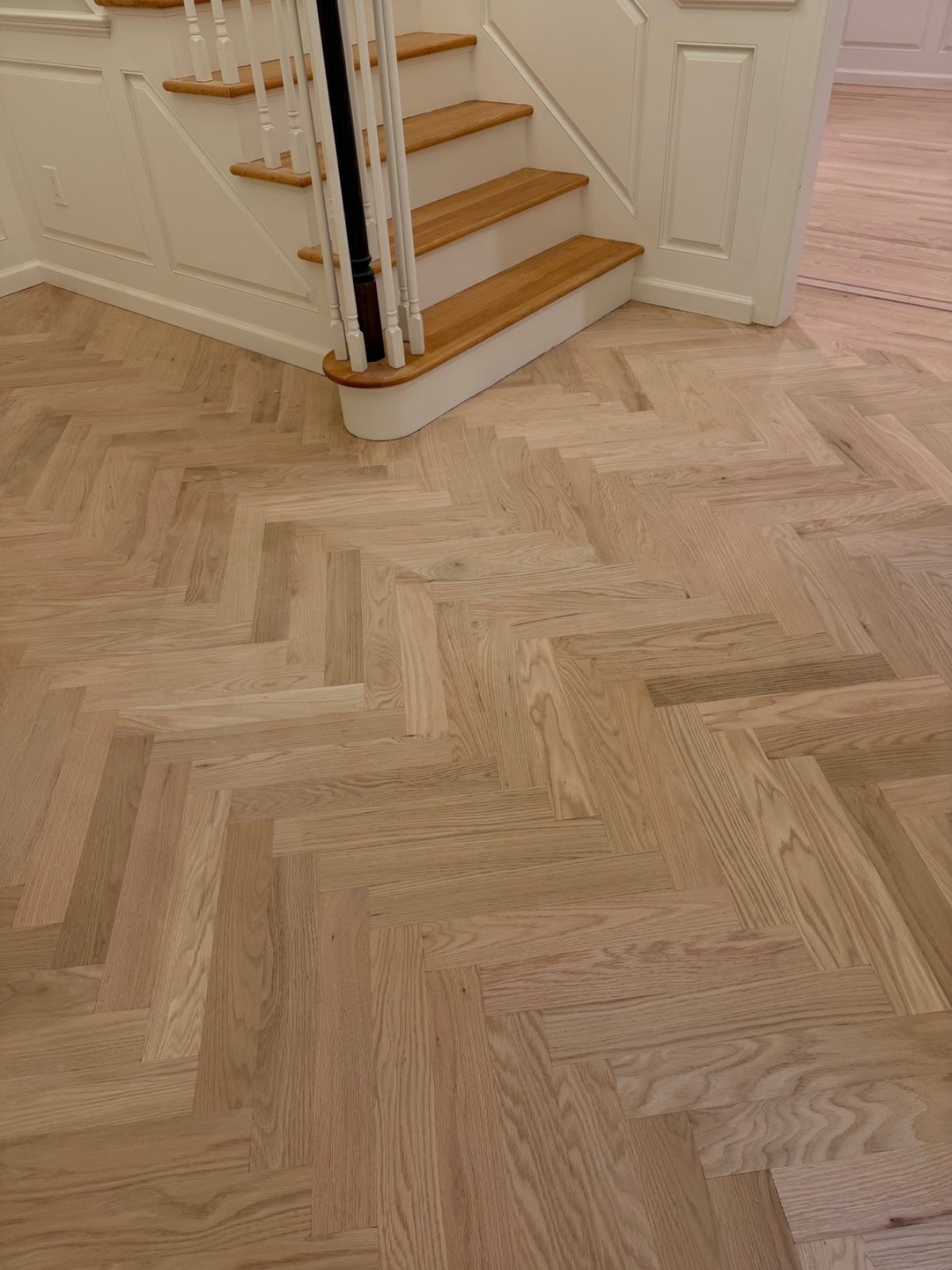
The first objective was to get back to a properly prepared wood surface.
Visible sanding marks can become even more noticeable once finish is applied because the finish highlights the surface underneath it.
Finish puddling creates another problem.
A professional hardwood floor finish shouldn't have heavy pools of material sitting in some areas and a thinner film in others. Application rate, technique, environmental conditions, product requirements and proper preparation all matter.
So before we could make this Farmington floor beautiful, we had to correct what was underneath.
We carefully sanded the red oak flooring back down, addressed the previous sanding problems and prepared the floor for an entirely new finishing system.
Slowly, the problems disappeared.
And the real red oak began showing itself again.
A Hardwood Floor Should Look Like Hardwood
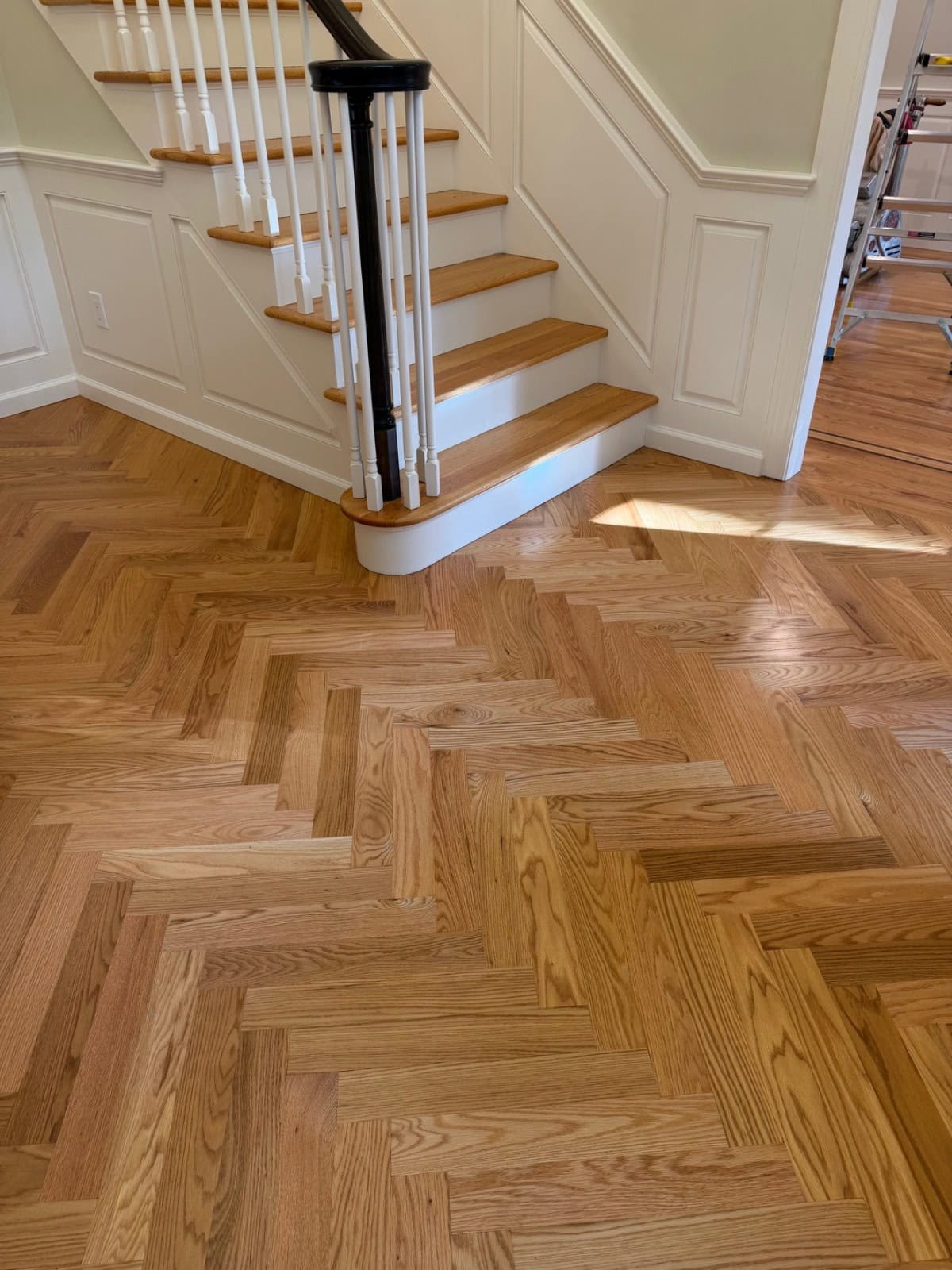
There's an important lesson in this Devonwood project.
More finish does not automatically mean a better floor.
One of the things we try to avoid is excessive film build.
When too much product accumulates on hardwood, you can begin losing the visual and tactile character that makes genuine wood beautiful in the first place.
The floor starts looking heavily coated.
Eventually, instead of seeing and feeling the character of real wood, it can begin to have an almost plastic-like appearance.
That's not what we wanted here.
We wanted protection, durability and a professionally finished surface—but we also wanted this red oak to still look like red oak.
The grain should have character.
The floor should have some natural texture.
You shouldn't lose the wood underneath the finish.
Keeping the Red Oak a Little Lighter
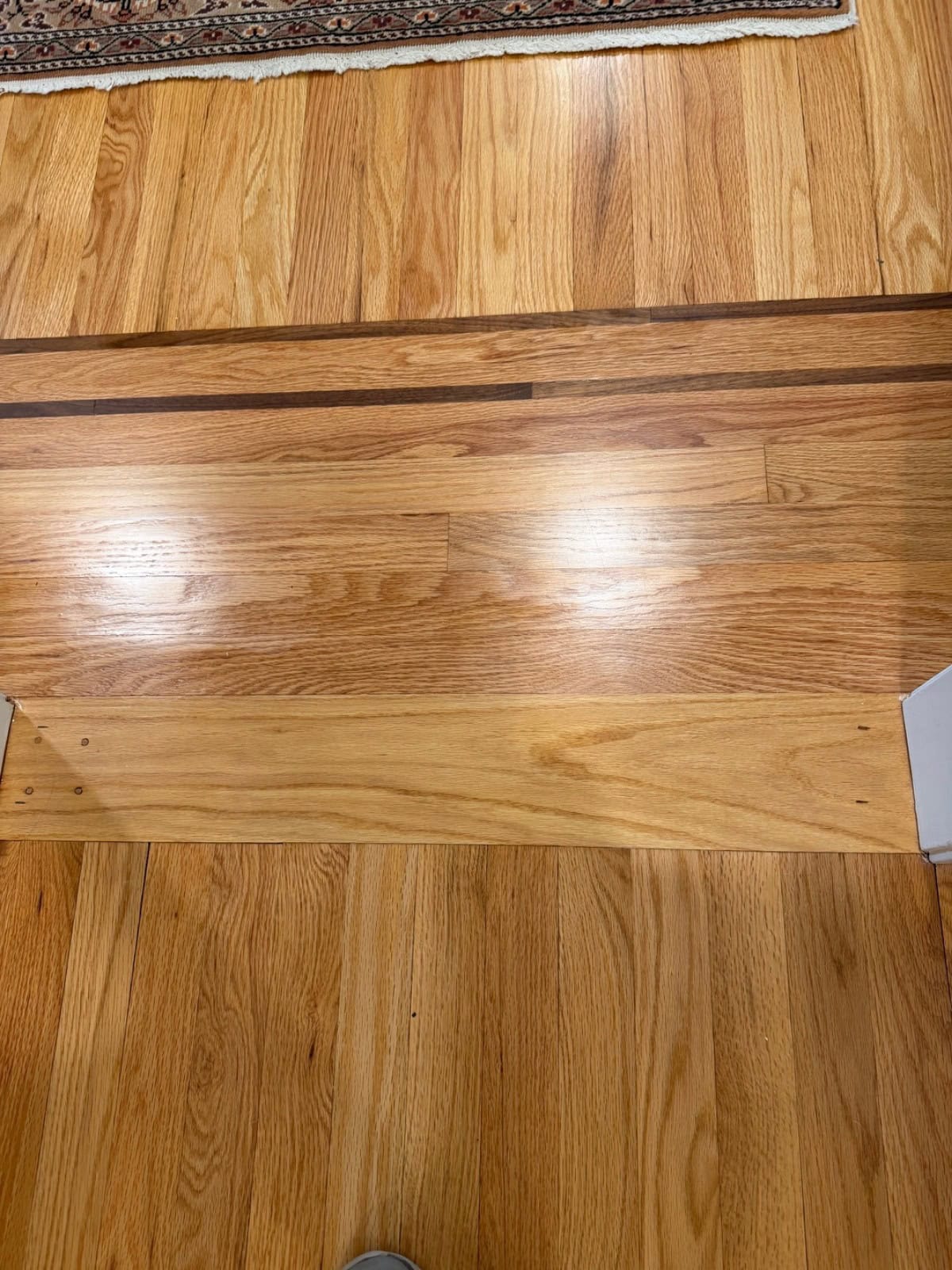
The homeowners also didn't want the floor to become unnecessarily dark or heavily ambered.
For our first application, we used a commercial-grade clear coat to help maintain a somewhat lighter appearance before completing the floor with the selected oil-based polyurethane finishing system.
Oil-based polyurethane traditionally brings warmth and richness to red oak, but the complete finishing schedule can influence the final appearance.
Our objective on this project was balance.
Warm—but not excessively amber.
Protected—but not buried underneath finish.
Smooth and professionally prepared—but still unmistakably real hardwood.
That's where experience comes into play.
Proper Preparation Between Coats Matters
The National Wood Flooring Association (NWFA) emphasizes proper sanding, preparation, finish application and following the finish manufacturer's requirements.
That's important on every hardwood floor.
On a corrective project like this, it's critical.
Each stage affects what happens next.
After the appropriate drying period, the floor receives the required intercoat preparation or abrasion before subsequent finish applications.
Edges and detailed areas need attention.
Dust and contaminants have to be controlled.
And the next coat has to be applied consistently.
There isn't one magic final coat that fixes poor preparation underneath it.
The quality of the finished floor is built through the entire process.
Then Came the Moment We Were Waiting For
This is the part of the Devonwood project we'll remember.
These homeowners had already watched someone try to correct their hardwood floors three times.
So they had doubts.
We don't blame them.
But when our work was completed and they finally saw the finished red oak floor, their reaction said everything.
They were ecstatic.
The sanding marks were gone.
The puddled, overly heavy appearance was gone.
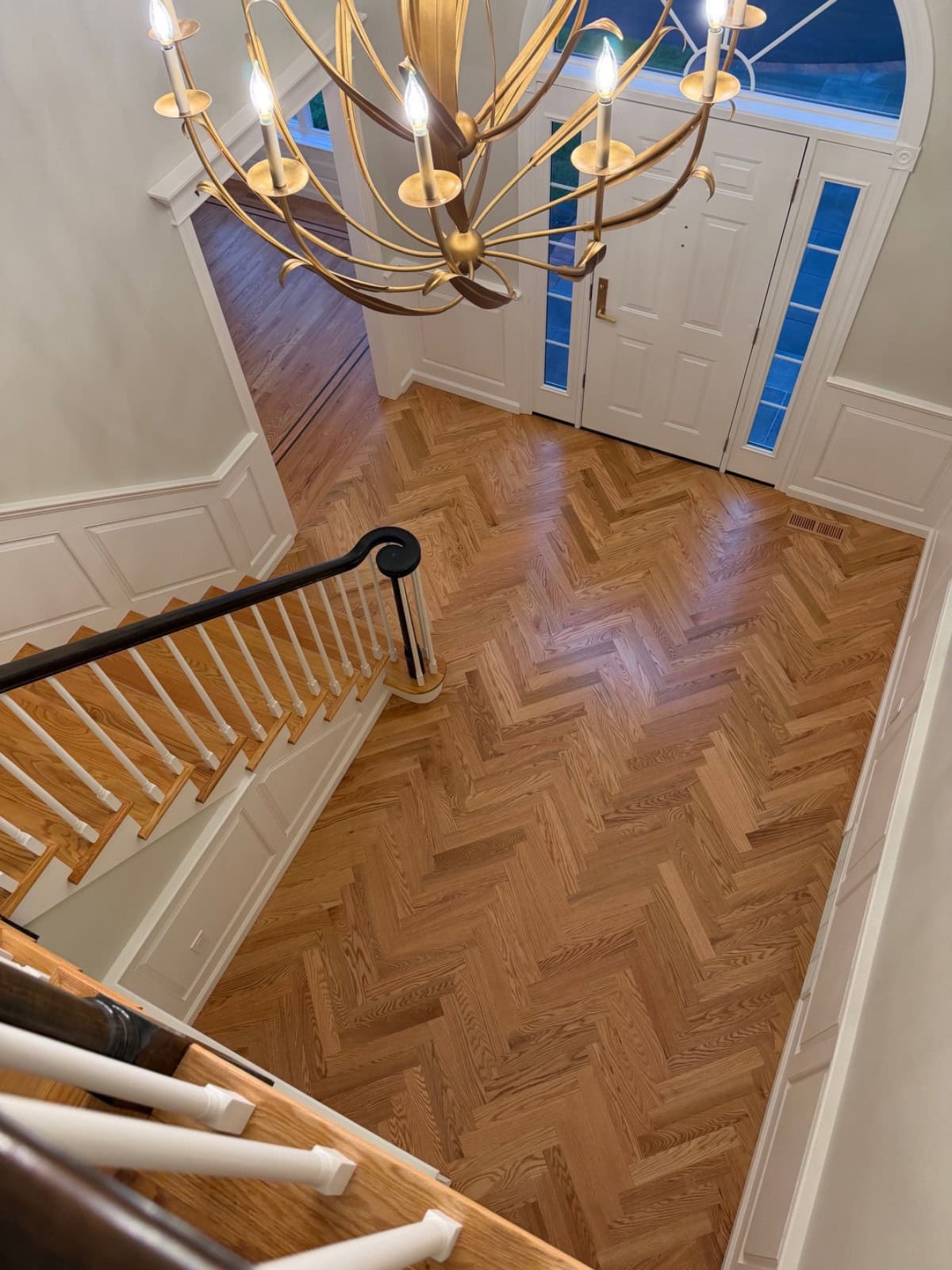
The red oak had warmth and depth again without looking like it was trapped underneath layers of plastic.
The floor looked like real wood again.
And then came the hug.
After all the frustration these homeowners had gone through, they couldn't believe how the floor turned out.
Those are the jobs that mean something to us.
Patrick Daigle Hardwood Flooring and Devonwood Go Back a Long Way
Devonwood isn't a neighborhood that's new to us.
We've been working on hardwood floors in Devonwood in Farmington for decades, going back to the development's earlier years.
Over that time, Patrick Daigle Hardwood Flooring has worked in more than 150 homes in Devonwood.
We watched the neighborhood develop into an area known for its large, distinctive homes, and we've watched many of those original hardwood floors go through different stages of their lives.
Some we've installed.
Some we've sanded and refinished.
Some we've repaired.
And some we've returned to years later and refinished again.
That's one of the interesting things about being in the hardwood flooring business for generations.
Eventually, the floors become part of your history too.
Four Generations of Hardwood Flooring Craftsmanship
At Patrick Daigle Hardwood Flooring, Inc., our family's hardwood flooring tradition dates back to 1927.
Today, we continue that tradition throughout Farmington, Devonwood, Manchester, Hartford County and communities across Connecticut.
We're proud members of the National Wood Flooring Association (NWFA).
We're proud to be ranked #1 in Hartford County by BusinessRate, along with our recognition as #1 in Connecticut.
And we're certainly proud to have worked in more than 150 Devonwood homes over the years.
But a project like this reminds us what those numbers really mean.
Experience isn't simply how many years you've been in business.
It's knowing what to do when the easy answer didn't work.
Have a Hardwood Floor in Farmington That Someone Else Couldn't Fix?
This Devonwood project is a good example of why we tell homeowners not to automatically give up on a difficult hardwood floor.
Sanding marks?
Uneven finish?
Puddling?
Too much finish?
A floor that looks overly coated or artificial?
Or maybe you've already had someone attempt to correct it and you're wondering whether you should try again.
Sometimes the floor isn't ruined.
It needs the right person to diagnose what happened and determine the right way to correct it.
We take on challenging hardwood floor sanding, refinishing and repair projects throughout Farmington and Hartford County, including floors other contractors have had difficulty correcting.
We can't promise that every damaged floor can be saved until we've evaluated it.
But difficult floors are something we've spent generations learning how to handle.
This Devonwood homeowner had already been through three attempts.
When we finished the fourth, she gave us a hug.
That's the outcome we'll remember.
Patrick Daigle Hardwood Flooring, Inc.
Fourth-Generation Hardwood Flooring Craftsmanship Since 1927
NWFA Member
Ranked #1 in Hartford County by BusinessRate
More Than 150 Hardwood Flooring Projects in Devonwood
Serving Farmington, Devonwood, Manchester, Hartford County and communities throughout Connecticut