
Restoring a Historic Hartford Hardwood Floor: Church of the Good Shepherd & Parish House
Some hardwood flooring projects are about making a room look new again.
Others are about preserving a small piece of Hartford history.
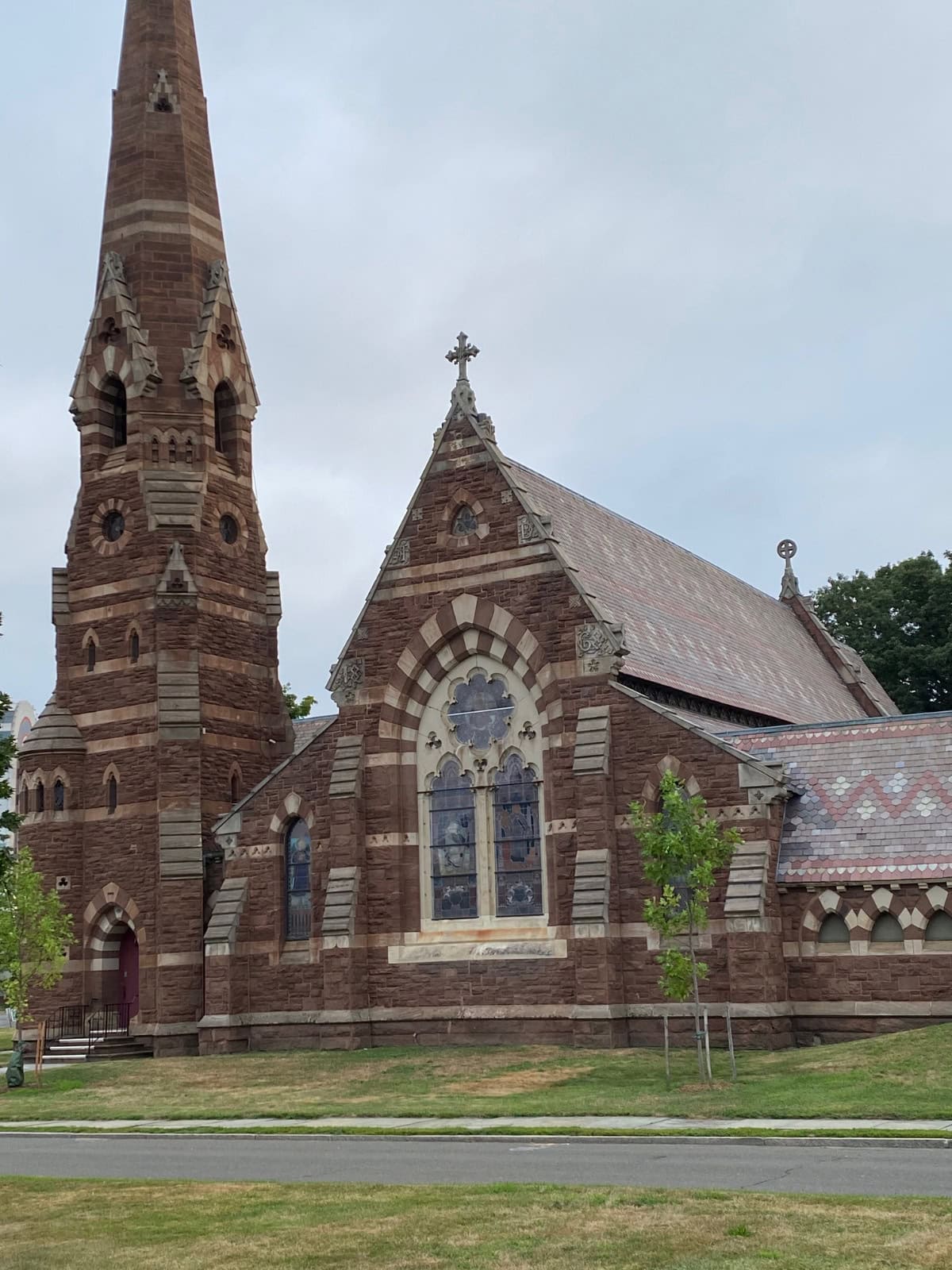
Patrick Daigle Hardwood Flooring, Inc. was extremely proud to be trusted with hardwood floor restoration work at the historic Church of the Good Shepherd and Parish House at 155 Wyllys Street in Hartford, Connecticut.
This isn't just another building in Hartford. The Good Shepherd parish dates back to 1868, and the historic Parish House was built in 1895 by Elizabeth Colt as a community center for the parish and surrounding neighborhood.
Working on a building with this much history makes you appreciate something we've believed for generations:
Old hardwood floors are often worth saving.
More Than 100 Years of History Under Our Feet
When you walk into a historic Hartford building, you're looking at materials that have survived generations of use.
But age, moisture, wear and previous repairs can take their toll on hardwood flooring.
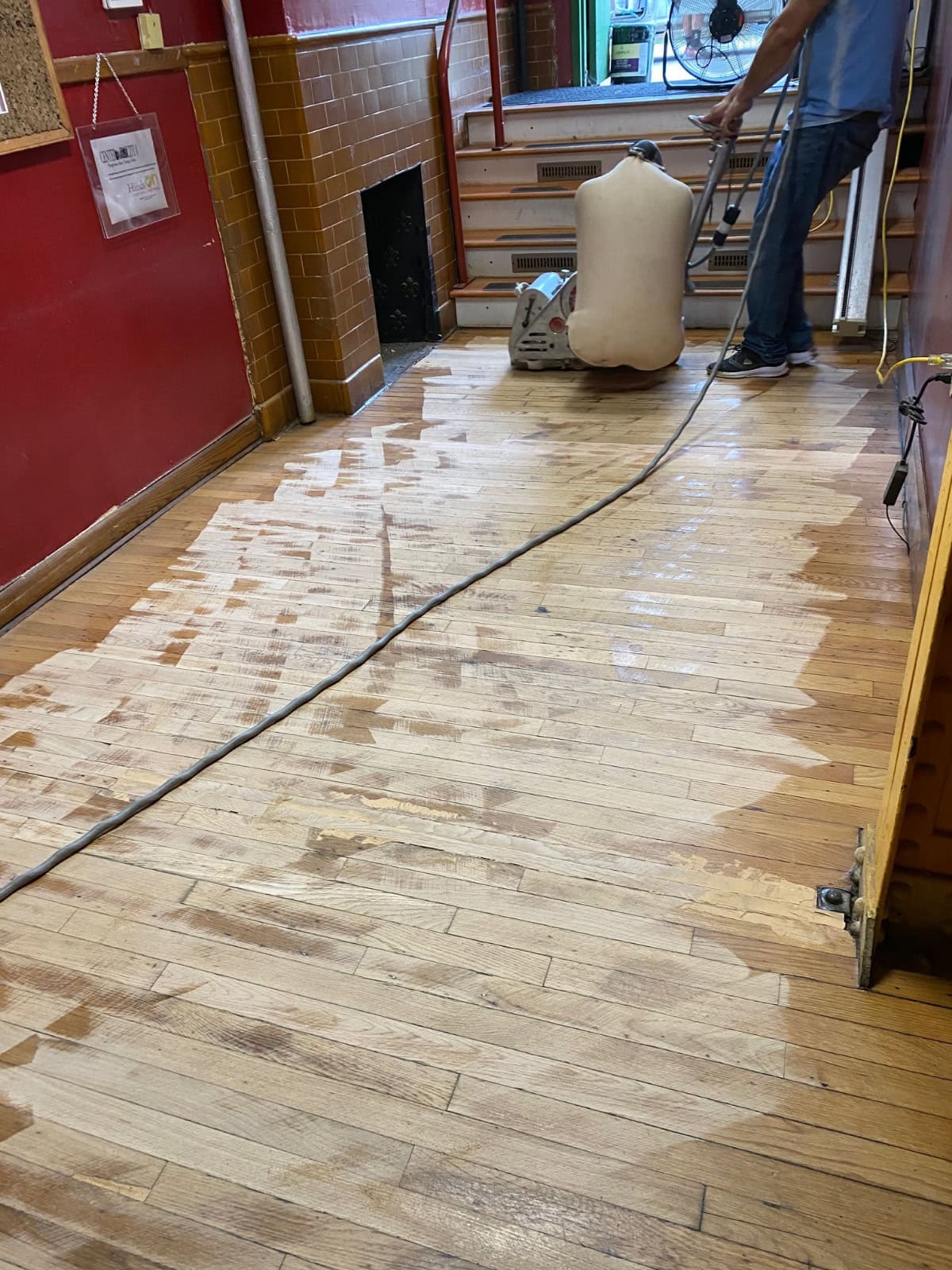
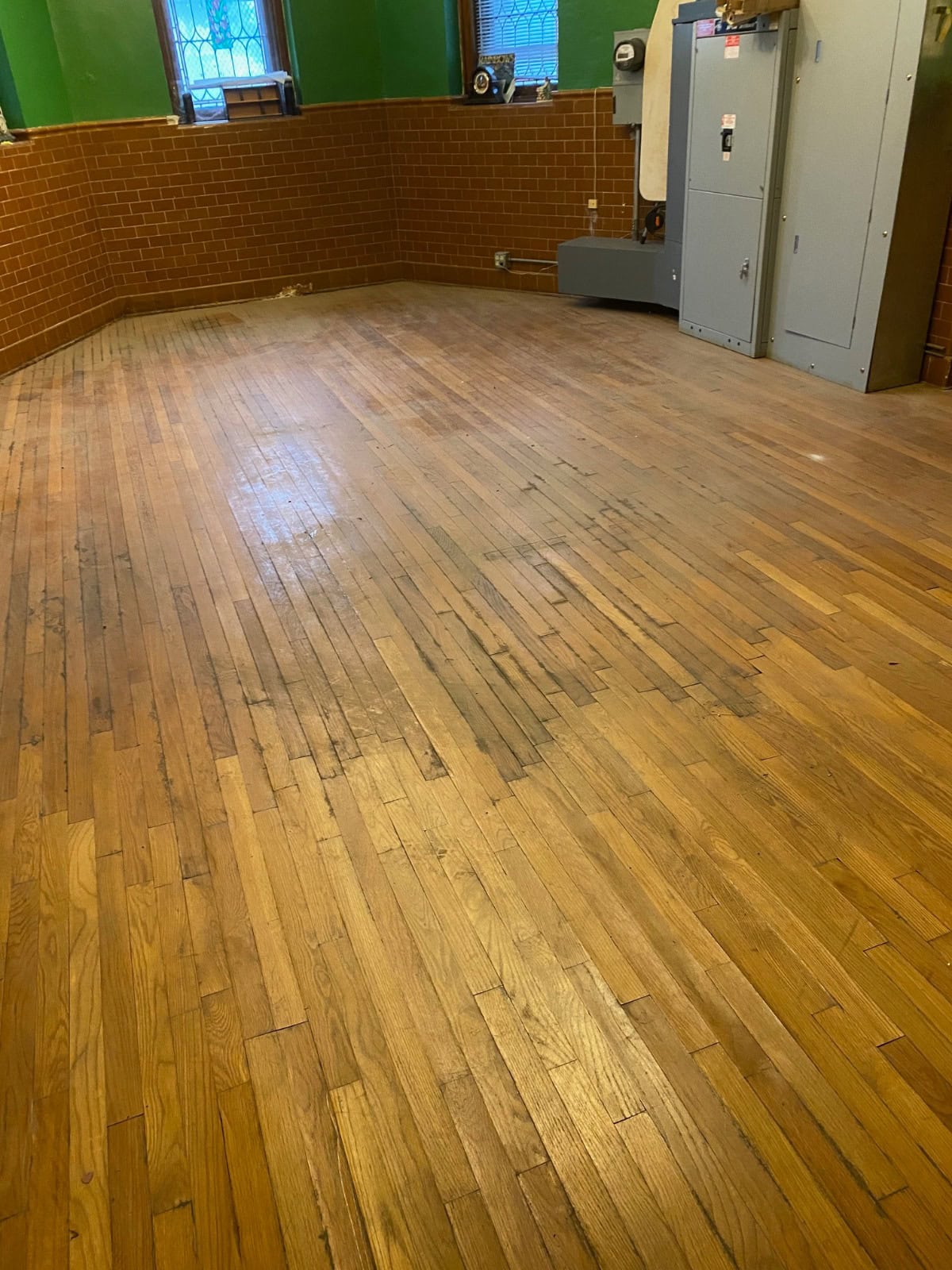
The floor we were asked to restore at the Church of the Good Shepherd had significant areas of water damage along with the wear you would expect from an older floor.
This wasn't an easy sanding job.
Before refinishing could begin, damaged areas had to be evaluated and the necessary hardwood floor repairs completed. The objective wasn't to cover up the damage.
We wanted to save the existing hardwood wherever possible.
The Transformation Begins With Raw Wood
One of the most dramatic moments in any hardwood floor restoration comes when the old coatings and years of discoloration finally disappear.
Through professional sanding, we worked the floor down to clean, raw wood.
That's when you can really begin to see what an old hardwood floor still has left in it.
The National Wood Flooring Association — NWFA — uses professional sanding and finishing standards that recognize the importance of proper sanding sequences, preparation and compatible finishing systems.
On a challenging historic floor, those details become especially important.
You can't rush the sanding simply because portions of a floor are difficult.
And you can't just sand aggressively at water-damaged areas hoping to make discoloration disappear. The condition of the wood has to be evaluated, repairs made where necessary, and the floor sanded properly while preserving as much of the original hardwood as practical.
Once this Hartford floor reached the raw-wood stage, the transformation was already remarkable.
But we weren't finished.
Bringing the Warmth Back With Oil-Based Polyurethane
For this project, we used an oil-based polyurethane finishing system.
Oil-based finishes bring a warm, amber character to hardwood. That's particularly beautiful in many older and historic interiors because the finish brings out the grain, natural variations and richness of the wood.
As the first coat goes down, something happens that we've watched thousands of times over the years:
The wood comes alive again.
The raw, lighter-colored wood develops depth. Grain becomes more pronounced. The boards begin showing their individual character again.
For this Hartford project, we applied three coats of oil-based polyurethane, following the appropriate drying and preparation procedures between applications.
What Happens Between Those Coats Matters
Homeowners often see the final photograph but don't see all the work that happens between the first and last coat.
After a coat dries, the floor can have some surface texture. Proper intercoat preparation helps prepare the surface for the following application.
That means carefully abrading and preparing the floor, including detailed work around perimeter areas, edges and other locations where larger equipment can't do everything.
Then everything must be properly cleaned before another coat is applied.
Those steps aren't very glamorous.
But they're part of the difference between simply putting polyurethane on a floor and professionally refinishing a hardwood floor.
And on a historic Hartford property, we believe those details matter.
Look at the Final Picture
This is why we love before-and-after photographs.
Look at where this floor started.
Then look at the final picture.
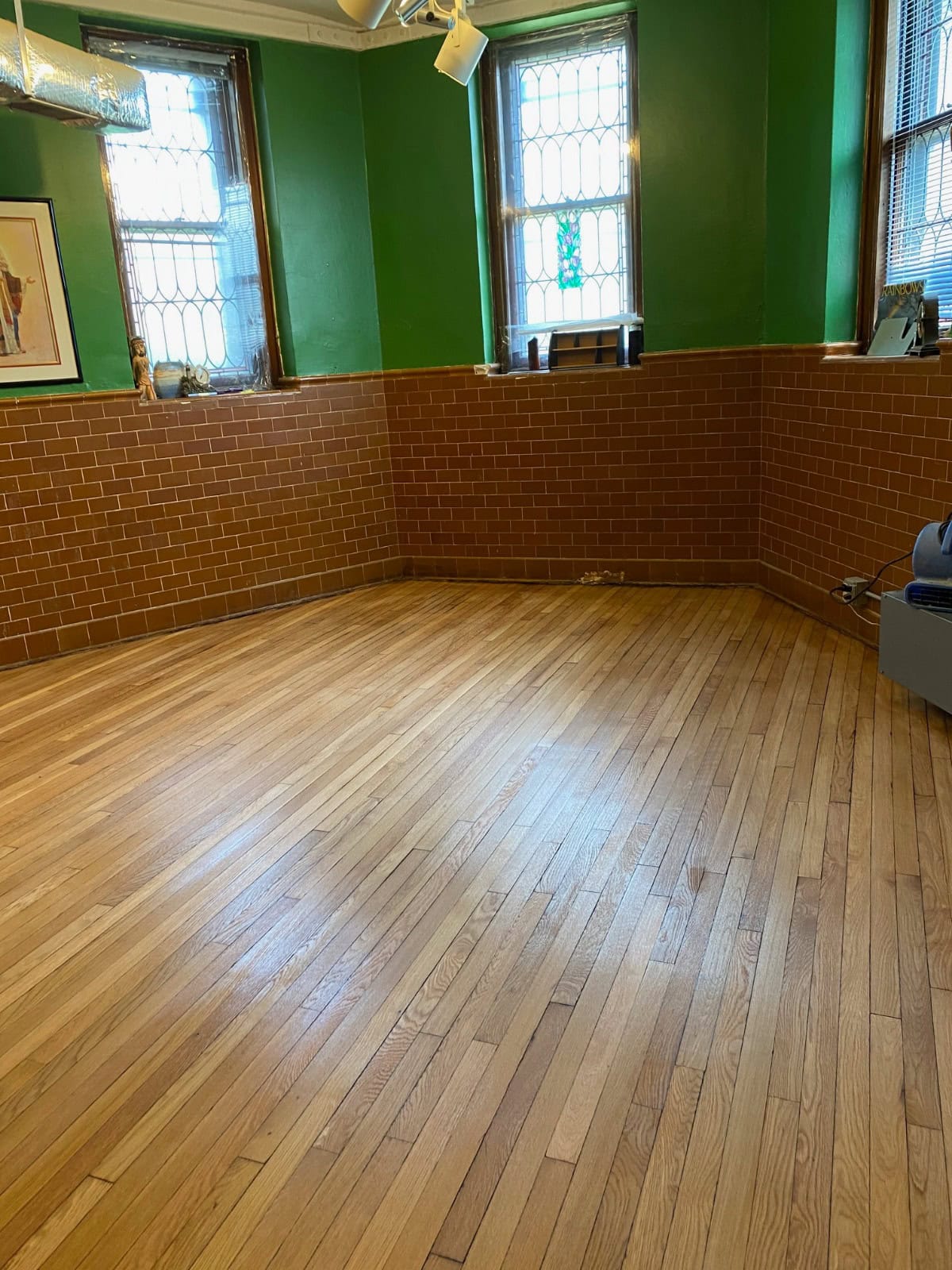
The old water-damaged appearance is gone. Instead, you're looking at a clean, sharp, beautifully refinished hardwood floor with the warmth and character you'd expect in a historic Hartford building.
We didn't replace its history. We brought the hardwood back.
That's one of the greatest advantages of genuine hardwood flooring.
When appropriate, a floor that looks worn, damaged or beyond its useful life can sometimes be repaired, professionally sanded and refinished rather than simply covered over or torn out.
Hartford Is Part of Our Company's History, Too
Working at the Church of the Good Shepherd is especially meaningful to us because Hartford has been part of Patrick Daigle Hardwood Flooring's story for generations.
Our family's hardwood flooring tradition dates back to 1927, and our Connecticut business has been serving this area for decades.
Over the years, we've had the opportunity to work in some remarkable Hartford properties.
We've performed hardwood flooring work in the Gold Building in downtown Hartford.
We've worked inside many of Hartford's beautiful older and historic homes, including properties around Governor Street.
And now we're proud to add the historic Church of the Good Shepherd and Parish House to the Hartford properties where we've had the opportunity to practice our craft.
These aren't floors we take for granted.
When you're working inside an older Hartford property, you're often working with hardwood that was installed by craftsmen generations ago.
Our job is to respect that.
Ranked #1 in Hartford County — and Proud to Serve Connecticut
Patrick Daigle Hardwood Flooring, Inc. is proud to be ranked #1 in Hartford County by BusinessRate, and we're equally proud of our recognition as #1 in Connecticut.
We're also members of the National Wood Flooring Association (NWFA) and believe that today's professional hardwood flooring practices should be combined with something that can't be learned overnight:
Experience.
Four generations of it.
From historic buildings in Hartford to family homes throughout Hartford County and Connecticut, we still approach hardwood floors the way our family has for generations—with the belief that a real hardwood floor deserves to be repaired and restored properly whenever possible.
Have an Old Hardwood Floor in Hartford That Looks Beyond Repair?
Don't make the decision to cover it or replace it until you know what's underneath.
Water stains, worn finishes, scratches, discoloration and decades of use don't necessarily mean the hardwood itself is finished.
Sometimes you have to get through all those years to discover the beautiful wood that's still underneath.
That's exactly what happened at this historic Hartford project.
Water damage. Repairs. Difficult sanding. Raw wood. Three coats of oil-based polyurethane. And a floor that looks beautiful again.
For Patrick Daigle Hardwood Flooring, that's what hardwood floor restoration is all about.
We're proud of our ranking.
We're proud to be NWFA members.
We're proud of four generations in the hardwood flooring trade.
But most of all, we're proud when we can stand back at the end of a project like the Church of the Good Shepherd and Parish House in Hartford, Connecticut, look at that finished floor and know that another piece of Hartford's history has been given new life.
Patrick Daigle Hardwood Flooring, Inc.
Fourth-Generation Hardwood Flooring Craftsmanship Since 1927
Ranked #1 in Hartford County by BusinessRate
Proudly Serving Hartford and Communities Throughout Connecticut