
Hardwood Floor Installation & Refinishing – Hopmeadow Street, Simsbury CT 06070
From 1990s to Today — A Lighter, Brighter Hardwood Floor Transformation
When the new owners of this beautiful home in the Hopmeadow Street area of Simsbury, Connecticut purchased the property, they loved the house—but they wanted the hardwood floors to feel lighter, brighter and more current.
I met with the homeowner and her parents before beginning the project. We walked through the house together, discussed what they wanted to accomplish and talked about the different options available to them.
The home was built in the 1990s and already had hardwood flooring throughout much of the main living area. But for some reason, the large family room had carpeting instead of hardwood.
The family wanted the entire house to flow together. That meant this wasn't going to be simply a hardwood floor refinishing project. We first needed to remove the carpeting, correct the floor height, install new unfinished hardwood flooring and then sand and refinish the new and existing floors so everything worked together.
Their goal was simple:
Make the house feel bigger, brighter, airy and up to date—while keeping the natural beauty of real hardwood.
Removing the Carpet Was Only the Beginning
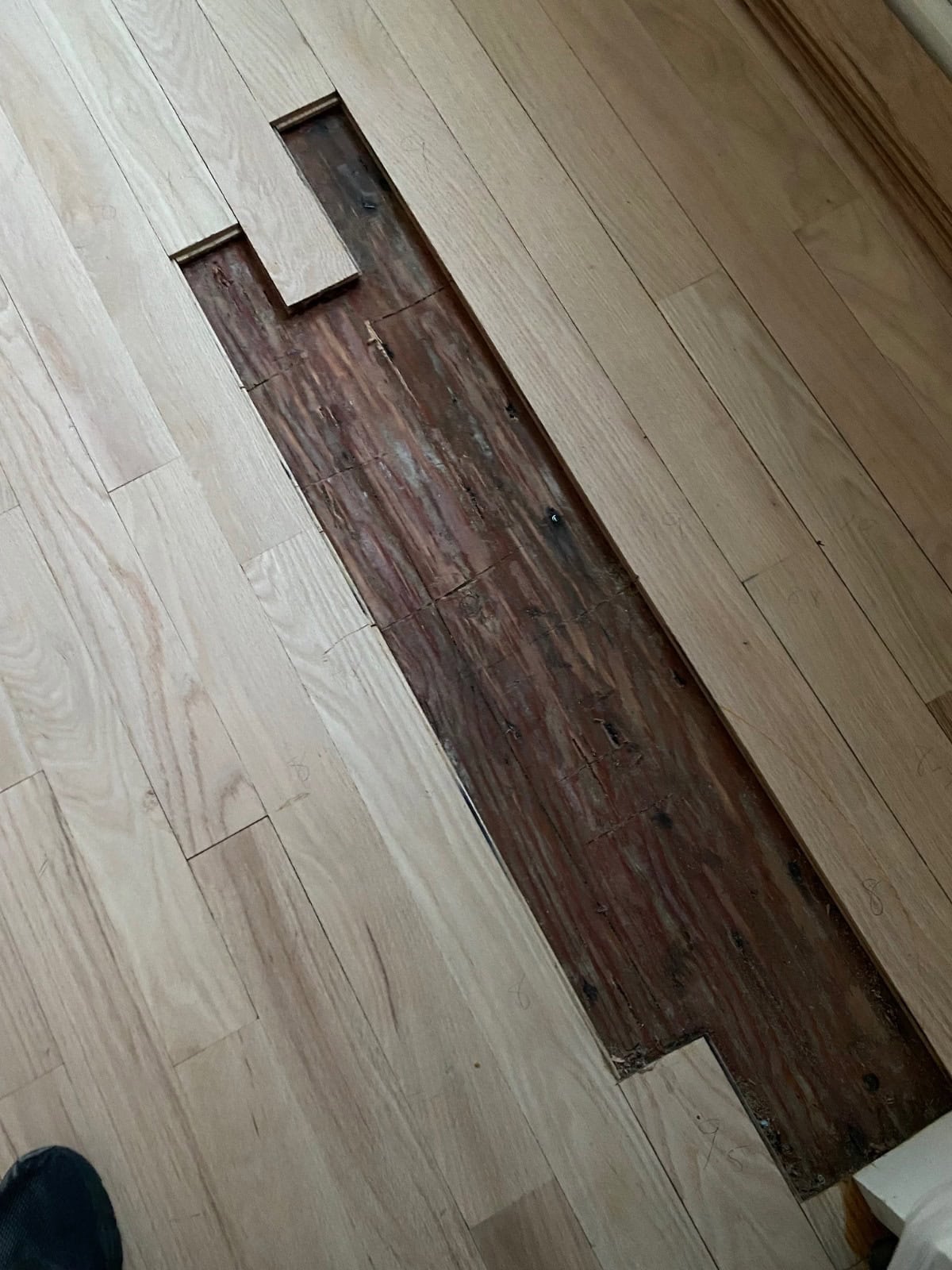
Once the carpeting came out of the family room, we discovered another issue.
There was an additional layer of plywood underneath it.
That plywood couldn't simply remain in place. If we installed hardwood directly over it, the new family-room floor would sit higher than the adjoining kitchen hardwood.
That's one of those details homeowners may never notice when a project is finished correctly—but they'll certainly notice when it's wrong.
We removed the additional plywood and prepared the subfloor so the new hardwood could meet the existing flooring at the proper elevation.
Then we began installing traditional unfinished hardwood flooring.
Why We Still Install Unfinished Hardwood the Traditional Way
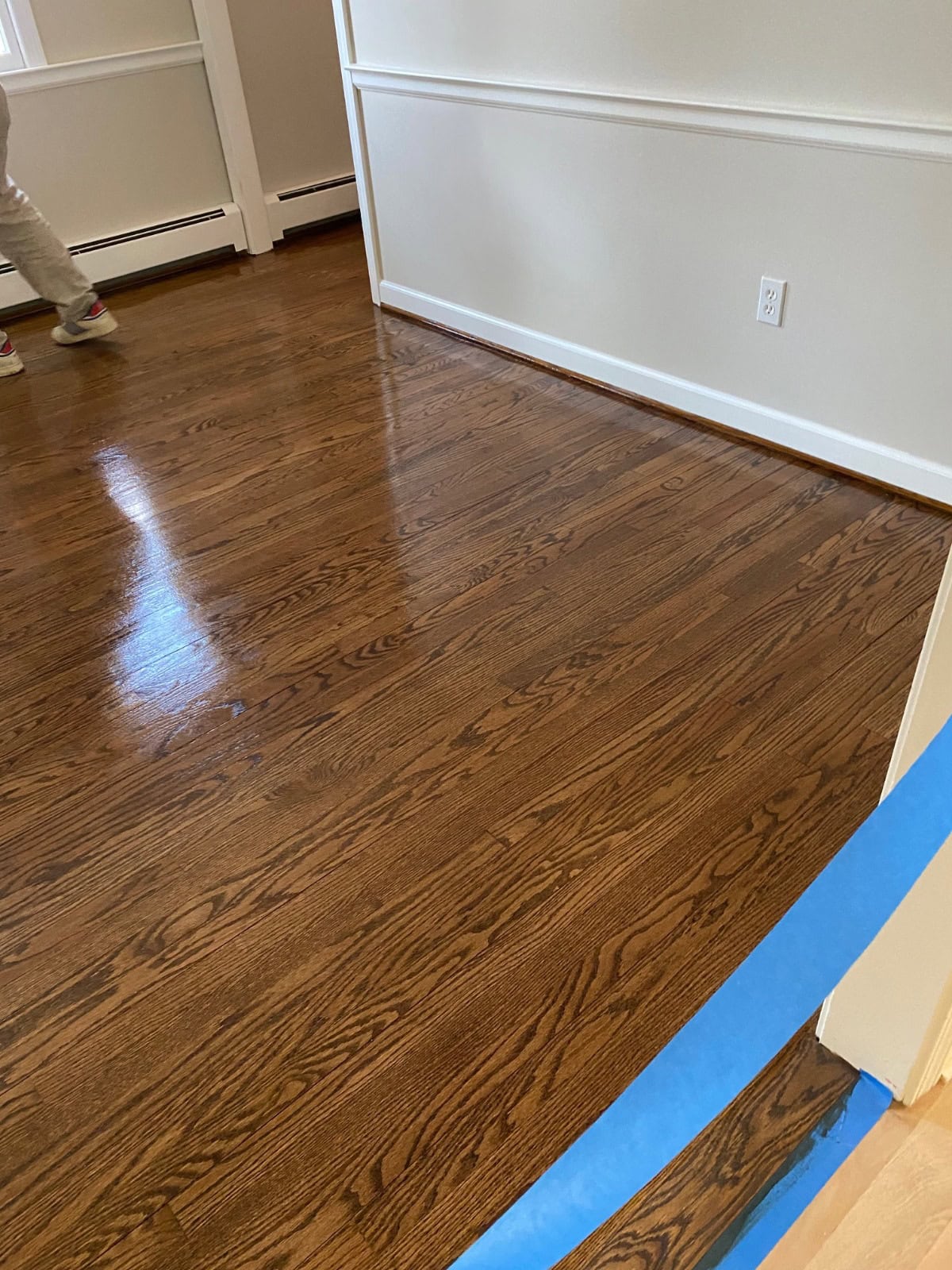
This photograph shows something we've been doing for generations.
The unfinished hardwood is installed board by board on site. Once the installation is completed, the new flooring can be professionally sanded and finished along with the rest of the house.
For a project like this, that's a major advantage.
Rather than putting a factory-finished floor into one room and trying to make it work with older hardwood in the adjoining rooms, we could install the new wood and incorporate it into the overall hardwood floor sanding and refinishing process.
The objective was for someone walking into this house afterward to see one beautiful hardwood floor—not immediately recognize where the old flooring stopped and the new flooring began.
Sanding the New and Existing Hardwood Together
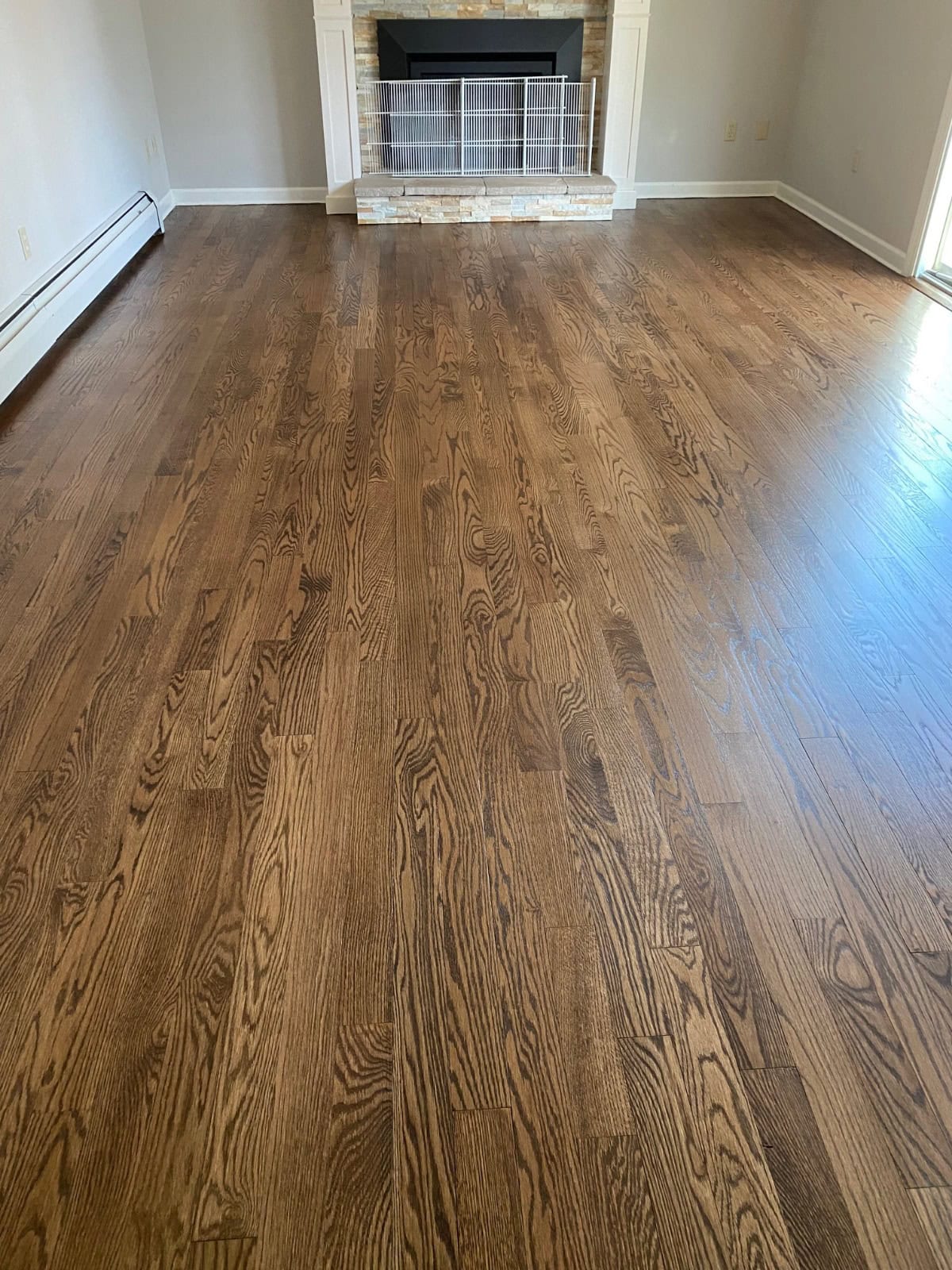
Once the installation was completed, we moved into the hardwood floor sanding and refinishing portion of the project.
Our professional sanding process removed the older finish from the existing hardwood and prepared the newly installed flooring so the different areas could become part of the same overall finished floor.
Professional dust-containment equipment was used during the sanding process to capture the majority of airborne sanding dust at its source and help keep the project cleaner.
This was also when the family could really begin seeing the transformation we had discussed during our original meeting.
Underneath the older finish was a much lighter, more natural-looking hardwood floor.
The Raw Wood Helped Us Decide the Direction
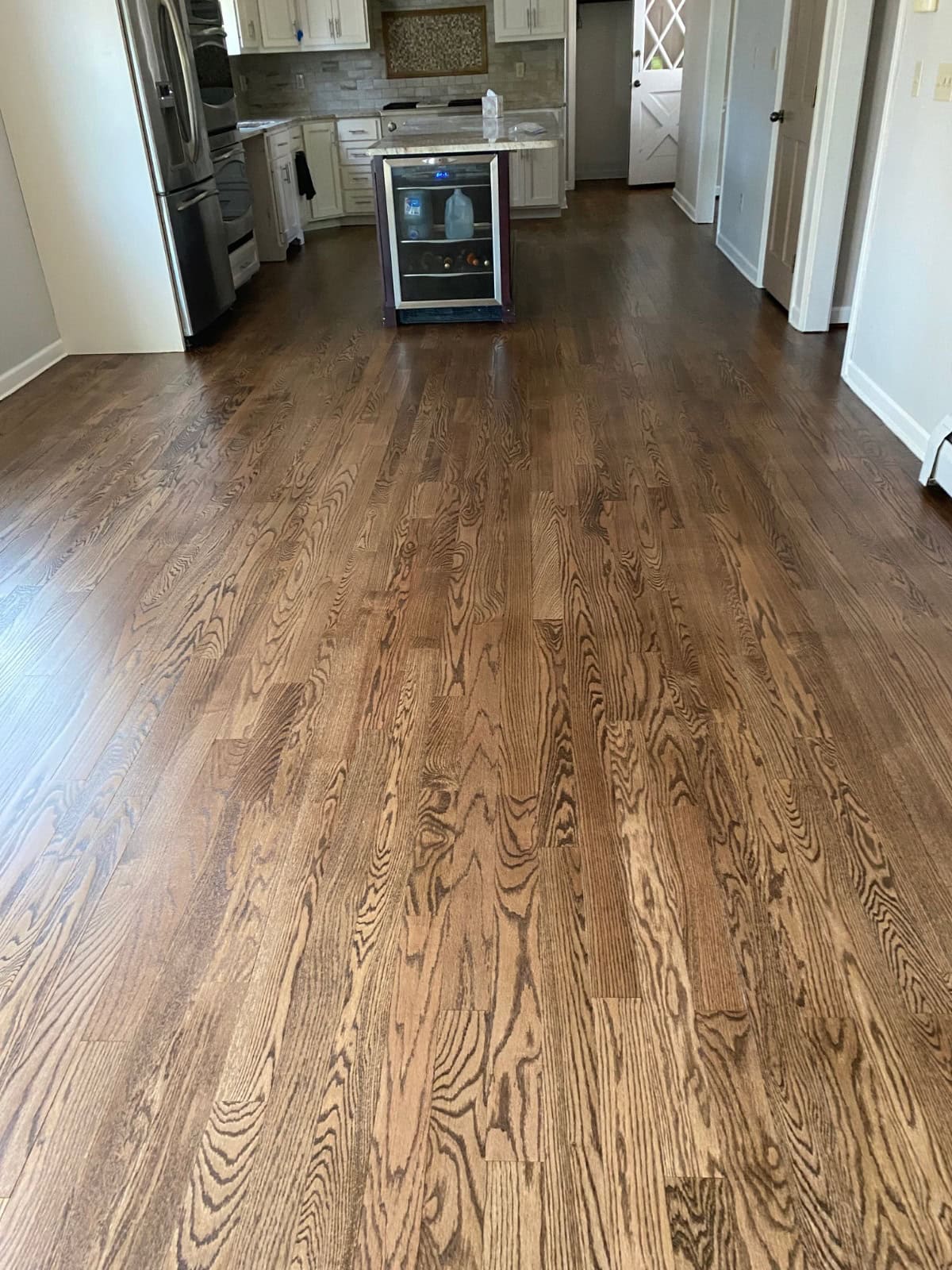
Once the older finish was removed, the homeowners could see how dramatically different the house looked with lighter hardwood.
And that's important.
Sometimes homeowners assume that the darker or more orange appearance they see before sanding is simply the natural color of their hardwood.
Often, it isn't.
The existing finishing system, aging and years of exposure can substantially affect the appearance of the wood.
Once we reached clean raw wood, the family could see the lighter appearance we had been discussing.
Instead of covering that up, we decided to build on it.
Choosing Water-Based Finish to Keep the Floors Light
One of the most important conversations we had with the homeowner and her parents involved the finish.
They weren't looking to recreate the warmer, darker appearance commonly associated with many hardwood floors from the 1990s.
They wanted something that would make the house feel bright, airy and current.
We therefore chose a professional water-based finishing system that allowed the floors to remain much closer to the appearance of freshly sanded raw wood.
Compared with traditional oil-based polyurethane, a water-based finish generally produces considerably less ambering. That allowed the natural character and variation of the hardwood to remain visible rather than adding a strong golden tone.
Professional water-based finishes also offer lower odor and lower VOCs than traditional oil-based polyurethane.
For this particular house, it was exactly the direction the family wanted.
The Staircase Needed to Change With the Rest of the House
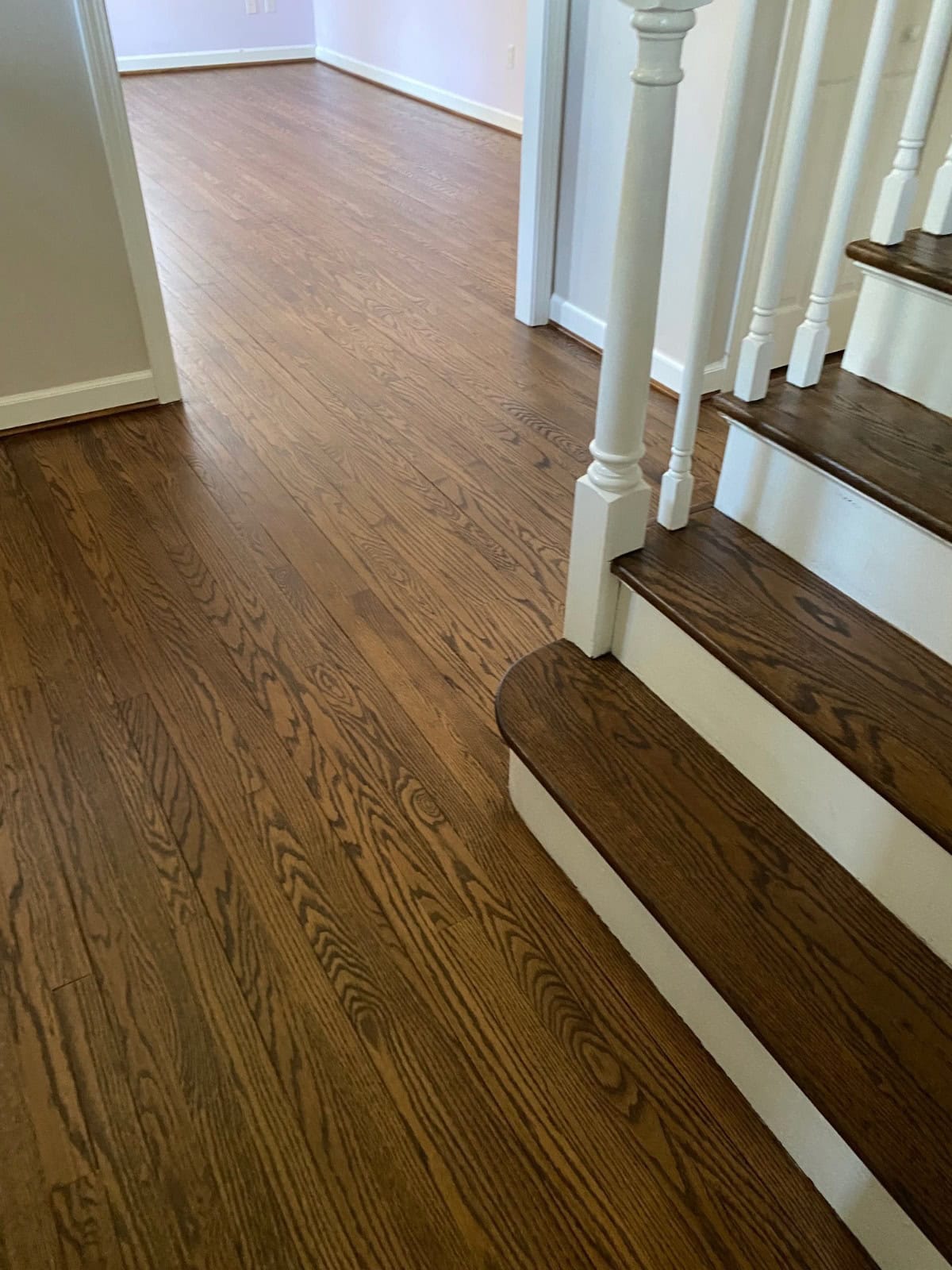
The staircase was another important part of this project.
If we had transformed the floors throughout the house but left an older-looking staircase untouched, the project wouldn't have felt complete.
Hardwood stair sanding requires considerably more detailed work than sanding a large open floor. Each tread has edges, corners and areas along the walls and trim that need individual attention.
We sanded the stair treads back to raw wood so the staircase could coordinate with the newly installed and refinished flooring throughout the rest of the home.
From 1990s to Today
By the time we finished, this didn't feel like the same house we had walked into at our first meeting.
The family room that had been carpeted now had traditional hardwood flooring.
The height transition into the kitchen was correct.
The existing hardwood had been professionally sanded.
The staircase had been updated.
And the water-based finishing system gave the floors the lighter, natural appearance the homeowners had envisioned.
The reaction from the homeowner and her parents made all of the work worthwhile.
They couldn't believe how much changing the floors changed the entire house.
The parents had been involved from the beginning and, like many parents helping their children with a major home project, they wanted to make sure the decisions being made were good ones.
We talked through the project together before starting, explained what we thought would work and then carried that plan through the installation, sanding and finishing process.
When everything was finished, they felt the house looked as though it could have been built yesterday rather than in the 1990s.
That's a pretty dramatic transformation without replacing all the hardwood that was already there.
Hardwood Floor Installation & Refinishing in Simsbury, CT 06070
Patrick Daigle Hardwood Flooring provides hardwood floor refinishing, wood floor refinishing, hardwood floor installation, hardwood floor repairs, stair sanding and professional dust-containment sanding throughout Simsbury, Connecticut 06070 and the surrounding Farmington Valley.
Our work takes us throughout Simsbury and the Hopmeadow Street area, as well as nearby West Simsbury, Weatogue, Avon, Canton, Granby and Farmington.
Patrick Daigle Hardwood Flooring is a fourth-generation family hardwood flooring company. Our family's flooring history dates to 1927 in Maine, with our Connecticut operation beginning around 1972.
Projects like this are also why we continue installing unfinished hardwood the traditional way. Sometimes creating the right finished floor requires more than simply sanding what's already there. It requires looking at the subfloor, room transitions, existing hardwood, stairs, finish color and the way the homeowner wants the entire house to feel.
For this Simsbury family, all those pieces came together.
From a carpeted family room and an older 1990s appearance to a continuous, light and natural hardwood floor—the house was ready for its new owners and its next chapter.