

Whole-House Hardwood Floor Refinishing & Water-Damage Repair – Simsbury CT 06070
A Small Water-Damaged Area Shouldn’t Define an Entire Floor.
Sometimes the biggest challenge on a hardwood floor refinishing project doesn't reveal itself until the sanding begins.
That happened on this whole-house project in the Seminary Road and Firetown Road area of Simsbury, Connecticut.
The homeowners were preparing to move into the house and wanted the existing hardwood floors professionally sanded and refinished throughout the home. During the sanding process, we discovered an area near the refrigerator where the flooring had been damaged by water.
The refrigerator apparently had been pulled out by the previous owner during the move, and the damage wasn't fully apparent until we began working on the floor.
Fortunately, this didn't mean replacing an entire room.
It meant making the right hardwood floor repair in the right place.
We removed and replaced three damaged boards, blended the repair into the surrounding hardwood, continued the sanding process throughout the house and then worked with the homeowner to select a new color.
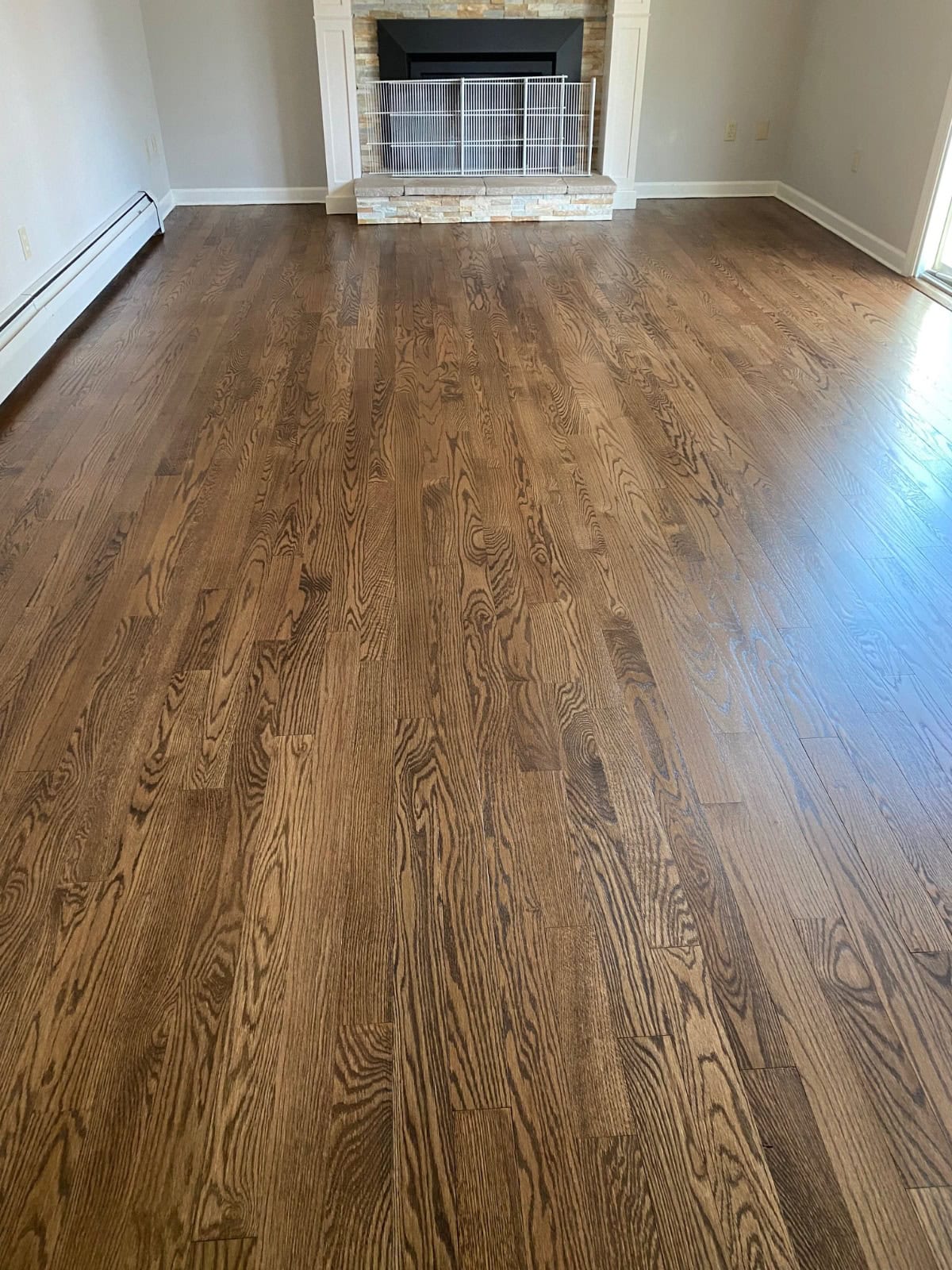
The choice was DuraSeal Provincial, a traditional medium-brown stain that brings out the grain and character of oak without making the floor excessively dark.
The result was a completely different-looking home—and the family was able to move in the following weekend.
Discovering Water Damage During the Sanding Process
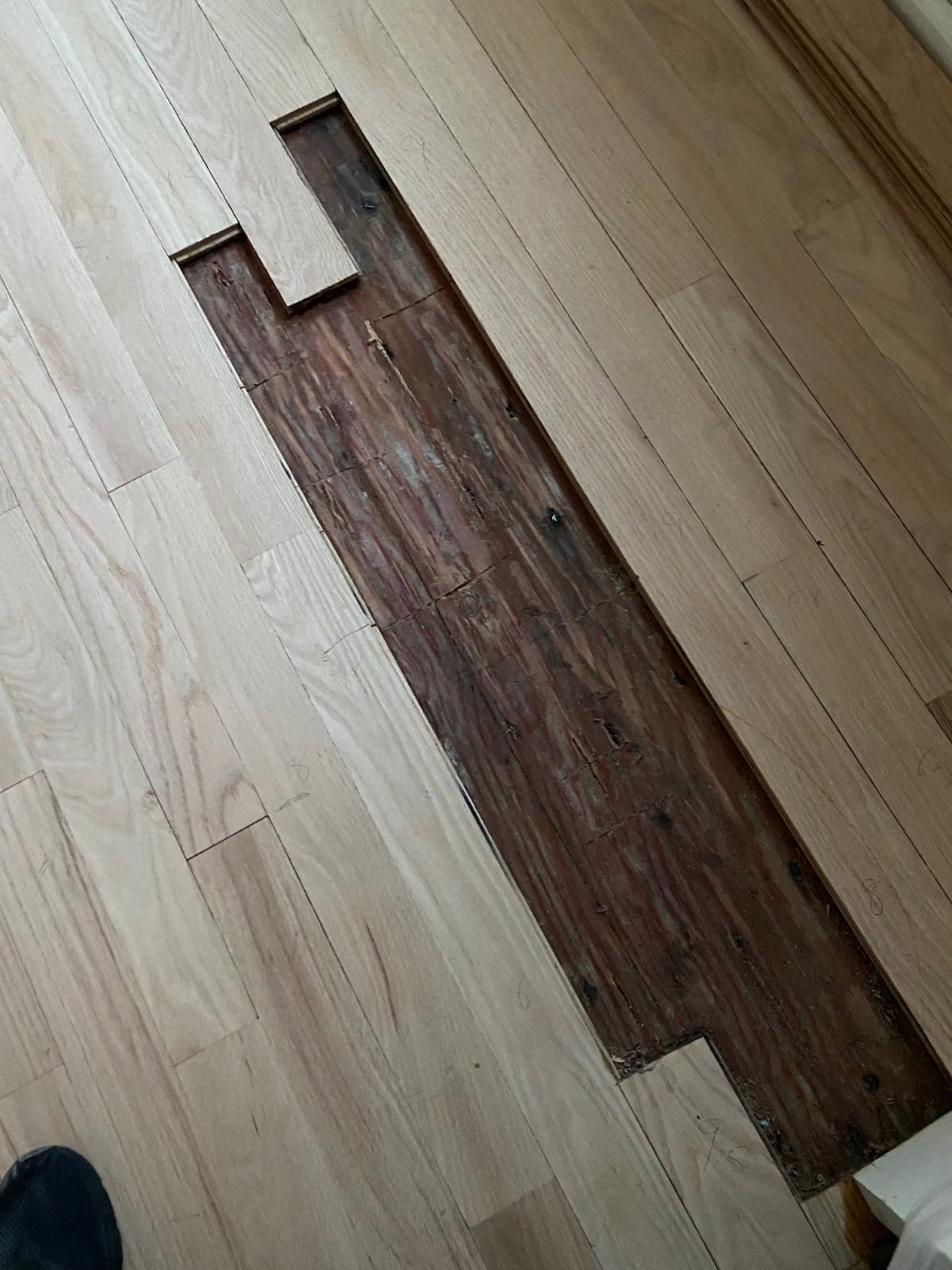
One reason professional sanding can reveal problems that aren't always obvious beforehand is that the existing finish and discoloration can hide what's happening underneath.
In this home, the refrigerator area had suffered water damage.
Once the floor was being sanded, we could properly evaluate the affected boards and determine what needed to be replaced.
Rather than unnecessarily replacing a large section of flooring, we concentrated the repair on the damaged area.
Three boards needed to be removed and replaced.
With this type of hardwood floor repair, the goal is not simply to put new wood into an opening. The repair has to be fitted correctly so that after sanding, staining and finishing, it becomes part of the surrounding floor rather than looking like an obvious patch.
Choosing DuraSeal Provincial for the Whole House
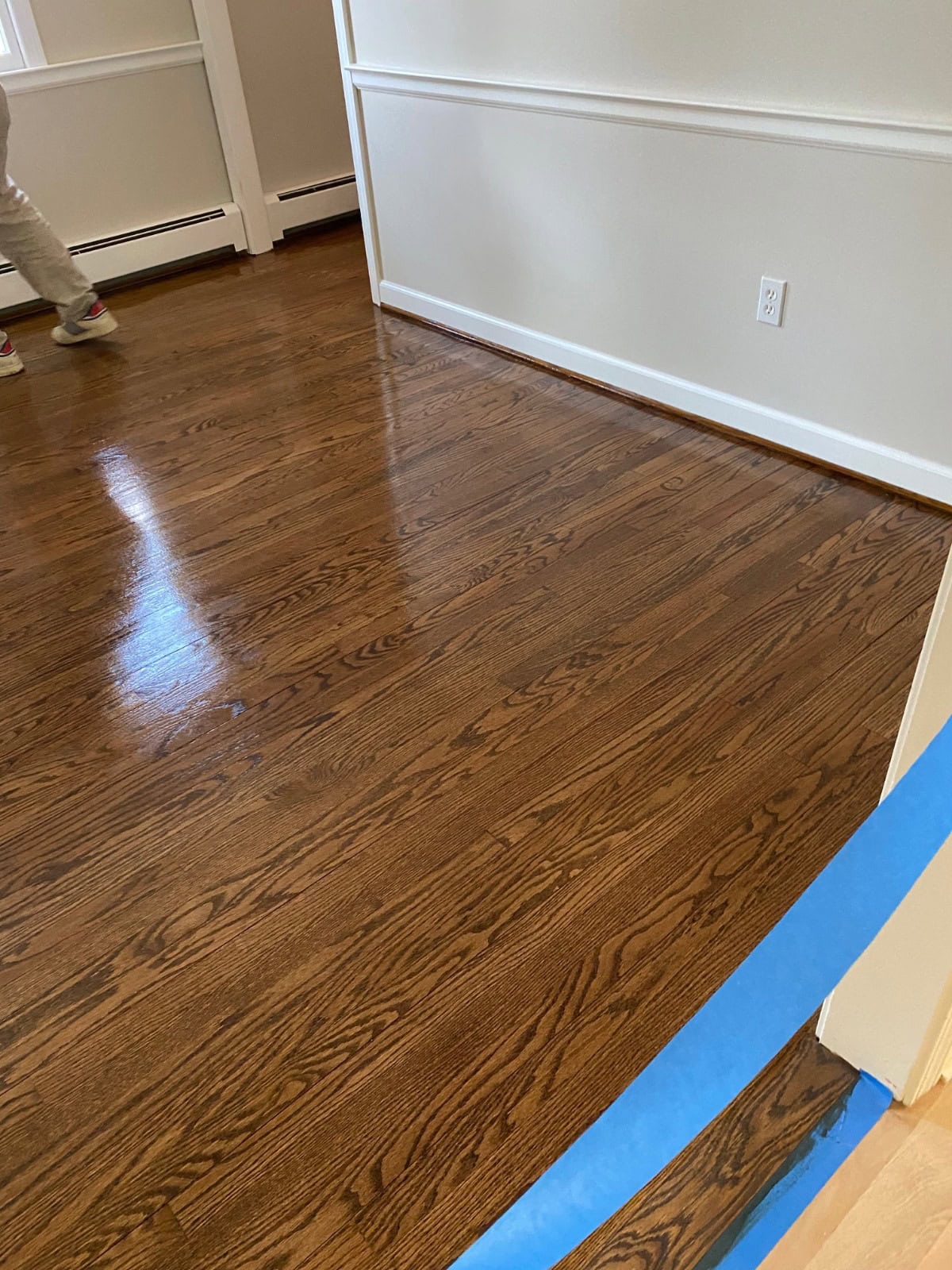
Once the repair and sanding work were completed, we turned our attention to color.
The homeowner selected DuraSeal Provincial, which was a very good choice for this house.
Provincial provides the warmth of a traditional stained oak floor while still allowing the natural grain pattern of the wood to remain an important part of the appearance.
And that's something we pay close attention to when staining hardwood.
We don't want the stain simply sitting on the floor and masking the character of the wood. Proper sanding preparation and careful stain application help develop an even color while allowing the natural variation of real hardwood to remain visible.
On a large, interconnected project like this one, consistency is especially important because your eye can travel from one room into another.
How We Approach Staining Hardwood Floors
Staining isn't simply a matter of putting color on the wood.
The sanding preparation, the species of wood, grain characteristics, how the stain is applied and how excess material is removed can all influence the final appearance.
Our approach is to allow the stain itself to develop the richness and character the homeowner selected.
We don't automatically add unnecessary steps to every floor. Techniques such as water popping can have their place when a particular floor or color calls for them, but we don't believe every staining project needs to be treated exactly the same way.
On this Simsbury floor, our objective was a rich, consistent Provincial color that complemented the house while keeping the character of the oak visible.
Once the stain had been applied, it was carefully worked and wiped to help keep the color even across the interconnected rooms.
Why Water-Based Finish Was Used Over the Provincial Stain
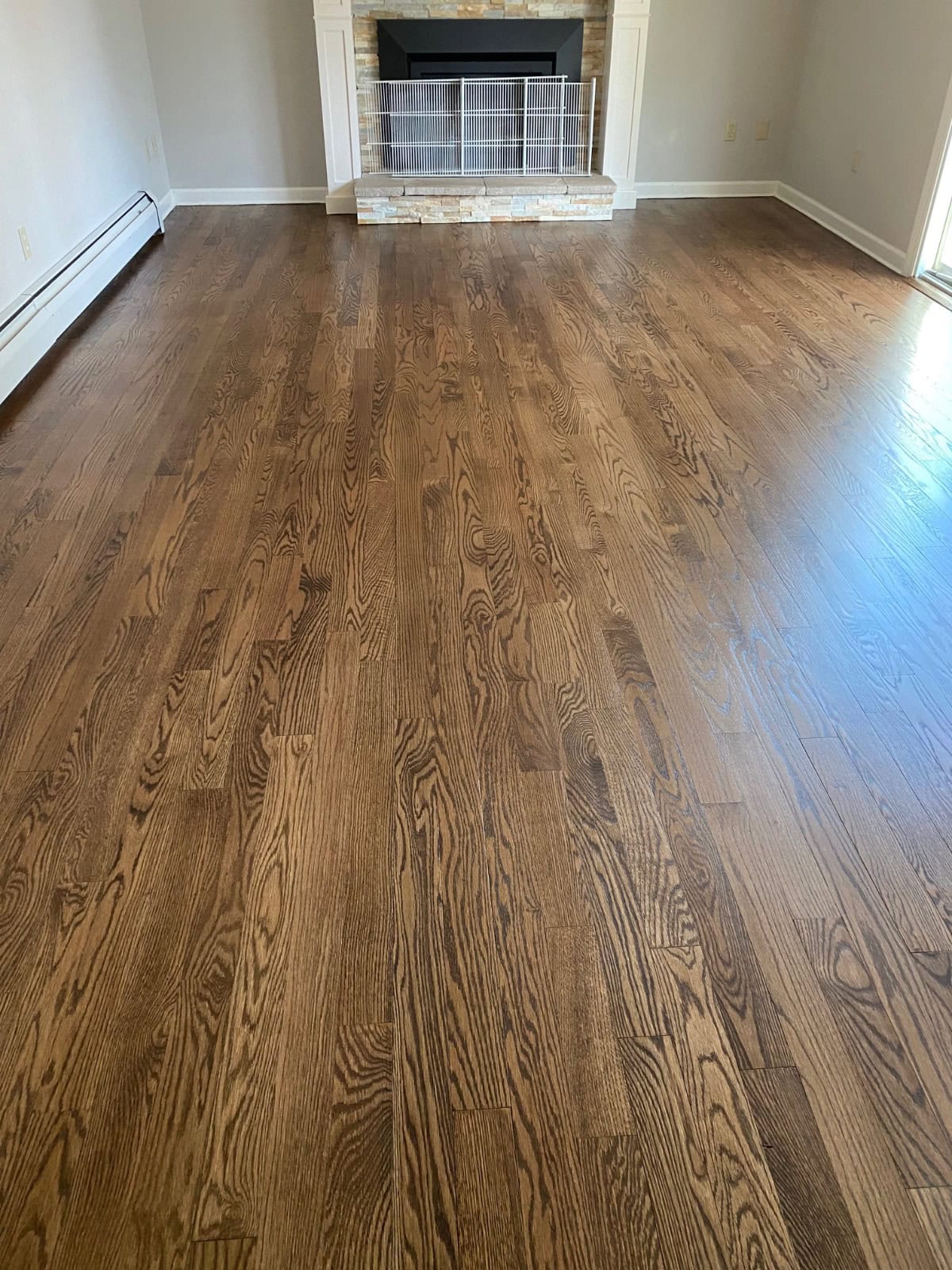
The homeowner wanted the richness of the Provincial stain without adding more amber coloration than necessary through the finishing system.
For this project, we used a water-based hardwood floor finish over the stained floor.
Water-based finishes generally add less amber coloration than traditional oil-based polyurethane. That allowed the Provincial stain to establish the primary color of the floor while the clear finish provided the protective surface.
Water-based finishes also offer lower odor and lower VOC characteristics compared with traditional oil-based polyurethane systems, which can be helpful on projects where homeowners are preparing to occupy the house soon afterward.
In this case, timing mattered.
The family was getting ready to move in the following weekend.
Refinishing the Entire House as One Project
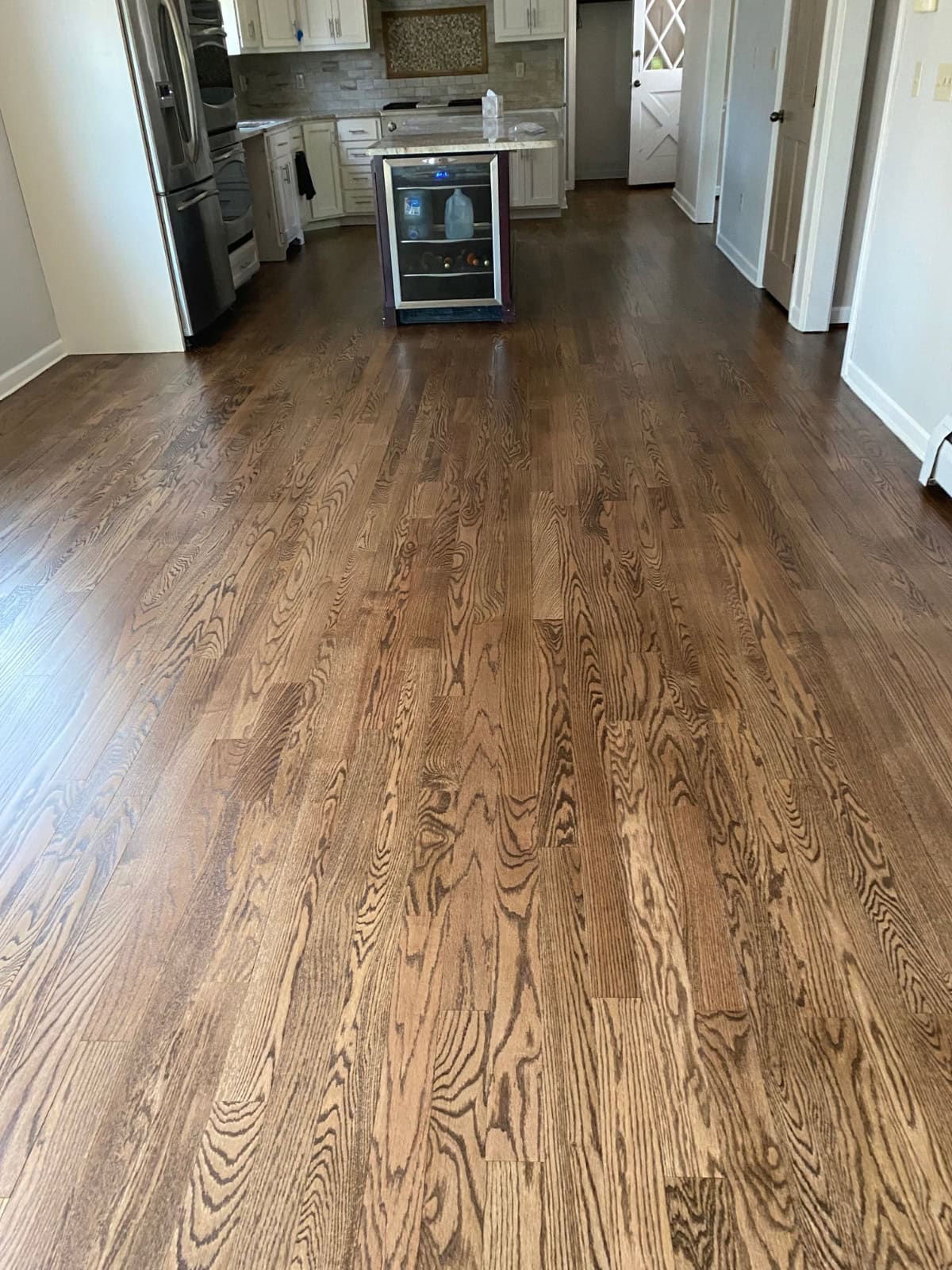
Doing the entire house at the same time gave us an opportunity to create continuity from room to room.
Instead of having one room newly refinished while adjoining rooms remained a different age, color or sheen, the hardwood could be treated as one connected surface.
You can see that particularly well looking from the main living area toward the kitchen.
The Provincial color carries throughout the home and visually ties the different spaces together.
The grain isn't hidden.
It's actually one of the first things you notice.
When Stair Treads Don't Take Stain Exactly Like the Floor
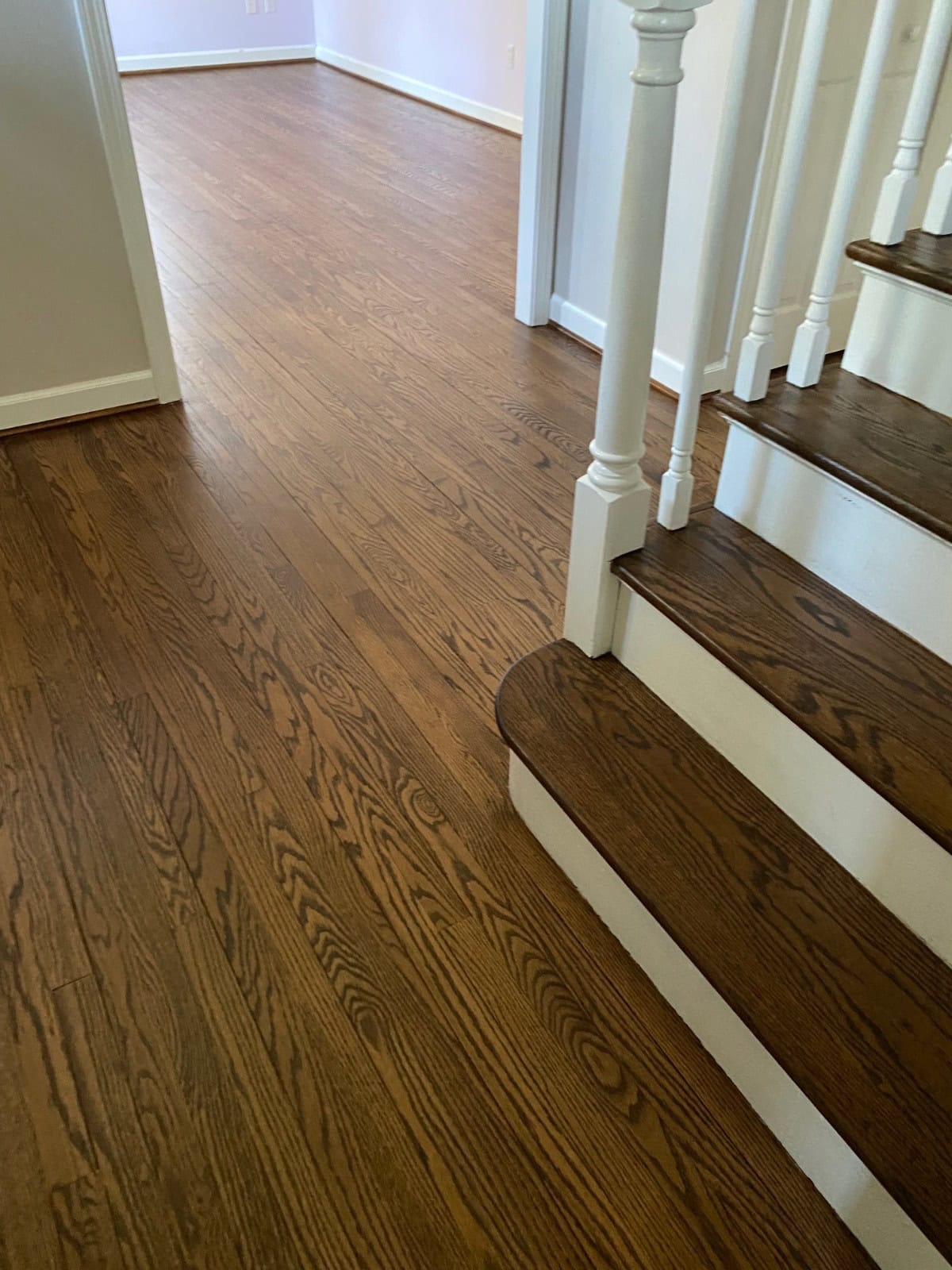
There was another interesting detail on this project.
The stair treads were not exactly the same material as the main hardwood flooring.
That matters.
Different wood species—and sometimes different grades, ages or grain characteristics of the same general type of wood—can absorb stain differently.
That means applying the same stain doesn't necessarily guarantee that two different woods will look identical.
In this house, the stair treads took the color slightly darker than the surrounding flooring. Some of that difference is also emphasized by the lighting and the photograph, but there is a natural contrast between the stairs and the main floor.
Rather than looking out of place, the slightly deeper stair color works well with the white risers, balusters and trim.
From a Three-Board Repair to a Whole-House Transformation
What started as a whole-house wood floor refinishing project ended up including an unexpected repair.
That's not unusual with existing hardwood floors.
Sometimes problems only become completely visible after the old finish is removed.
The important part is knowing how to address them without turning a relatively small problem into a much larger—and more expensive—replacement project.
Here, we repaired the three affected boards, continued the sanding throughout the house, applied the homeowner's selected DuraSeal Provincial stain and protected the floor with a water-based finishing system.
By the time the work was completed, your attention wasn't drawn to the refrigerator repair.
It was drawn to the floor.
That's how it should be.
Hardwood Floor Refinishing Is Also an Opportunity to Inspect the Floor
One benefit of having an existing hardwood floor professionally sanded is that we're able to see the actual wood once years of finish, wear and discoloration begin to disappear.
That's when localized damage, old repairs and other conditions can sometimes become more apparent.
As a member of the National Wood Flooring Association (NWFA), Patrick Daigle Hardwood Flooring approaches these projects as hardwood restoration—not simply applying another coat of finish.
Our family flooring history dates to 1927 in Maine, and our Connecticut operation began around 1972. Four generations of working with wood floors have taught us that older hardwood often has far more life remaining than homeowners initially realize.
Sometimes a damaged floor doesn't need to be torn out.
Sometimes it needs three boards, proper sanding, the right color and an experienced hand.
Hardwood Floor Refinishing in Simsbury, CT 06070
Patrick Daigle Hardwood Flooring provides hardwood floor refinishing, wood floor refinishing, hardwood floor repair, dust-containment sanding, hardwood floor installation and stair refinishing throughout Simsbury, Connecticut 06070 and the surrounding Farmington Valley.
This project was completed in the Seminary Road–Firetown Road area of Simsbury and included whole-house sanding, a three-board refrigerator water-damage repair, DuraSeal Provincial stain and a water-based protective finish.
We also work throughout nearby West Simsbury, Weatogue, Avon, Canton, Granby and Farmington.
For homeowners purchasing an older home, refinishing before moving in can also be an ideal time to address repairs, change the color and bring all of the hardwood throughout the house together.
In this case, the homeowners were able to move in the following weekend to floors that looked completely renewed.
And most importantly, the customer was extremely happy with the entire process and the finished result.