

Sometimes the Best Hardwood Floor Repair Is Knowing How Much Floor NOT to Sand
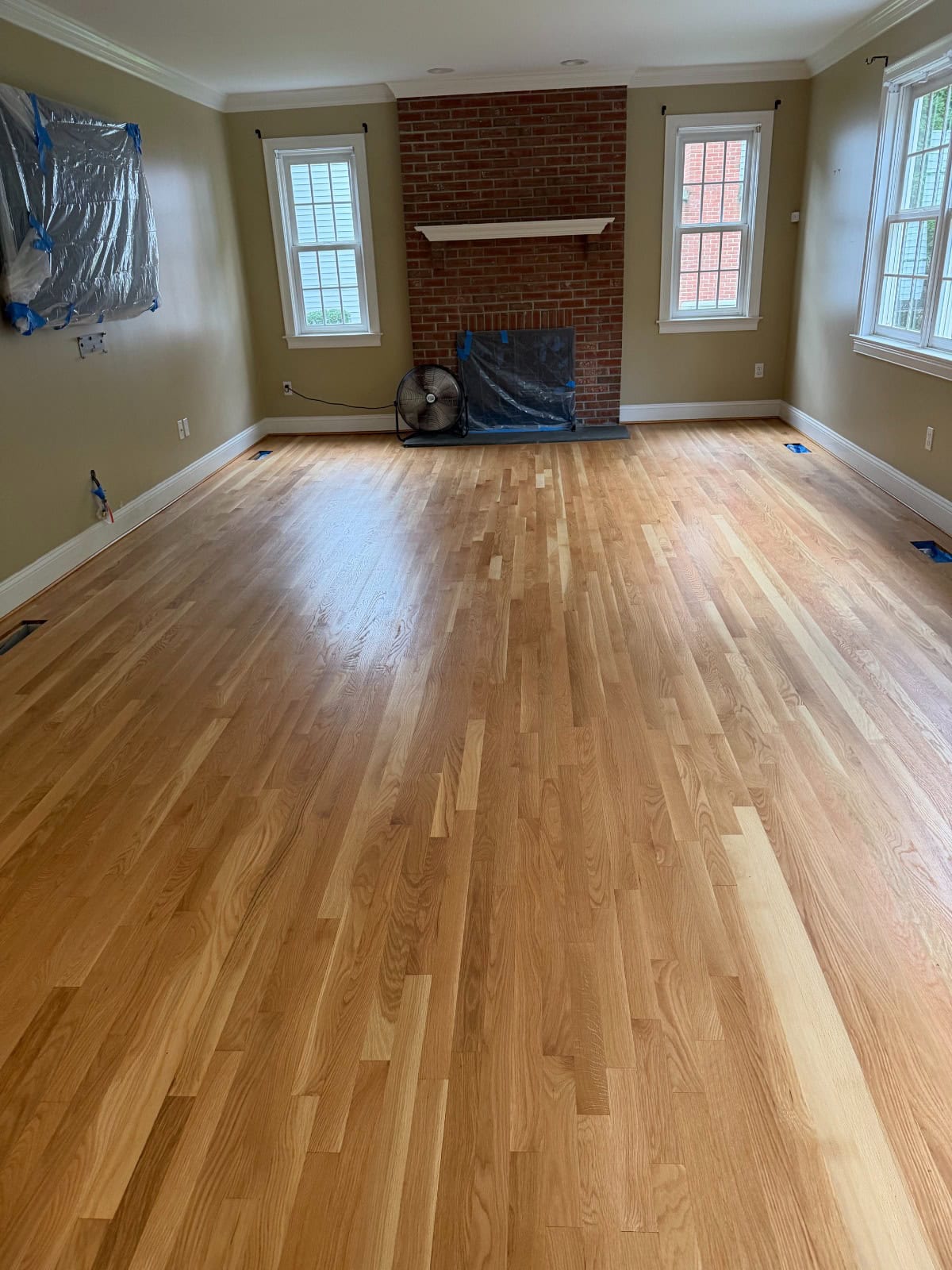
One of the most important parts of hardwood floor refinishing isn't simply knowing how to sand a floor.
It's knowing what actually needs to be sanded—and what doesn't.
That was the challenge at this home in the Walden Court neighborhood of Berlin, Connecticut, not far from Route 5.
The homeowner had worn and damaged hardwood in the back portion of the house, particularly around the sliding door and kitchen island. The front half of the home's hardwood flooring was still in good condition.
Naturally, he didn't want to refinish good flooring unnecessarily.
So when we first met, the conversation wasn't simply, “What color do you want?”
The bigger question was:
Can we sand and refinish the damaged portion of the house and get the newly finished hardwood close enough to the existing floors that we don't have to sand everything?
We believed we could.
And that's where this Berlin hardwood floor refinishing project became particularly interesting.
Worn Hardwood Near the Sliding Door
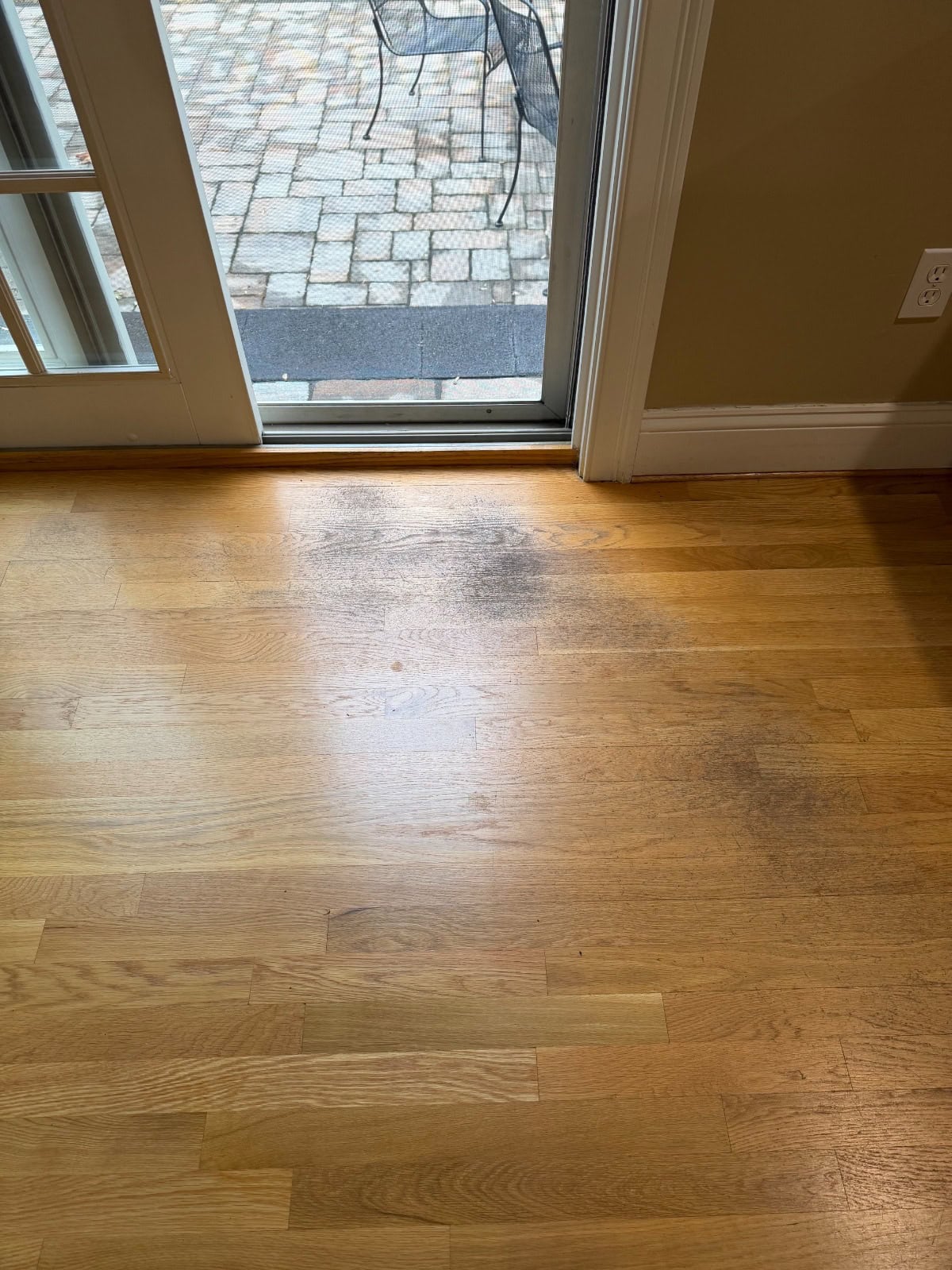
The first photograph shows exactly why the homeowner called us.
The hardwood near the sliding door had taken considerable wear. The protective finish had deteriorated and darkened areas had developed where traffic, moisture and everyday use had affected the floor.
There was also wear around the kitchen island.
The important thing was that the hardwood itself was still worth saving.
Rather than covering it or replacing good oak flooring, our plan was to professionally sand the affected portion of the house back to clean wood and build the finish again from the bottom up.
Talking Through the Project With the Homeowner
Before bringing the sanding equipment into the house, we spent time with the homeowner discussing the entire project.
We explained our professional dust-containment sanding process, how we would protect the surrounding areas, how the floor would look as the old finish was removed, and how long the sanding and finishing process would take.
But the homeowner had two concerns that were especially important.
The first was matching the front half of the house.
The second involved a smaller problem near the toilet in the powder room.
We looked at both situations together before starting.
That's something we've always believed is important. A homeowner should understand what we're planning to do, why we're doing it, and what can realistically be expected before the sanding machines ever touch the hardwood.
Seeing What Is Really Under an Old Finish
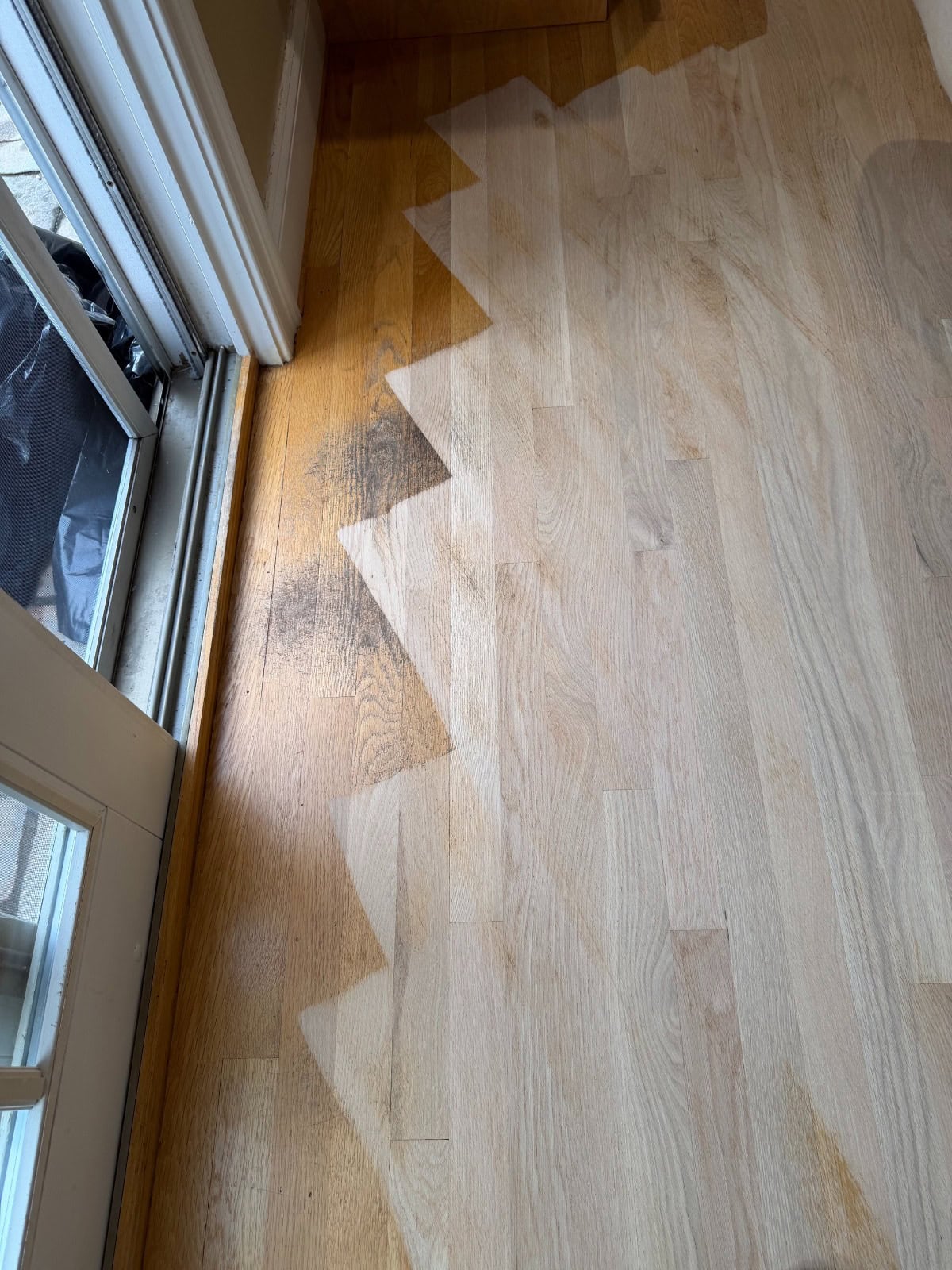
This may be our favorite process photograph from the entire project.
You can see the old floor on one side and freshly sanded raw hardwood on the other.
This is one of the reasons we tell homeowners not to make assumptions about an older hardwood floor based only on what they see before sanding.
Under years of finish, traffic and discoloration can still be beautiful hardwood.
As the old coating came off, the natural oak began showing itself again.
But we weren't trying to make this floor as light as possible.
Remember the goal:
We needed the refinished back portion of the house to work with the existing hardwood in the front portion.
That meant the finishing system mattered.
Professional Hardwood Floor Sanding in Berlin, CT
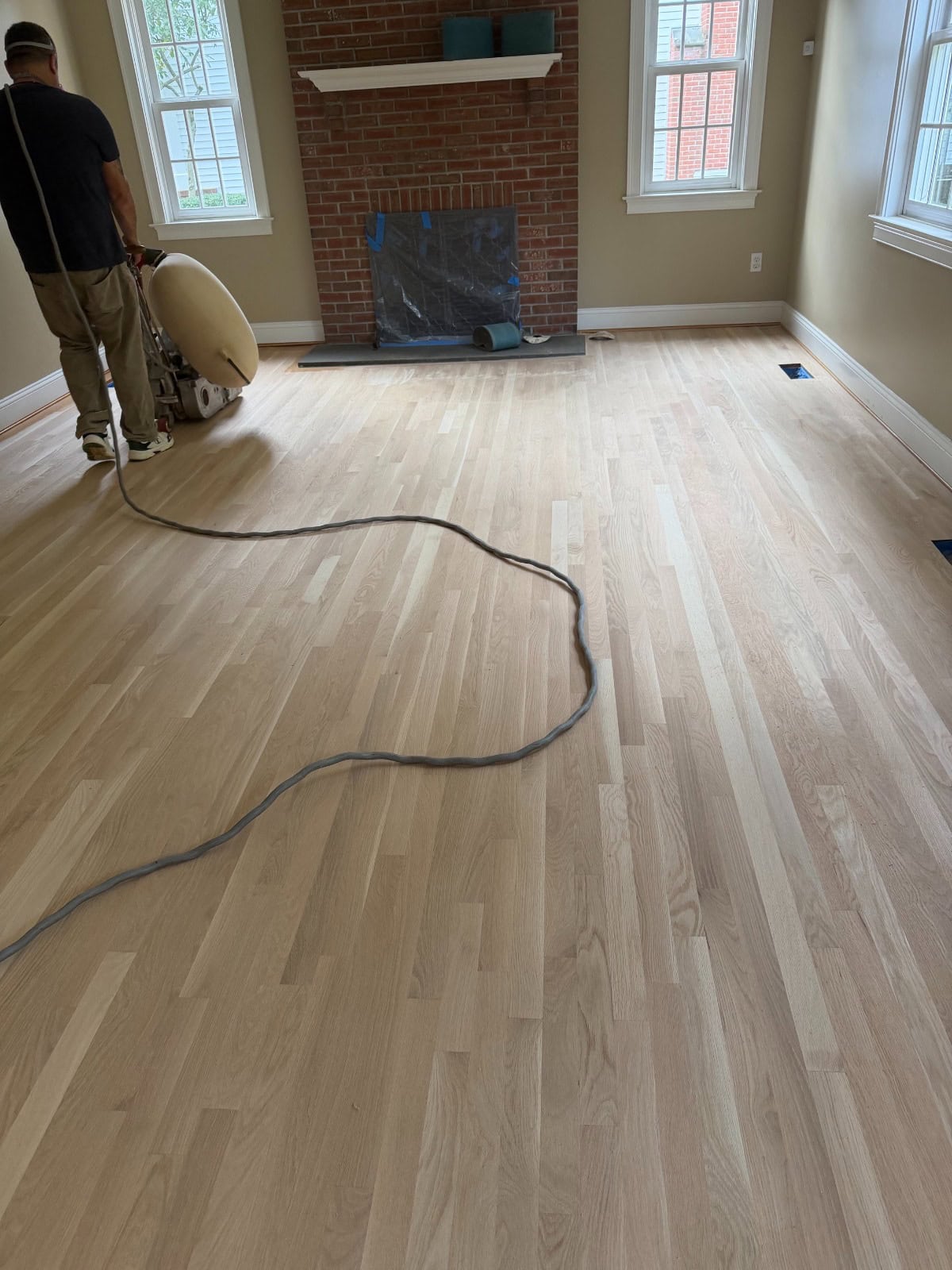
Once we established the plan, we continued sanding the hardwood throughout the affected portion of the home.
Our professional sanding equipment is connected to dust-containment equipment designed to capture the large majority of airborne sanding dust at its source.
That's an important part of modern wood floor refinishing, particularly when we're working in an occupied home.
The sanding process removed the worn coating and allowed us to properly prepare the oak for its new finish.
And as the photograph shows, this wasn't a floor that needed to be replaced.
It needed to be restored.
A Small Powder-Room Repair Instead of Refinishing the Whole Room
There was another concern we discussed with the homeowner before beginning.
A smaller area near the toilet in the powder room needed attention.
But after evaluating it, we didn't believe there was a reason to aggressively sand and completely refinish the entire bathroom.
Instead, we were able to address the affected area with a lighter sanding and additional finish coats.
The improvement was substantial—the area looked close to new again without unnecessarily sanding the entire powder-room floor.
That's an important part of hardwood floor repair.
More work isn't automatically better work.
Sometimes experience means recognizing when a localized hardwood floor repair is sufficient and leaving the rest of a good floor alone.
Matching the Newly Refinished Hardwood to the Existing House
Once the back portion of the home was completely sanded and prepared, we needed to build the color back.
For this Berlin project, we chose a commercial sealer followed by two coats of oil-based polyurethane.
Why?
Because the warmer characteristics of that finishing system helped us move the freshly sanded oak toward the appearance of the existing hardwood that remained in the front portion of the house.
No two sections of an existing home can be guaranteed to match perfectly. Hardwood changes with age, sunlight, use and previous finishing systems.
But the goal was to make the transition work naturally enough that the homeowner wouldn't need to sand perfectly serviceable flooring simply for the sake of refinishing everything at once.
And that's what we were able to accomplish.
The Finished Kitchen
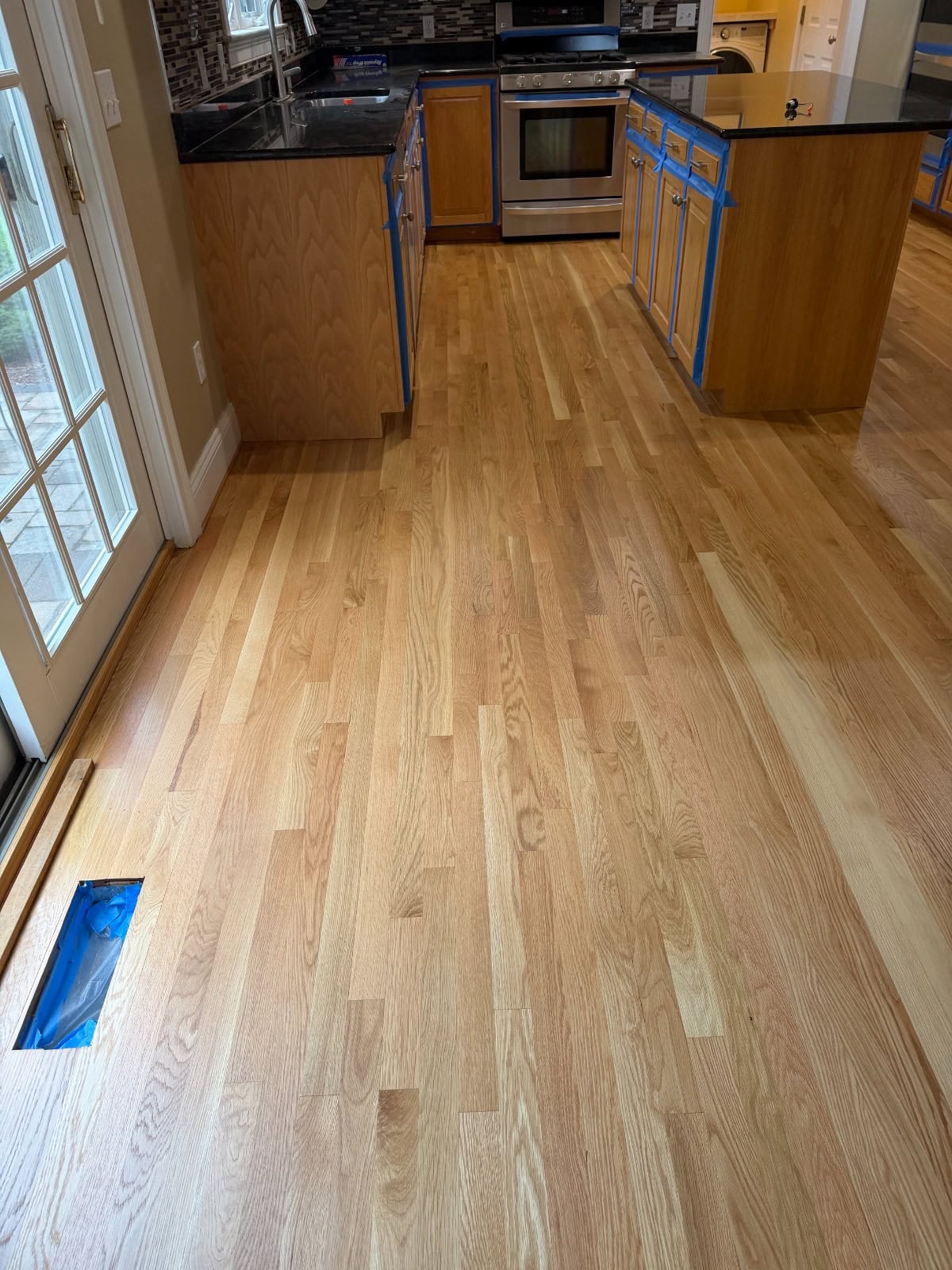
The kitchen shows how dramatically the floor changed.
The worn areas are gone. The oak grain is visible again, and the commercial sealer and oil-based polyurethane restored the warmer character we needed for this particular home.
Instead of the floor drawing your eye toward damaged areas around the island and sliding door, the hardwood once again works as one continuous part of the room.
From Worn and Darkened to Warm, Clean Hardwood
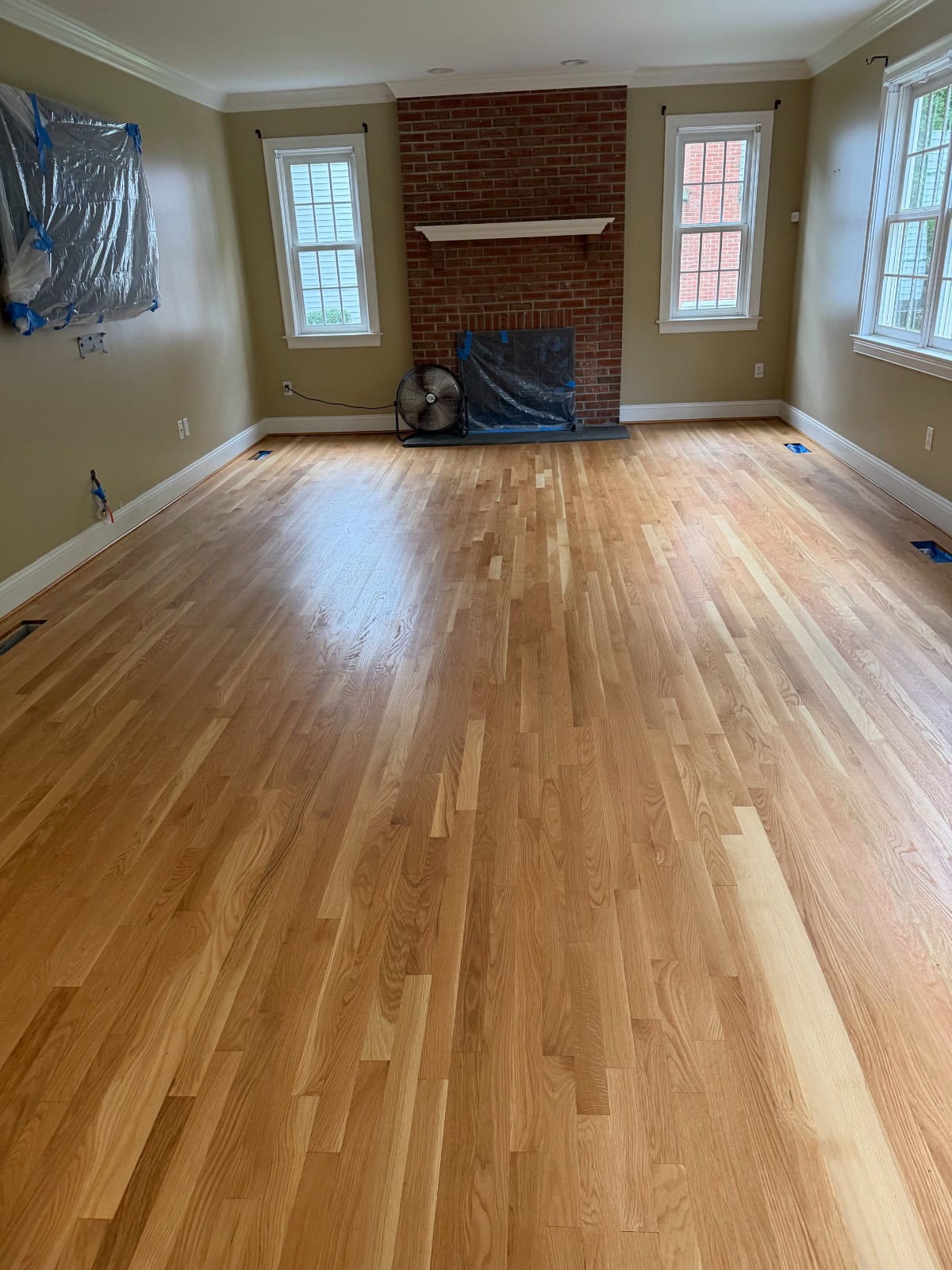
This final photograph tells the story.
What began with worn, darkened hardwood around heavily used areas became a clean, warm and professionally refinished oak floor.
But for us, the success of this project wasn't simply that the floor looked beautiful when we finished.
It was that we accomplished what we had discussed with the homeowner at our first meeting.
We addressed the worn areas.
We restored the back portion of the house.
We took care of the smaller powder-room concern.
And we created a finished appearance that worked with the existing flooring well enough that there was no reason to unnecessarily sand the good floors in the front half of the home.
That's a successful hardwood floor repair and refinishing project.
Hardwood Floor Refinishing in Berlin, Connecticut
Patrick Daigle Hardwood Flooring, Inc. provides hardwood floor refinishing, wood floor refinishing, hardwood floor repair, dustless sanding and hardwood flooring installation throughout Berlin and surrounding central Connecticut communities.
We work throughout Berlin, CT 06037, including areas around Route 5, Berlin Turnpike, Worthington Ridge, Kensington, East Berlin and nearby Newington, New Britain, Cromwell, Rocky Hill and Middletown.
Our family hardwood flooring tradition dates back four generations to 1927, with our Connecticut operation serving homeowners since approximately 1972.
Whether you have worn hardwood near an exterior door, damaged flooring around a kitchen, a small area that needs repair, or an entire home that needs sanding and refinishing, we'll first look at what you already have and talk through the options with you.
Sometimes the best hardwood floor refinishing project isn't about sanding more of the house. It's about knowing how to restore exactly what needs attention.