
Avon, CT Hardwood Floor Repair — Weaving in New Oak After Severe Pet Damage
When a young couple purchased this beautiful home in the Country Club Road and Stony Corners Road area of Avon, CT 06001, they discovered a problem they couldn't see when they first looked at the house.
After the carpeting was removed from a large family room, extensive pet urine damage was exposed in the hardwood flooring underneath. A dog had apparently been repeatedly using one portion of the room, and the damage had gone far beyond something that could simply be sanded away.
The family room was approximately 400 square feet. We could have talked about tearing out the entire hardwood floor and starting over, but we didn't believe that was necessary. Instead, we approached it as a hardwood floor repair and restoration project: remove the flooring that could not be saved, weave new wood into the existing floor, and then sand and refinish everything together.
The Damage Was Too Deep to Simply Sand Away
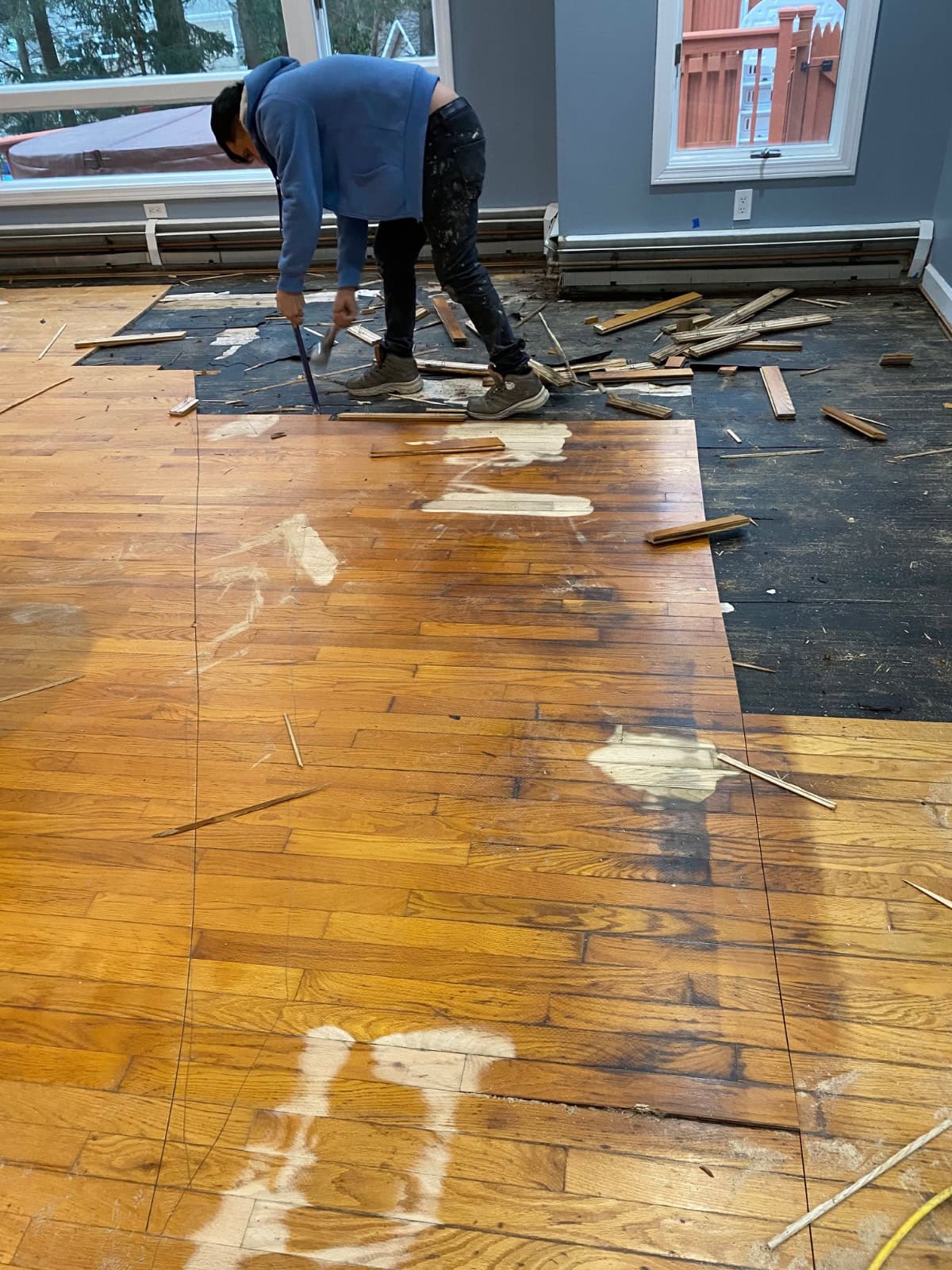
The photo showing the removal of the severely pet-damaged hardwood shows where this project really began.
Pet stains can vary tremendously. Sometimes urine discoloration is concentrated near the surface and sanding can substantially improve it. Other times the contamination and staining have penetrated too deeply into the boards for sanding alone to produce an acceptable result.
This floor was in the second category.
You can see us physically tearing out the affected hardwood. Rather than automatically replacing approximately 400 square feet of flooring, we concentrated on removing the sections that actually needed replacement.
That allowed us to preserve a considerable amount of the home's original hardwood.
Why We Didn't Make One Straight Repair Line
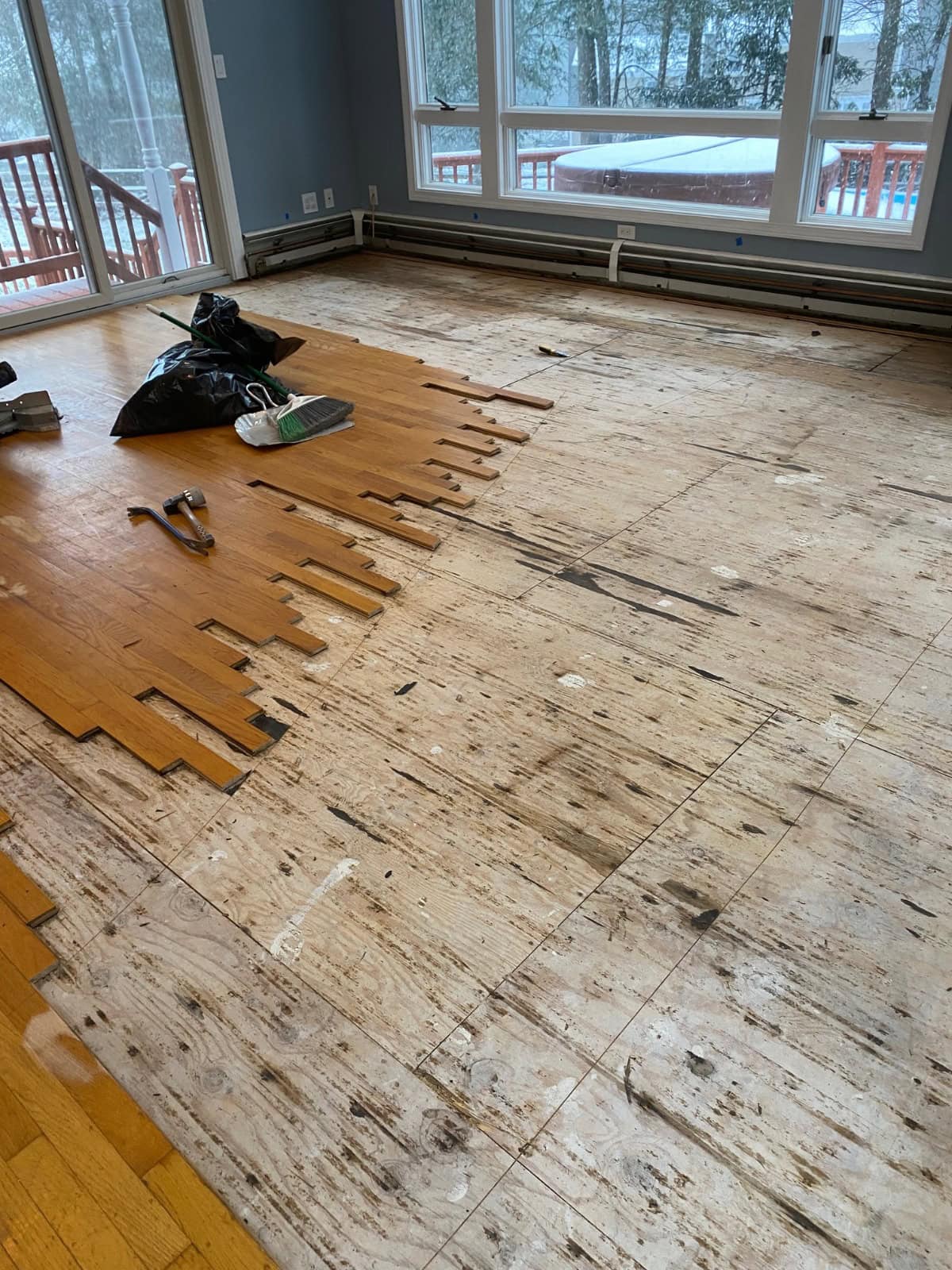
The photo showing the original boards being toothed out is a good photograph for explaining a repair technique homeowners don't always get to see.
Notice that the original boards don't end in one straight line.
We toothed out the flooring, removing individual boards at different lengths. New flooring could then be splined and woven into the existing hardwood.
If we had simply cut a large rectangle out of the floor and installed new wood inside it, the perimeter of the repair could remain obvious. We wanted the old and new flooring to interlock more naturally.
It takes considerably more work, but on a large repair like this, that extra work matters.
Saving the Floor Instead of Replacing Everything
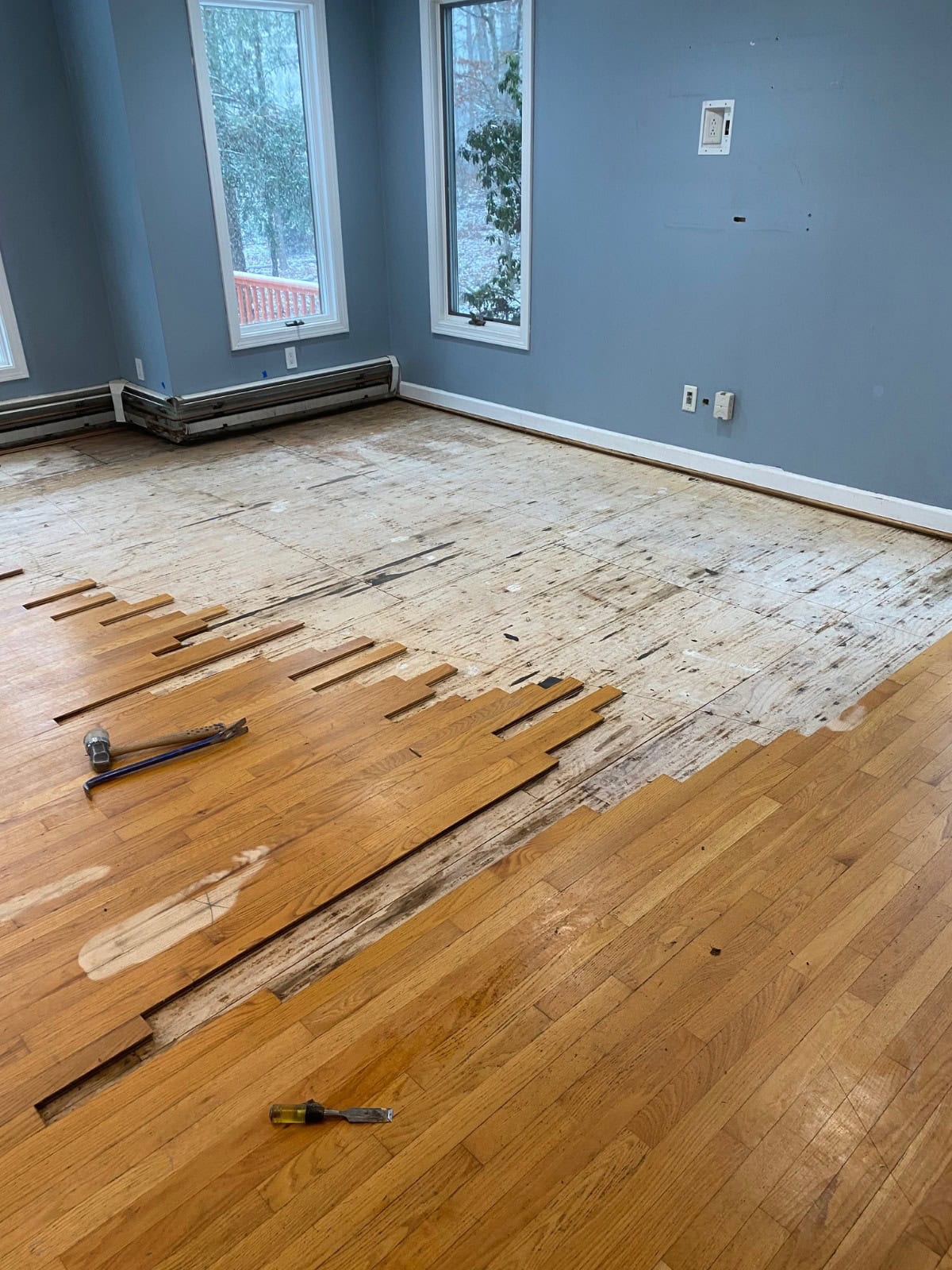
This photograph really shows why we chose this approach.
A substantial portion of the room had already been opened up, but there was still plenty of original flooring worth saving. The new boards were integrated into that existing floor through the weaving and toothing process.
Matching an older floor isn't just about putting down the same species of wood. The repair also has to work with the existing board width, direction and layout.
Once the repair was completed, we could turn our attention to the second part of the project: making the entire floor look like one floor again.
The Homeowners Wanted to Get Rid of the Golden Honey Color
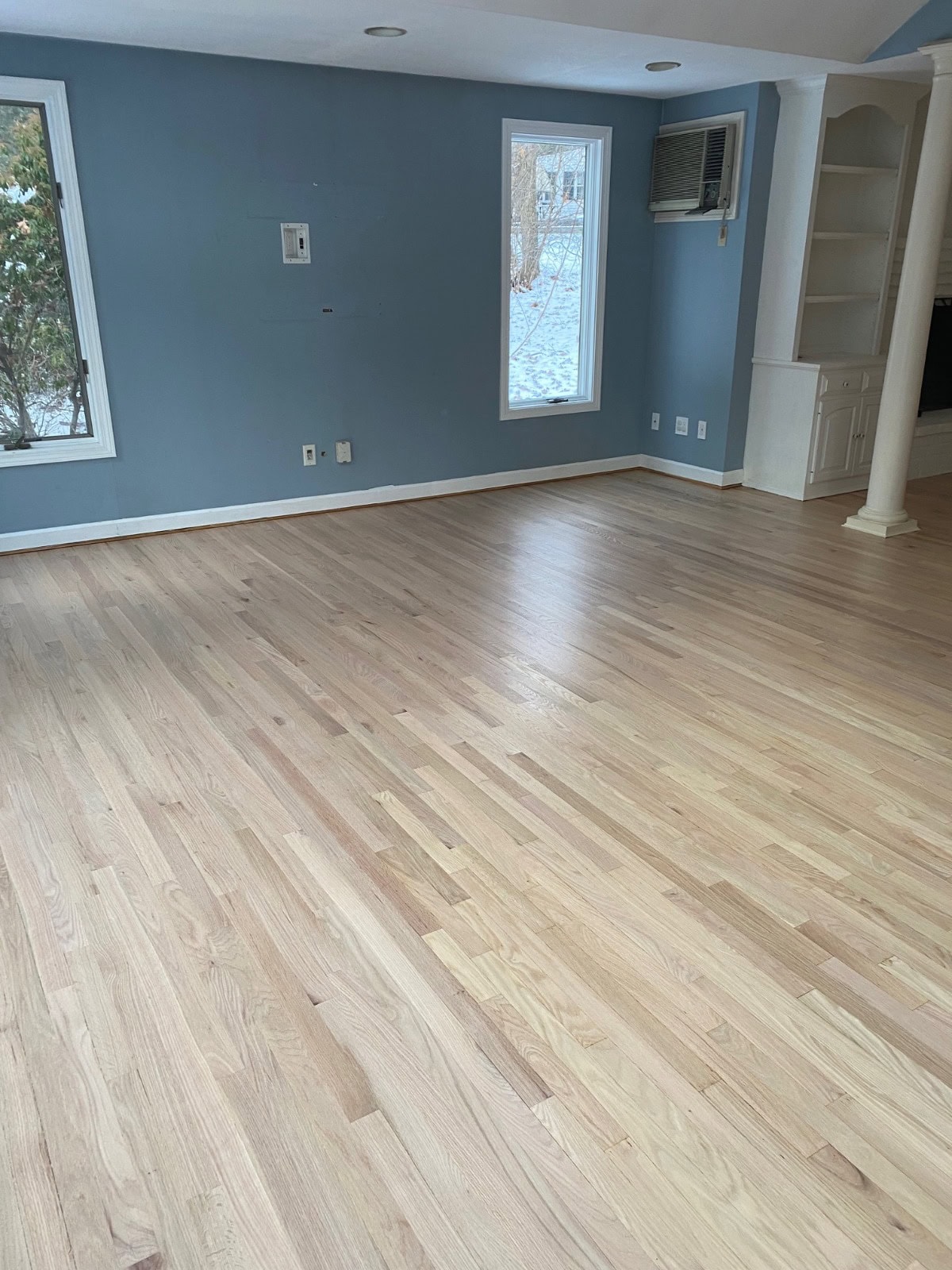
Repairing the pet damage wasn't the only objective.
The young homeowners also wanted to update the appearance of the house. The existing finish had the older golden honey tone commonly seen on traditionally finished oak floors.
They wanted something lighter.
After the repairs were completed, we sanded the floors with our professional dust-containment equipment and brought the wood back to its natural state. We then used a Bona water-based system with four coats.
Instead of adding back the heavy amber color the homeowners wanted to eliminate, the water-based system allowed the oak to retain a much lighter, more natural appearance.
From an Old Finish to a Completely Different Look
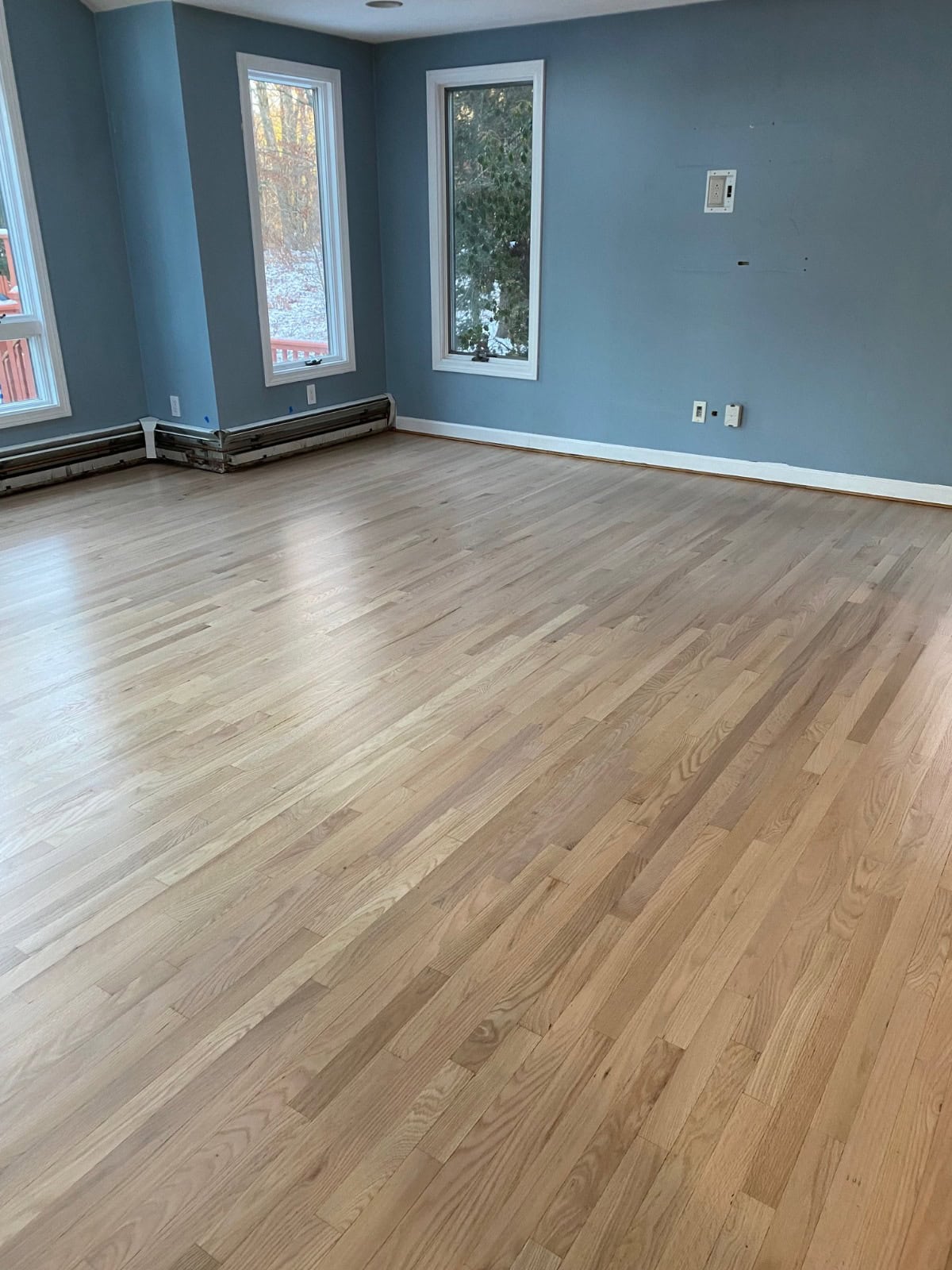
Compare this finished floor with what we started with.
The dark pet-damaged areas are no longer what catches your eye. Neither is the older golden finish.
Now you see the wood.
There are naturally lighter and darker boards throughout the floor, which is exactly what we expect from real oak. Rather than trying to cover that character with a darker stain, the homeowners chose to let it show.
The lighter floor also worked extremely well with the large windows and natural light in this room.
Four Days That Saved a 400-Square-Foot Hardwood Floor
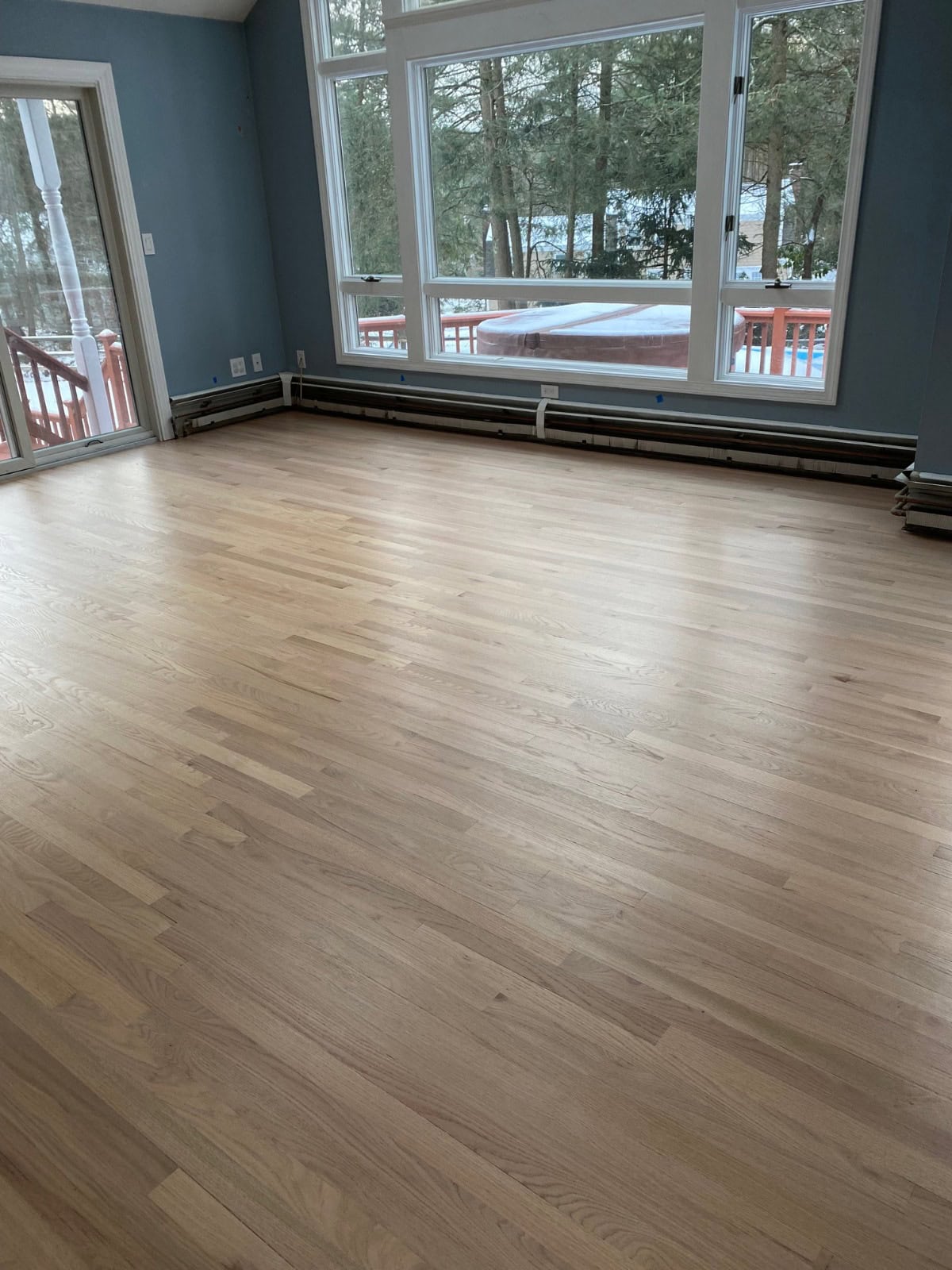
The finished photographs make this project look simple.
It wasn't.
Over approximately four days, this project went from removing extensive pet-damaged flooring, to toothing and weaving new hardwood into the original floor, to sanding everything together and completing the floor with a four-coat Bona water-based system.
Most importantly, we didn't have to tear out an entire 400-square-foot hardwood floor to solve a localized—but substantial—problem.
That's an important distinction with hardwood floor repair. Replacement is sometimes necessary, but it shouldn't automatically be the first answer.
When the remaining flooring is structurally sound, a carefully executed woven repair can preserve much of the original hardwood and allow the repaired sections to become part of the overall floor.
Hardwood Floor Repair and Refinishing in Avon, CT 06001
This Avon project combined two different parts of our work: hardwood floor repair and hardwood floor refinishing.
First we had to solve the damage. Then we had to make the repair and the original floor work together visually.
Finally, we helped the homeowners move away from the dated golden honey appearance and toward the lighter natural oak floor they wanted for their new home.
For homeowners in Avon, CT 06001, as well as nearby Farmington, Simsbury and Canton, severe pet stains don't necessarily mean an entire hardwood floor has to be discarded. Every floor needs to be evaluated individually, but sometimes removing the damaged boards, weaving in new flooring, and refinishing the entire area can save a floor that initially looks beyond repair.
This was one of those projects.