

Hardwood Floor Repair & Refinishing in Canton, CT – Pet-Damaged White Oak Floor Restored
Canton, Connecticut 06019 | Sweetheart Mountain Area
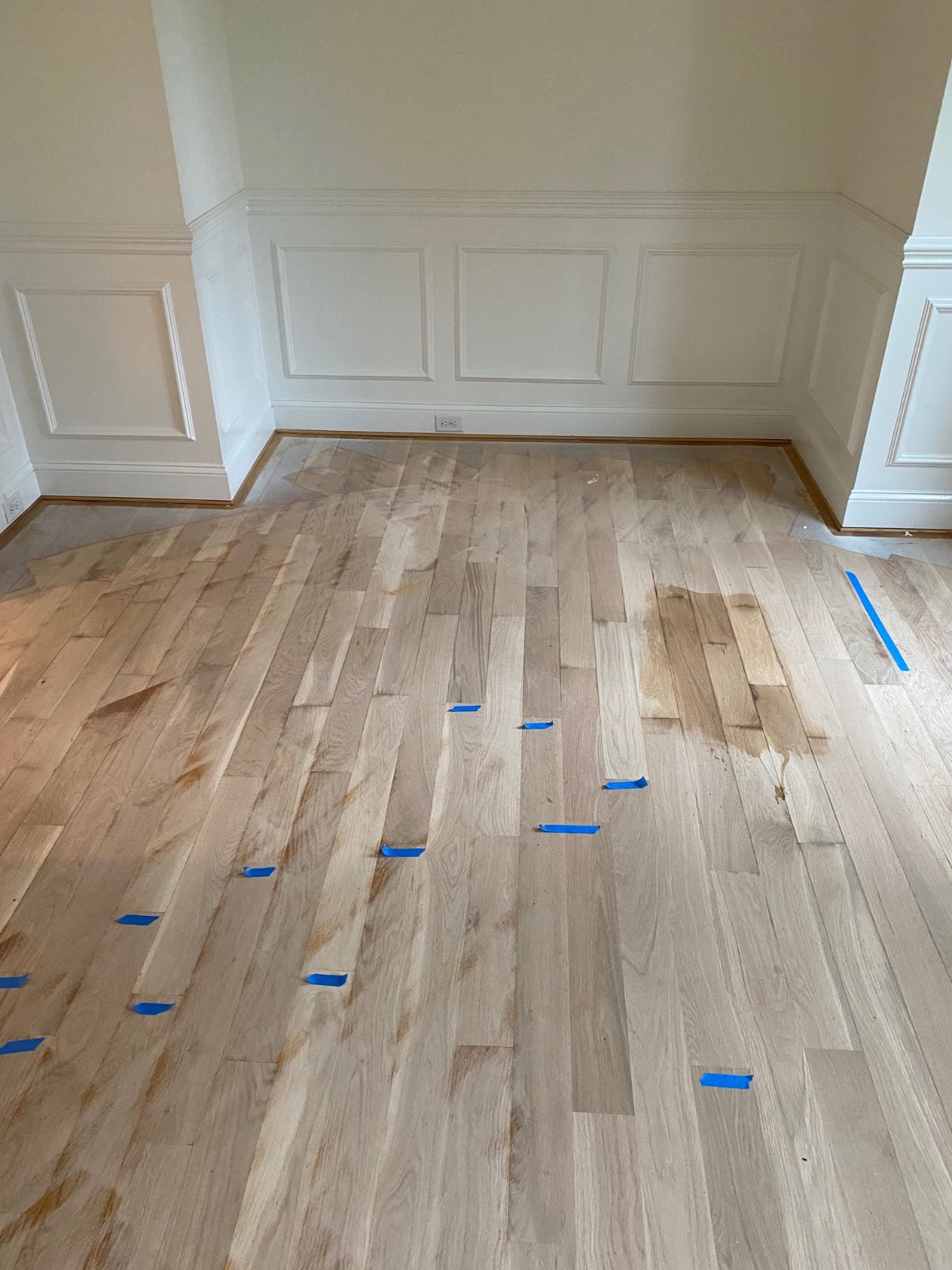
This hardwood floor repair and refinishing project in Canton, Connecticut 06019 is a good example of why we don't make assumptions about pet stains until we actually begin working with the floor.
The homeowners in the Sweetheart Mountain area of Canton met with us several times to discuss the project and what they hoped could be accomplished. The dining-room hardwood had significant pet staining from a dog, and initially we thought there was a possibility that much of the discoloration could be removed through sanding.
Once we started sanding, however, the true extent of the damage became much clearer.
Some stains were simply too deep.
Rather than trying to hide damaged wood underneath a new finish, we explained to the homeowners that the affected boards needed to be removed and replaced.
Sanding Revealed Which Boards Could Be Saved
The floor was 4-inch white oak, and after the old finish was removed, we were able to evaluate the wood itself instead of judging the damage through the existing finish.
Pet stains can be unpredictable. Some discoloration is concentrated near the surface and improves considerably during hardwood floor sanding. Other stains have penetrated deeply enough into the wood that additional sanding isn't the proper solution.
That's exactly what we encountered in this Canton home.
The blue tape in the lead photograph identifies the individual boards we determined needed replacement. Approximately 25% of the dining-room flooring ultimately required repair, but that still allowed us to preserve the majority of the original hardwood floor.
That was an important part of the project: repair what needed repairing without unnecessarily replacing an entire floor that could still be saved.
Comparing NaturalSeal and IntenseSeal on White Oak
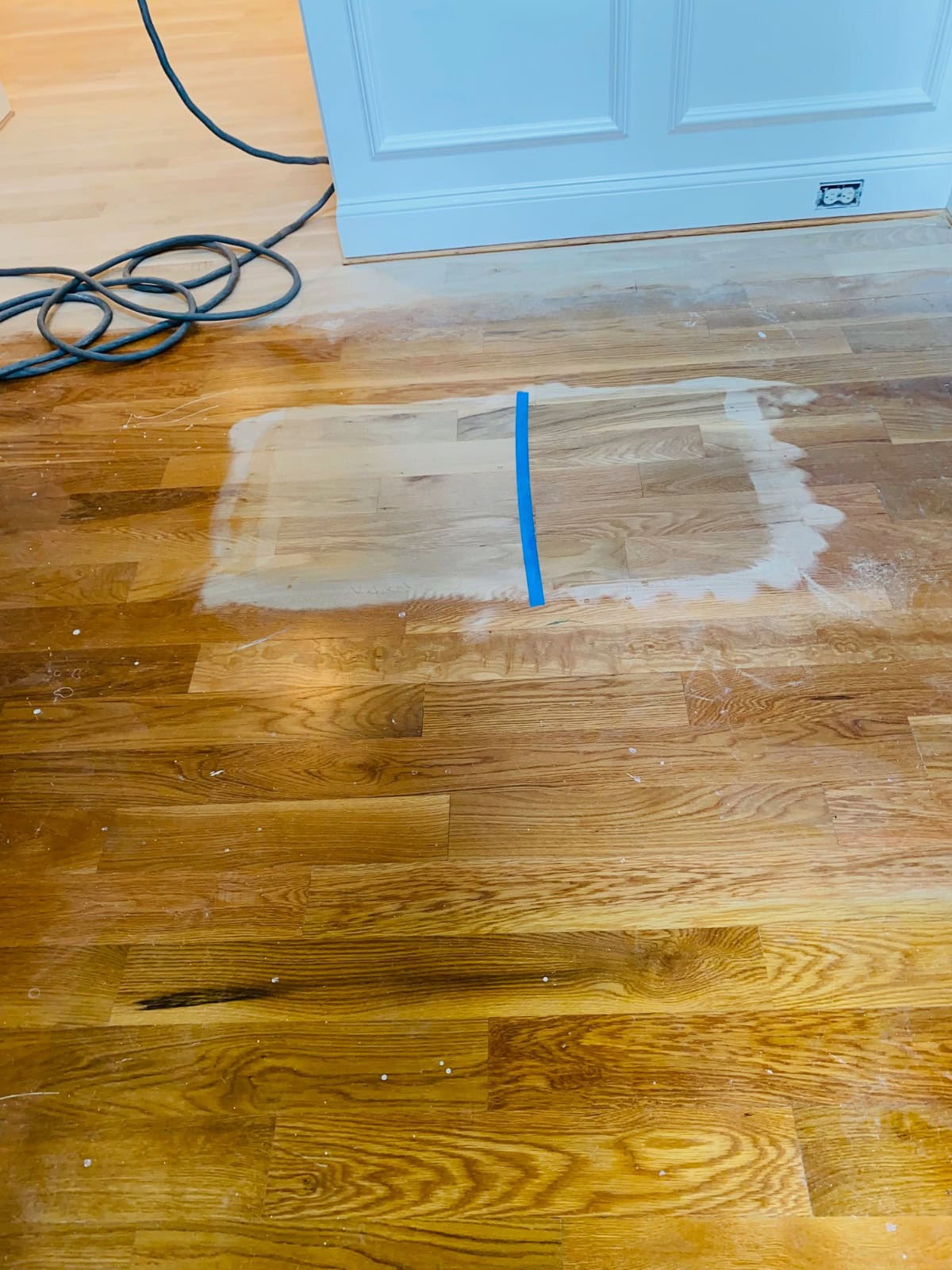
Color was another important part of our conversations with the homeowners.
They wanted to get away from the darker appearance of the existing floor and bring the white oak back to a lighter, more natural look.
Instead of choosing from a photograph or small sample board, we put the options directly onto their own hardwood.
In the NaturalSeal and IntenseSeal finish sample photograph, you can clearly see how differently the two choices affect the same white oak floor. The NaturalSeal sample on the left keeps the wood considerably lighter, while the IntenseSeal sample on the right adds more warmth and depth.
This is why we like to show homeowners actual samples whenever possible. The species of wood, age of the floor and natural variations in the boards can all affect how the finished floor appears.
Seeing it on their own floor gives them a much better idea of what they're choosing.
Removing the Boards That Sanding Couldn't Save
Once we knew which boards were too badly stained, we moved from refinishing into hardwood floor repair.
The damaged boards were carefully removed and replacement white oak was integrated into the existing flooring.
This is an important distinction with pet-damaged hardwood floors. Sanding is often capable of producing a dramatic improvement, but there comes a point where continuing to sand isn't the right answer. Hardwood only has so much usable thickness, and removing excessive wood just to chase a deep stain can create another problem.
In this case, replacing the worst boards allowed us to address the actual damage while keeping the rest of the original floor.
Sanding the White Oak After the Repairs
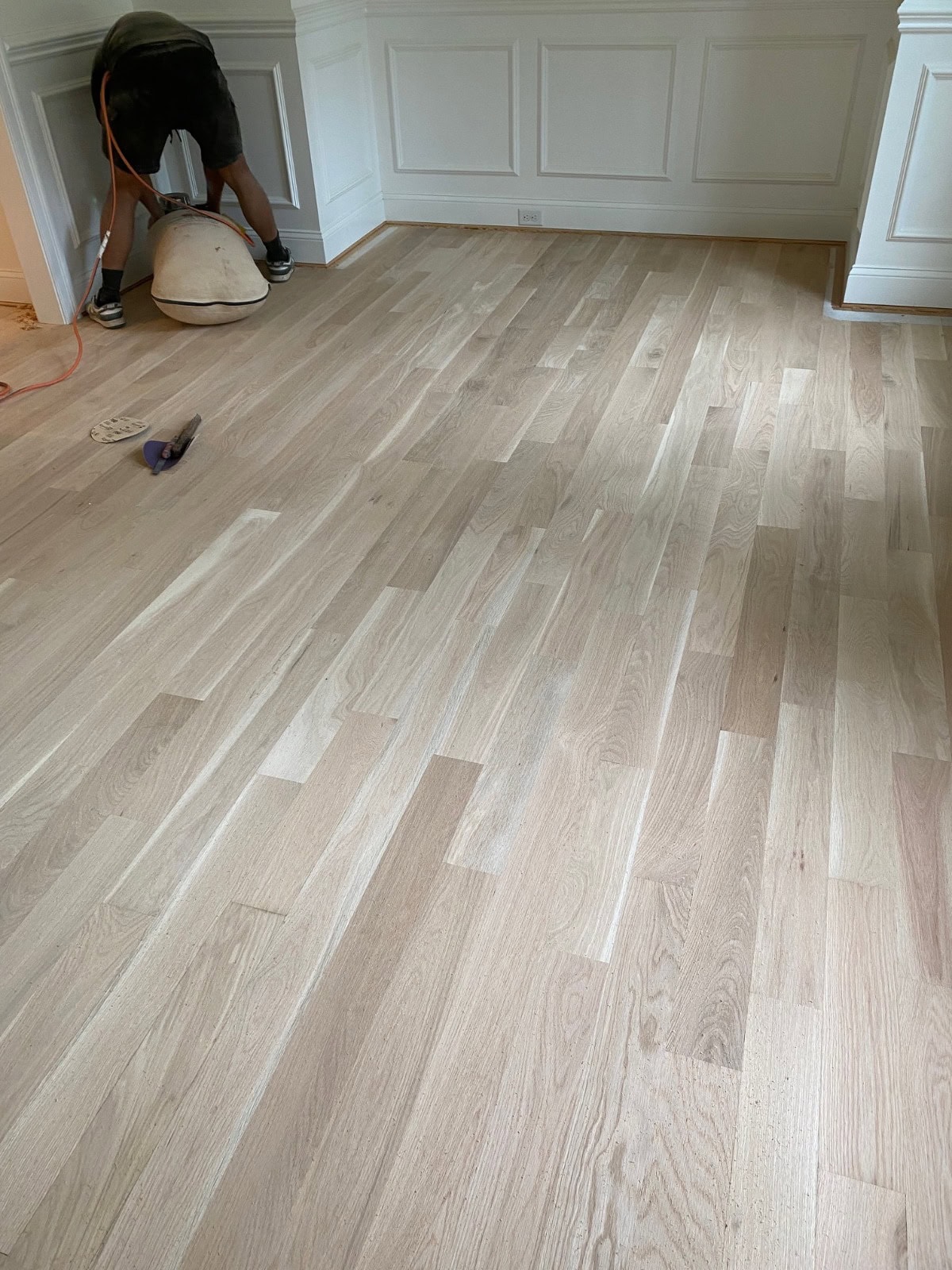
This photograph shows the project after the repairs had been made and we were continuing the sanding process.
At this stage, the transformation becomes much easier to see.
The dark, damaged appearance that originally dominated portions of the dining room is gone, and the floor has returned to the clean, light appearance of freshly sanded white oak.
Our professional dust-containment sanding process allowed us to properly prepare both the existing flooring and the repaired areas so the room could once again read as one continuous hardwood floor.
The goal wasn't to make the replacement boards look artificially identical on the first day. New and existing wood can have natural variations. The goal was to make the repair blend properly into the overall floor so that your eye sees the room—not a collection of individual repairs.
Saving the Original Hardwood Instead of Replacing the Entire Floor
One of the things we liked most about this Canton project was that the original plan evolved as we learned more about the floor.
We met with the homeowners several times. We discussed the pet damage, looked at the existing white oak and initially hoped that sanding might remove enough of the staining to save all of the boards.
When it didn't, we changed course.
That's part of hardwood floor restoration.
Not every decision can be made before the old finish comes off. Sometimes you have to expose the wood, evaluate what you're actually dealing with and then determine the proper repair.
By replacing only the boards that truly needed to come out, we were able to preserve most of this home's existing 4-inch white oak flooring instead of recommending unnecessary replacement of the entire dining room.
A Lighter, More Natural Direction for This Canton Home
The finish samples also gave the homeowners an opportunity to see how different their refinished floor could look from the darker floor they had been living with.
Once the old finish and pet damage were removed, the natural character of the white oak became much more visible.
The lighter finish direction complemented the room beautifully and helped show the grain and variation in the white oak rather than covering it with a much darker appearance.
For the homeowners, the project became more than simply fixing pet stains. It was an opportunity to repair the damaged flooring, preserve the original hardwood and change the overall appearance of the room at the same time.
The homeowners were very happy with the restoration and with the fact that we were able to save so much of their original hardwood flooring.
Hardwood Floor Refinishing & Repair in Canton, Connecticut 06019
Patrick Daigle Hardwood Flooring provides hardwood floor refinishing, wood floor refinishing, hardwood floor repair, pet-stain repair, dust-containment sanding, color changes and hardwood flooring installation throughout Canton, CT 06019, including the Sweetheart Mountain area, Collinsville and surrounding Farmington Valley communities.
This Canton project demonstrates something we've seen many times over four generations of working with hardwood floors: a badly damaged floor does not automatically mean the entire floor has to be replaced.
Sometimes the best solution is a combination of careful sanding, selective board replacement and professional refinishing.
That's what allowed us to preserve this Canton white oak floor and give the homeowners the lighter, updated appearance they were looking for.