Restoring 140-Year-Old Pine Floors in Enfield, CT – Hardwood Floor Refinishing in Hazardville
Enfield, Connecticut 06082 | Hazard Avenue & North Maple Street / Hazardville Area
Some hardwood floor refinishing projects are straightforward. Others make you work for every inch of the finished result.
This project in the Hazard Avenue and North Maple Street area of Enfield, Connecticut 06082 was definitely the second kind.
We were called into an approximately 140-year-old home that was being prepared to go on the market. The property had old pine flooring throughout portions of the house, and the floors had seen many decades of use, repairs, coatings and changes.
The owner wasn't looking to tear everything out and replace it. The goal was to determine whether these old floors could be saved, cleaned up and made presentable again before the property was listed for sale.
Once we started working on them, we discovered just how challenging this wood floor refinishing project was going to be.
Old Pine Floors With More Than a Century of History
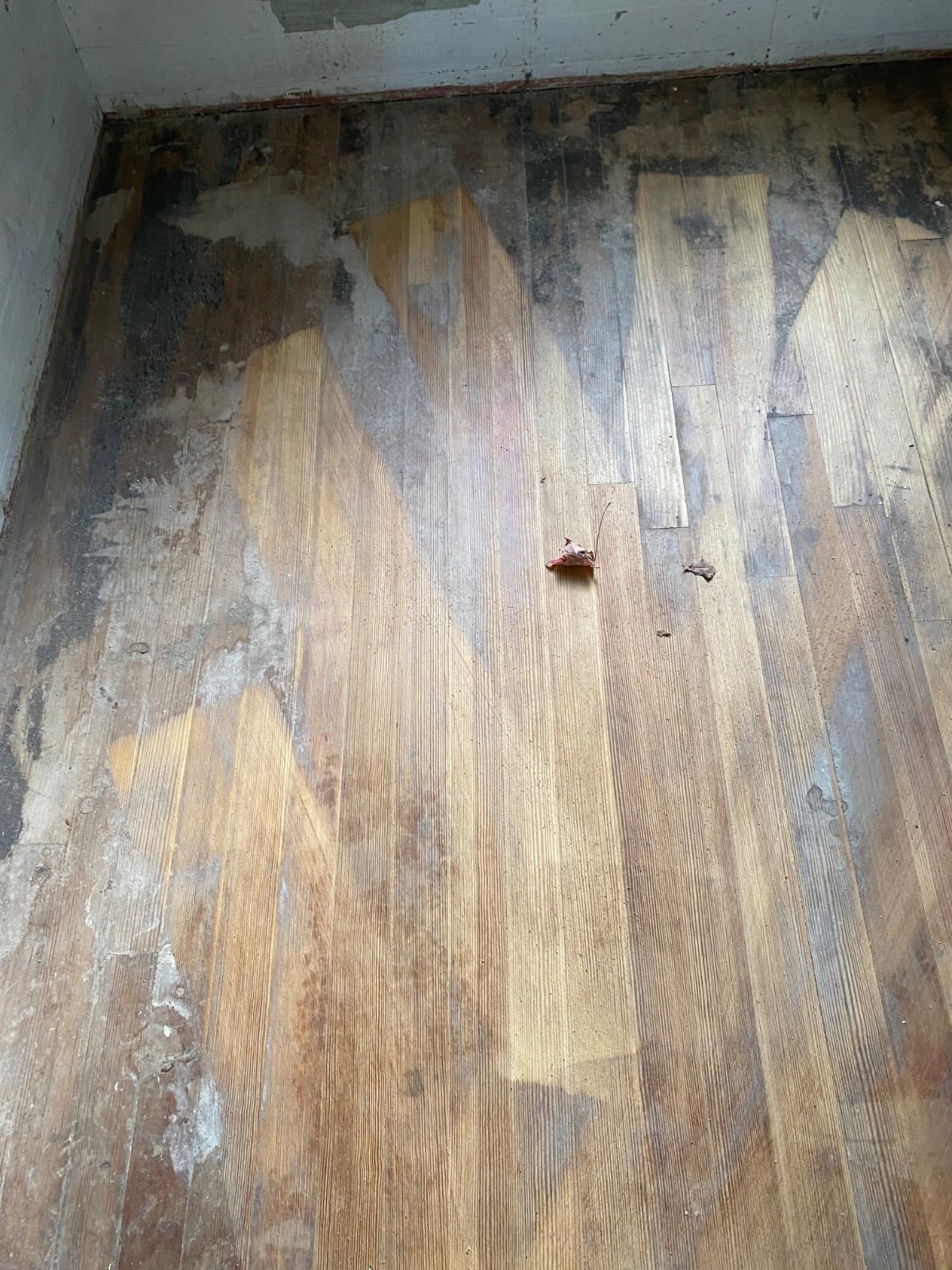
This first photograph tells the story.
The old kitchen flooring had heavy glue and buildup across the surface, along with areas where previous materials had apparently covered the wood for years.
This isn't the kind of floor where you simply make one pass with a sanding machine and suddenly have clean wood.
Old adhesive can be particularly difficult because it loads up abrasives and can prevent the sanding equipment from cutting properly. With an older pine floor, we also have to pay attention to how much material we're removing.
The objective wasn't to make a 140-year-old floor look like brand-new lumber.
It was to uncover and preserve as much of the original flooring as reasonably possible.
Discovering What Was Underneath
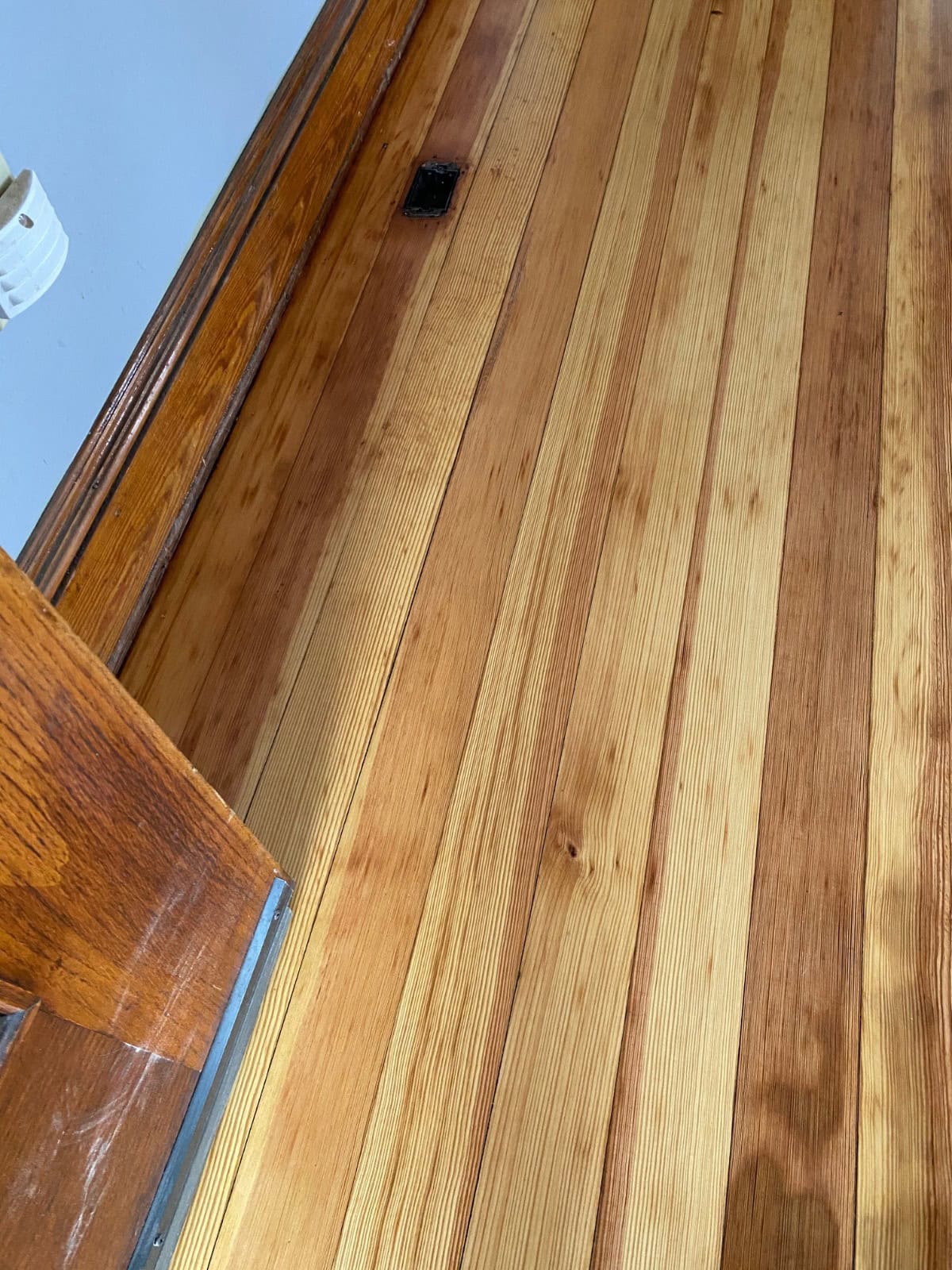
As we worked through the old coatings and contamination, the personality of the floor began to emerge.
What had looked dark, dirty and nearly beyond saving started showing the grain and color variation of the old pine underneath.
We believe this was yellow pine, possibly material sourced from the region many decades ago. With a home of this age, we don't claim to know the exact origin of the lumber, but it is precisely this older material that makes restoration projects interesting.
You can't go to a flooring supplier and duplicate 140 years of history.
This closer photograph is one of my favorites from the project because it shows what was hiding underneath.
The long grain lines, changes in color and occasional imperfections are exactly what give an old pine floor its character.
With an antique floor, those variations shouldn't necessarily be treated as something that needs to disappear.
They are part of the house.
Early American Stain Brought the Rooms Back Together
Once the difficult sanding and preparation were completed, we needed to decide how to finish the old pine.
The owner wanted the property cleaned up for sale, but we also didn't want to make these historic floors look out of place with the original woodwork and architectural details throughout the house.
We chose an Early American stain.
The color gave the pine warmth and helped bring together the natural variation between boards while still allowing the grain to remain visible.
That was particularly important in this home. Trying to make every board exactly the same color would have taken away much of what made the old floor interesting in the first place.
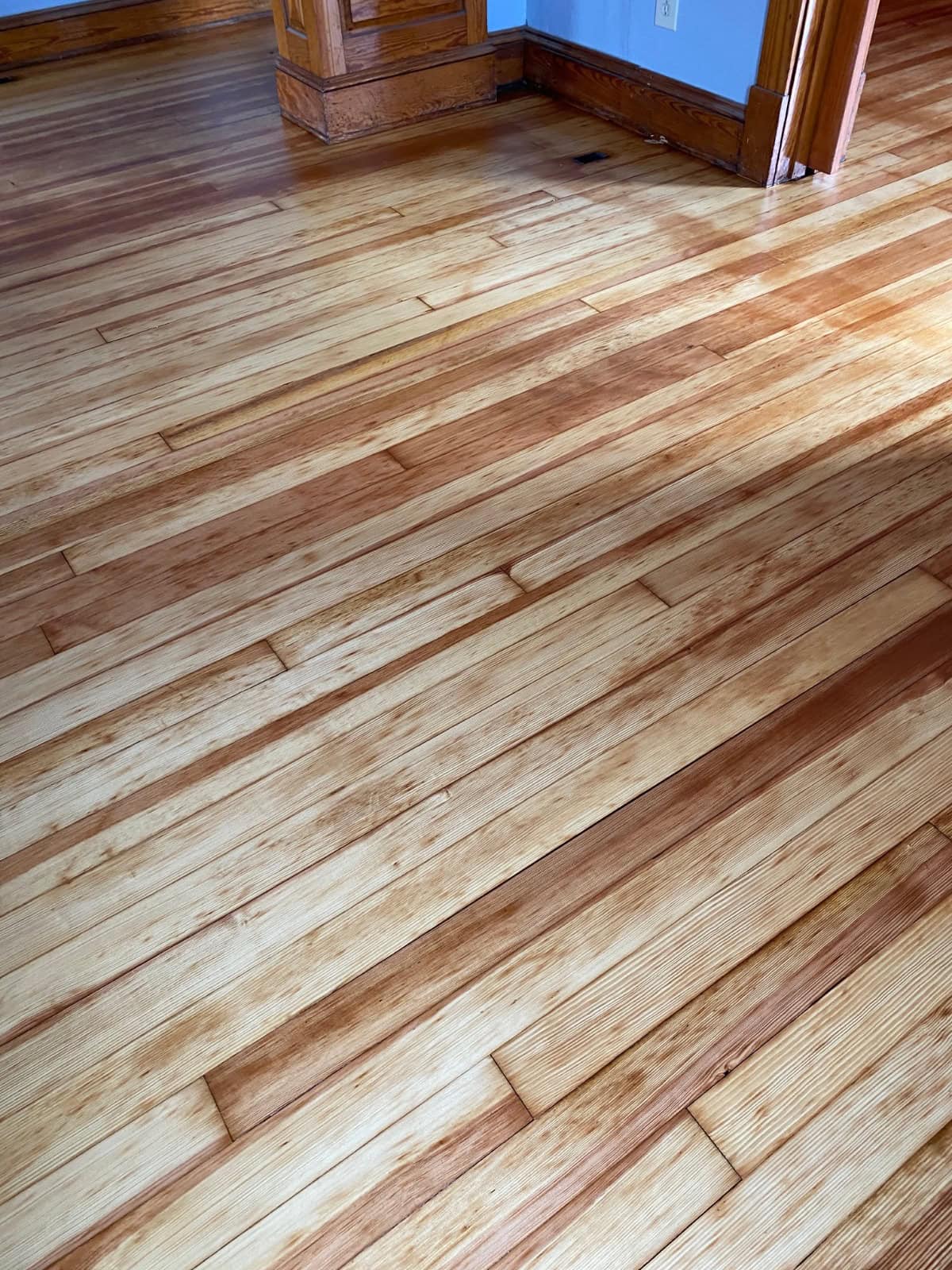
The Kitchen Floor After Restoration
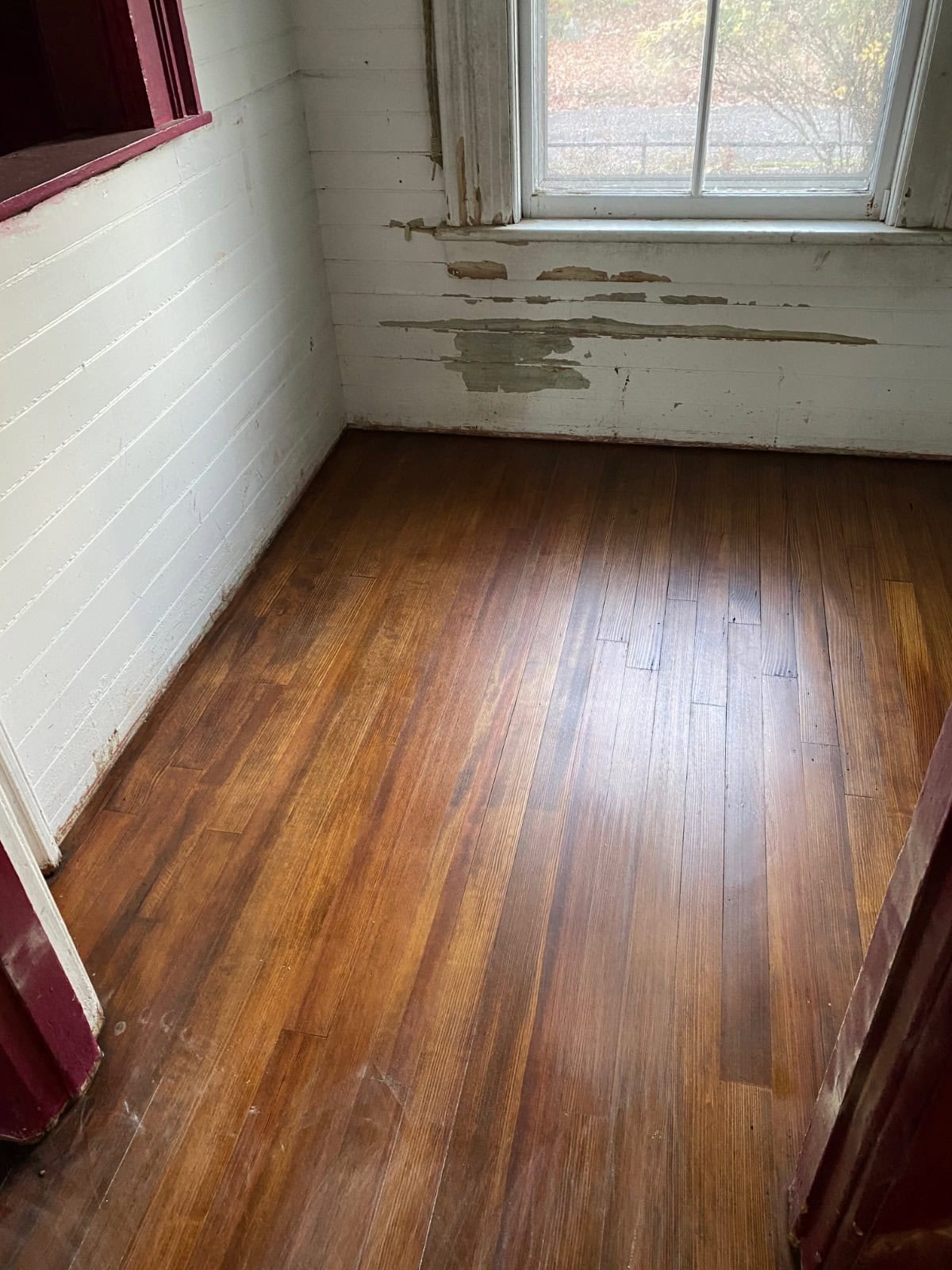
This is where the before-and-after comparison becomes powerful.
Look back at Picture 1 and then look at this photograph.
The first picture showed a floor that many people might assume needed to be torn out. After the sanding and refinishing process, it once again looked like part of the original home.
We didn't erase its age.
We brought the old wood back to a condition where its age became an asset rather than something that made the house look neglected.
Preparing an Older Enfield Home for the Real-Estate Market
This project also demonstrates why hardwood floor refinishing can make such a noticeable difference when preparing a house for sale.
The owner was getting this rental property ready to put on the market. We also met with the realtor during the process.
When the realtor saw the finished floors, the reaction was extremely positive. In the realtor's opinion, restoring the hardwood substantially improved how the property would present to potential buyers and could help the home's marketability and perceived value.
That's an important distinction—we wouldn't promise that refinishing automatically adds a specific dollar amount to a home's selling price.
But when buyers walk into an older home, original hardwood floors can be one of its most memorable features.
They have to be able to see them.
Bringing Back the Character of a 140-Year-Old Home
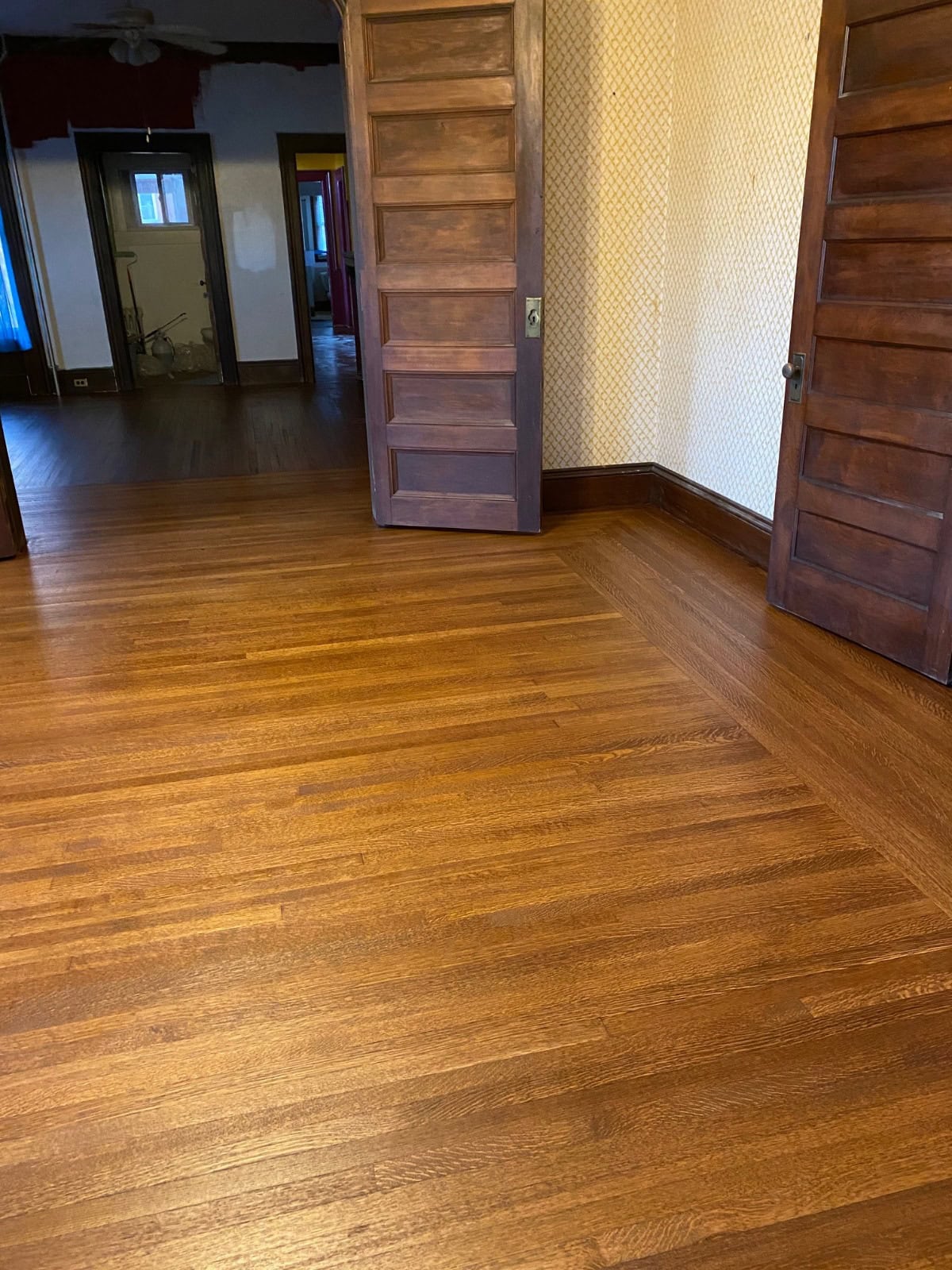
This final photograph puts the restoration into context.
The original doors, substantial wood trim and older architectural details tell you immediately that this isn't a new house.
The flooring should look like it belongs there.
The finished color complements those existing wood tones while allowing the floor to remain visibly old wood rather than trying to imitate a newly manufactured floor.
That's one of the things we enjoy most about restoring old hardwood floors in Connecticut.
Every house gives you something different to work with.
Hardwood Floor Refinishing in Enfield, Connecticut 06082
Enfield and the Hazardville area contain homes from many different periods, including older properties with hardwood flooring that may have been covered, neglected or refinished several times during their lives. Public listings in the North Maple/Hazardville area likewise show historic homes dating well back into the 1800s, reinforcing just how much older housing stock exists in this part of town. Zillow
At Patrick Daigle Hardwood Flooring, projects like this are why we don't automatically assume an ugly old floor needs to be replaced.
We first look at what's there.
Can it be sanded?
Can the contamination be removed?
Is there enough usable wood remaining?
Can repairs be made?
And most importantly, is the old floor worth saving?
In this Enfield home, the answer was yes.
The owner was extremely satisfied with the finished project, and the realtor's reaction reinforced what we were already seeing: the refinished floors had changed the presentation of the house.
What began as worn, dirty old pine—including a kitchen floor covered with difficult glue and buildup—ended as one of the property's strongest original features.
For a roughly 140-year-old floor, that's a pretty good second life.