
Hardwood Floor Refinishing in Glastonbury, CT: From Raw Wood to a Beautiful Stained Finish
If you've ever watched an old hardwood floor being completely sanded and refinished, you know something pretty remarkable happens.
The floor doesn't simply go from “old” to “new.”
It goes through several dramatically different appearances before you see the final result.
We're currently refinishing hardwood floors in a home in Glastonbury, Connecticut, and this project is a perfect example of what homeowners can expect when choosing a new stain color and having their floors professionally sanded and refinished.
At Patrick Daigle Hardwood Flooring, Inc., we've been working with hardwood for four generations, with our family's flooring history dating back to 1927. Today, from our Manchester location, we serve Glastonbury, Hartford County and communities throughout Connecticut.
We're also proud to be ranked #1 in Hartford County by BusinessRate.
But Today, let's talk about the wood.
It Starts With Something Surprisingly Simple: Raw Wood
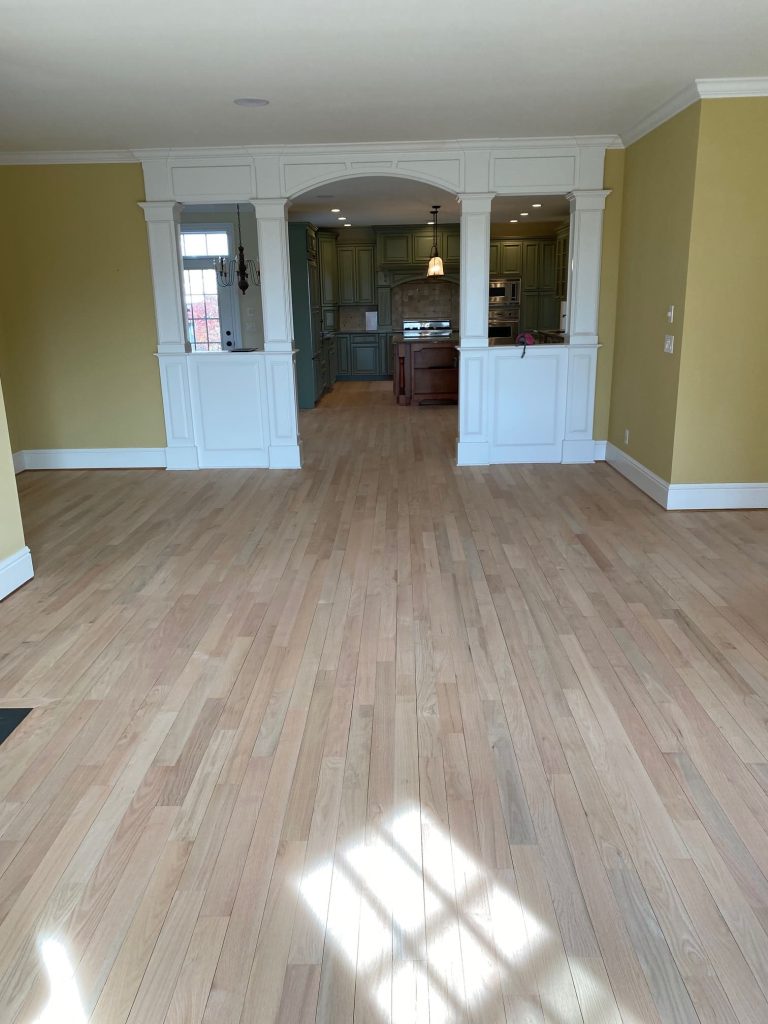
When we begin sanding an older hardwood floor, we're removing years of finish, stain, scratches, discoloration and wear until we reach the bare wood underneath.
This is one of our favorite stages of a refinishing project.
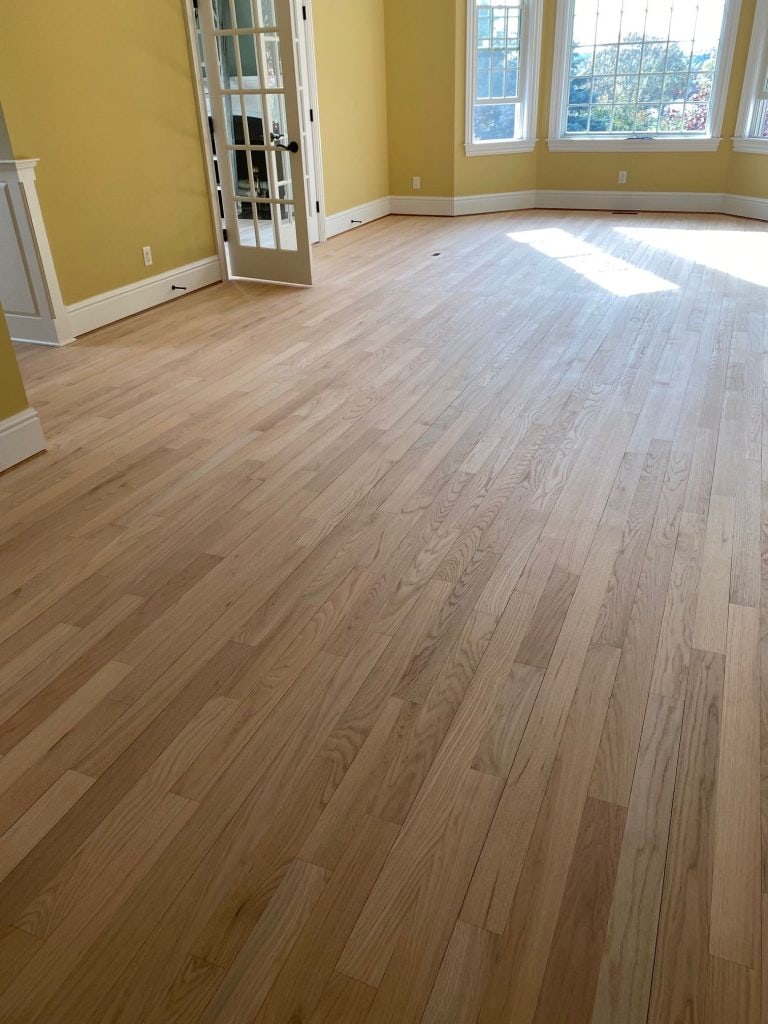
Once an old oak floor has been properly sanded, homeowners are often amazed at how light it becomes. What may have been a dark brown, golden or orange floor for decades can suddenly have a beautiful whitish-tan, pale natural appearance.
That's your hardwood without stain or finish hiding its natural character.
The National Wood Flooring Association (NWFA) describes a complete sand-and-refinish as sanding the floor back to raw wood and notes that this is an ideal opportunity to change the color of a hardwood floor.
And that's exactly where the fun begins.
Then Comes the Stain — And Don't Be Surprised by What Happens
Choosing a hardwood floor stain is exciting because this is when the homeowner begins to see the personality of the new floor.
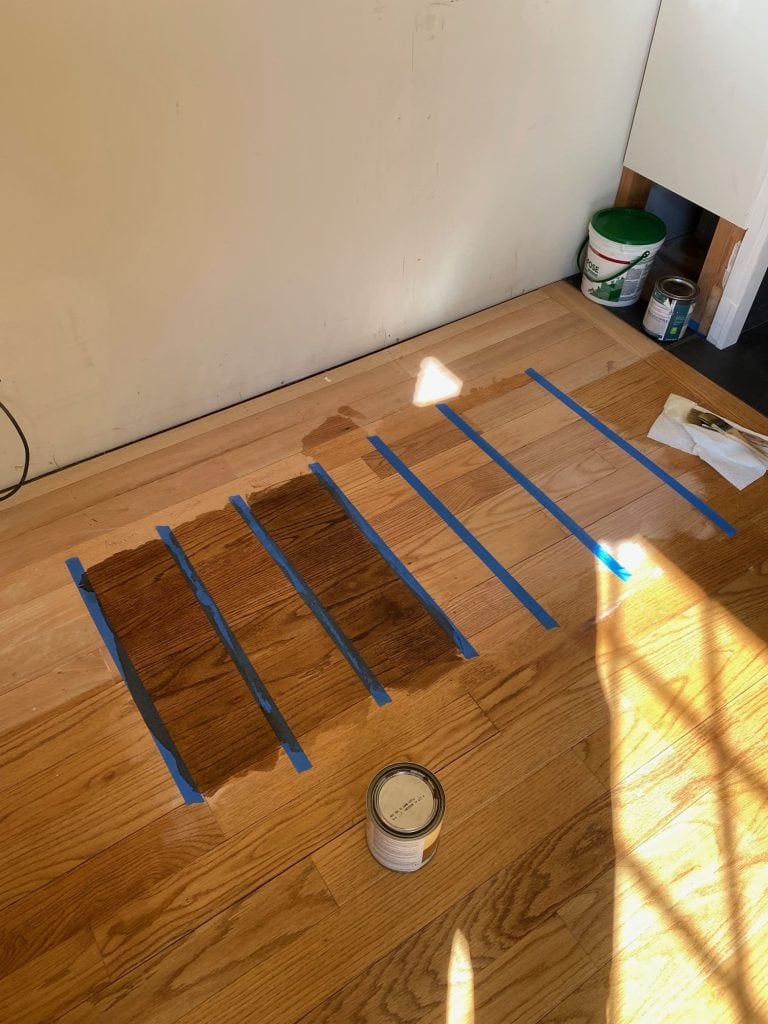
When stain first touches freshly sanded wood, the change can be dramatic.
The color initially appears dark, rich and intense. The grain jumps out. The homeowner may look at it and think, “Wow — that's dark!”
Then the stain begins to dry.
And the floor changes again.
As it dries, the color can become lighter and more muted. Different boards and grain patterns absorb stain differently, so the floor may temporarily look somewhat uneven, blotchy or washed out compared with the rich color you saw when the stain was first applied.
Don't panic. And don't judge the finished floor yet.
You're looking at one stage of a multi-step finishing process.
Wood is a natural material. Individual boards have different grain patterns, densities and natural coloration. Those variations are part of what makes a genuine hardwood floor beautiful.
The final depth and richness haven't arrived yet.
Here Comes the Finish — And the Color Changes Again
This is the stage homeowners love to watch.
Once the stain has dried properly and we're ready for the finishing system, that first application begins bringing the floor back to life.
The stain suddenly develops more depth, richness and definition.
But the final appearance also depends greatly on which finishing system you've selected.
Oil-Based Finish: Warmer, Richer and Deeper
An oil-based finish typically adds an amber tone to the floor.
That ambering can make a stained hardwood floor appear deeper, warmer and somewhat darker than the dried stain looked by itself.
If you're looking for that traditional rich hardwood appearance—the kind many people associate with classic Connecticut homes—an oil-based finish can produce a beautiful result.
Water-Based Finish: Clearer and Closer to the Selected Color
A water-based finish behaves differently.
Quality water-based finishes are generally much clearer and add considerably less amber coloration. The finish still brings depth and life back into the stained floor, but it tends to preserve more of the stain's original color character.
That's an important distinction when we're helping a homeowner choose between finishing systems.
Neither is automatically “better.”
They're different looks.
The right choice depends upon the wood, stain color, desired appearance, lifestyle and finish system being used.
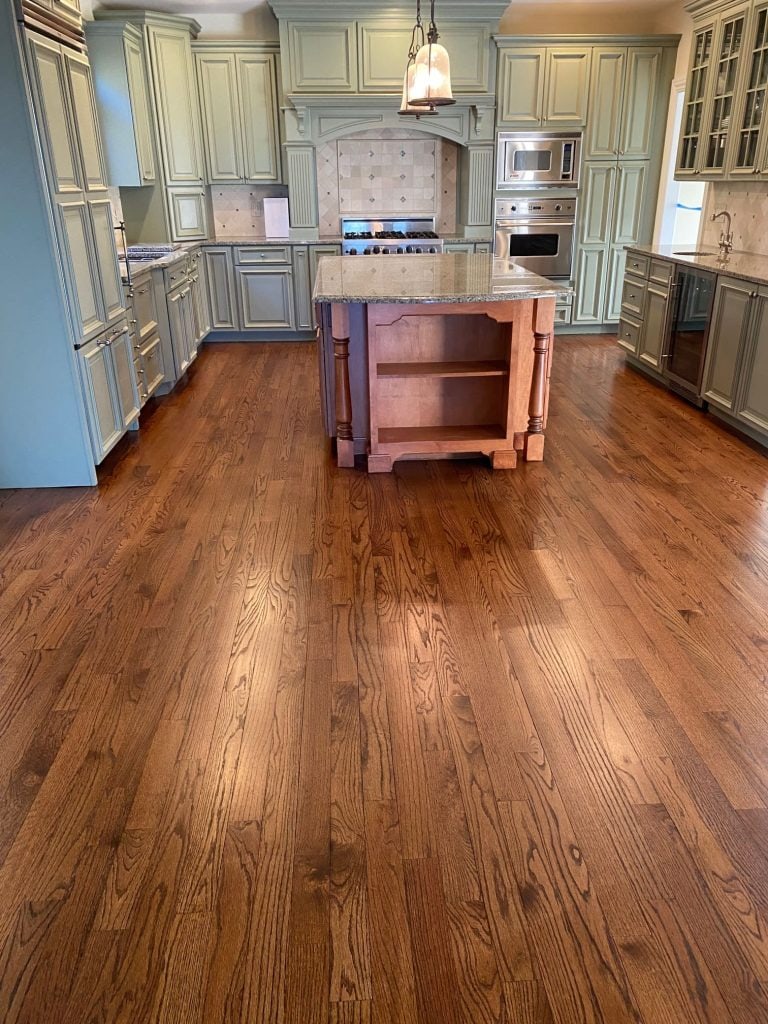
Why Does My Floor Feel Slightly Rough After the First Coat?
Here's another part of hardwood floor refinishing that homeowners don't always expect.
After that first coat dries, we're not finished.
The floor can have a slight texture to it. That doesn't mean anything has gone wrong.
Before subsequent coats are applied, we perform the appropriate intercoat preparation or abrasion required for the finishing system.
This is detailed work.
The main floor area is carefully prepared, but there are also areas where machines simply cannot do everything.
Along walls and perimeter areas, around stairs, near transitions and in detailed areas, we're working carefully by hand.
We're not sanding your newly finished floor back down to bare wood.
We're preparing the previous coat appropriately for the next application while addressing minor surface texture and imperfections.
Then the floor must be carefully cleaned before the next coat is applied.
It's one of those steps homeowners may never think about—but it's an important part of producing a professional site-finished hardwood floor.
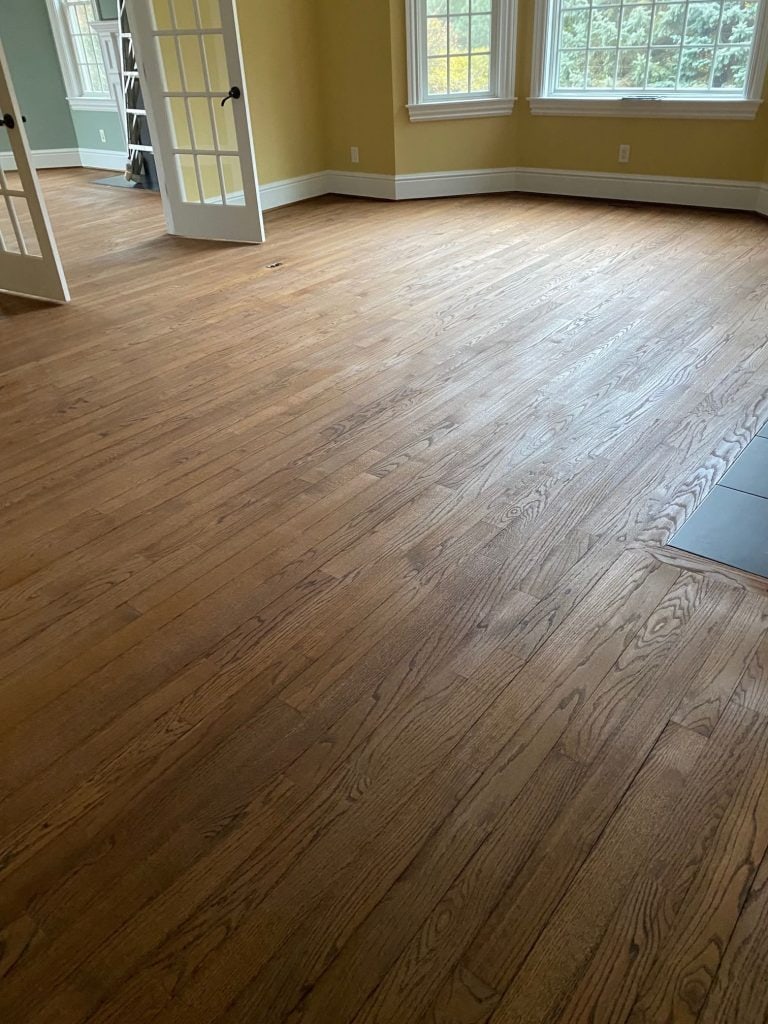
How Many Coats Do We Apply?
Our coating schedule depends upon the finish system and the manufacturer's requirements.
With the oil-based systems we commonly use, we typically apply two finish coats.
With our water-based systems, we typically use three coats as part of the finishing process.
But here's something we've learned from generations of working with hardwood:
More finish isn't automatically a better-looking floor.
We want your hardwood floor to look like wood.
You should still be able to appreciate its grain, texture, board variation and natural character.
A beautiful hardwood floor shouldn't look like a piece of plastic sitting underneath a thick film.
The goal is to build an appropriate protective finish system while preserving the appearance that made you choose real hardwood in the first place.
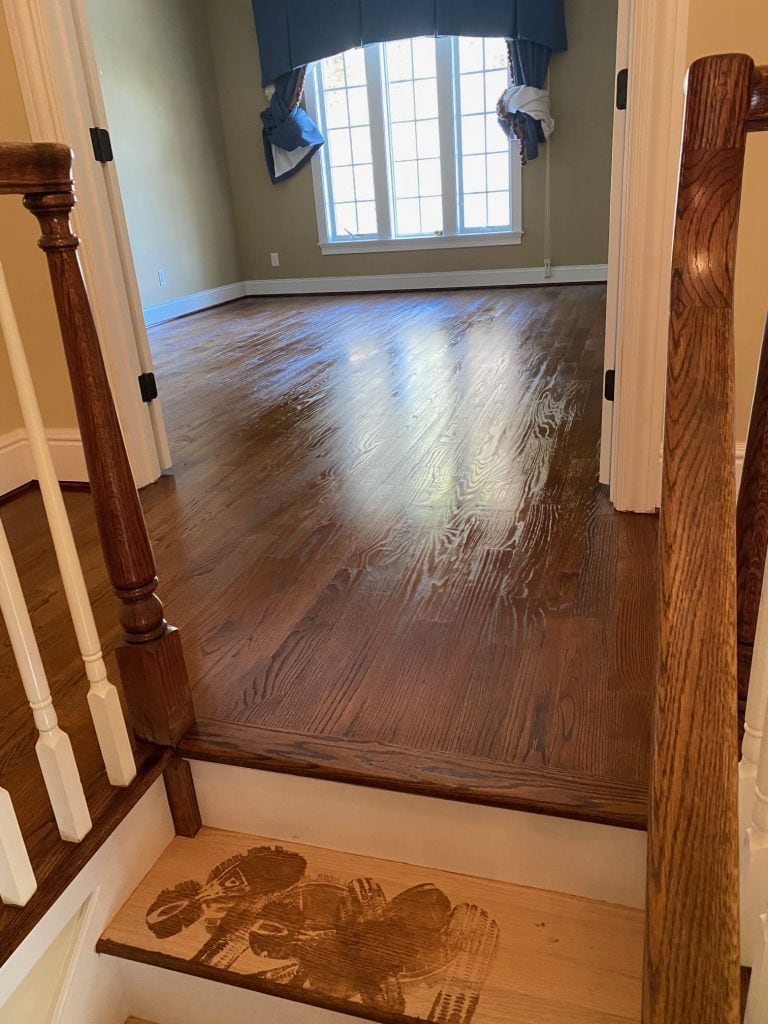
From Glastonbury Raw Wood to the Finished Floor
That's what makes this current Glastonbury hardwood floor refinishing project so interesting.
We're watching the floor travel through every stage:
Old finish → professional sanding → bare natural wood → fresh stain → dried stain → first finish coat → intercoat preparation → final finish.
At almost every stage, the homeowner is looking at a different floor.
That's why experience matters when choosing a stain.
You have to understand not only what a stain sample looks like, but what that color is going to do on your particular wood and how the selected finishing system will influence its final appearance.
The color you see immediately after staining isn't necessarily the color you'll have when the job is complete.
And the pale raw wood you see after sanding isn't where we're stopping.
It's all part of the transformation.
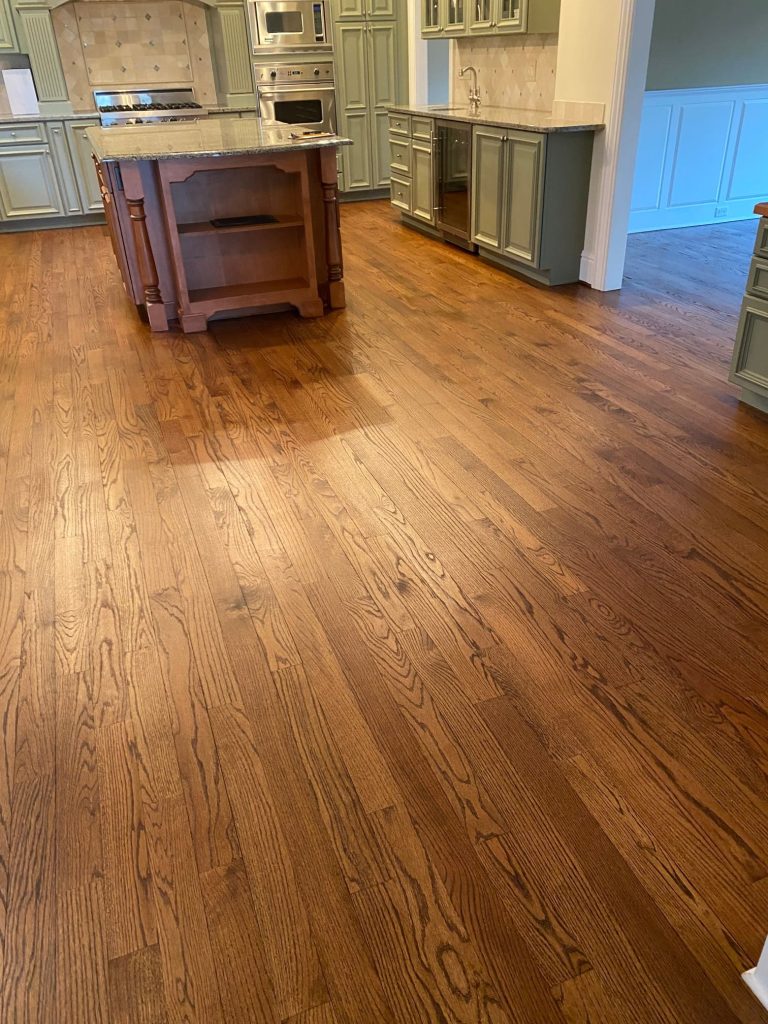
Four Generations of Hardwood Flooring — Right Here in Connecticut
Patrick Daigle Hardwood Flooring, Inc. represents four generations of hardwood flooring craftsmanship, with our family's history in the trade dating back to 1927.
Our Connecticut operation has been serving homeowners for decades from Manchester, and Today we work throughout Glastonbury, Hartford County and communities across Connecticut.
We're proud to be a member of the National Wood Flooring Association and to combine generations of hands-on experience with Today's professional sanding, staining and finishing systems.
We're also extremely proud to be ranked #1 in Hartford County by BusinessRate.
But ultimately, rankings don't finish hardwood floors.
Craftsmanship does.
It's knowing how to sand an older floor properly.
It's understanding how wood accepts stain.
It's knowing that a freshly stained floor is going to change as it dries.
It's understanding what an oil-based finish will do to the color compared with a water-based finish.
And it's taking the time between coats to properly prepare the floor, work the edges and detailed areas, and build a finish that protects the hardwood without hiding the natural beauty underneath it.
Thinking About Refinishing Your Hardwood Floors in Glastonbury, CT?
If your hardwood floors are scratched, yellowed, worn, outdated—or you simply don't like their current color—don't assume they need to be replaced.
Sometimes there's an entirely different floor waiting underneath the old finish.
Professional hardwood floor sanding and refinishing can expose the natural wood again and give you an opportunity to choose a completely different color and appearance for your home.
If you're in Glastonbury, Manchester, Hartford County or elsewhere in Connecticut, Patrick Daigle Hardwood Flooring would be happy to walk you through the process—from the first sanding pass to the final coat.
Because one of the most exciting things about an old hardwood floor is seeing what it can become.
Patrick Daigle Hardwood Flooring, Inc.
Fourth-Generation Hardwood Flooring Craftsmanship Since 1927
Ranked #1 in Hartford County by BusinessRate
Serving Glastonbury, Manchester, Hartford County and communities throughout Connecticut