

Hardwood Floor Refinishing in Granby, CT: Toning Down Red Oak With DuraSeal Weathered Oak
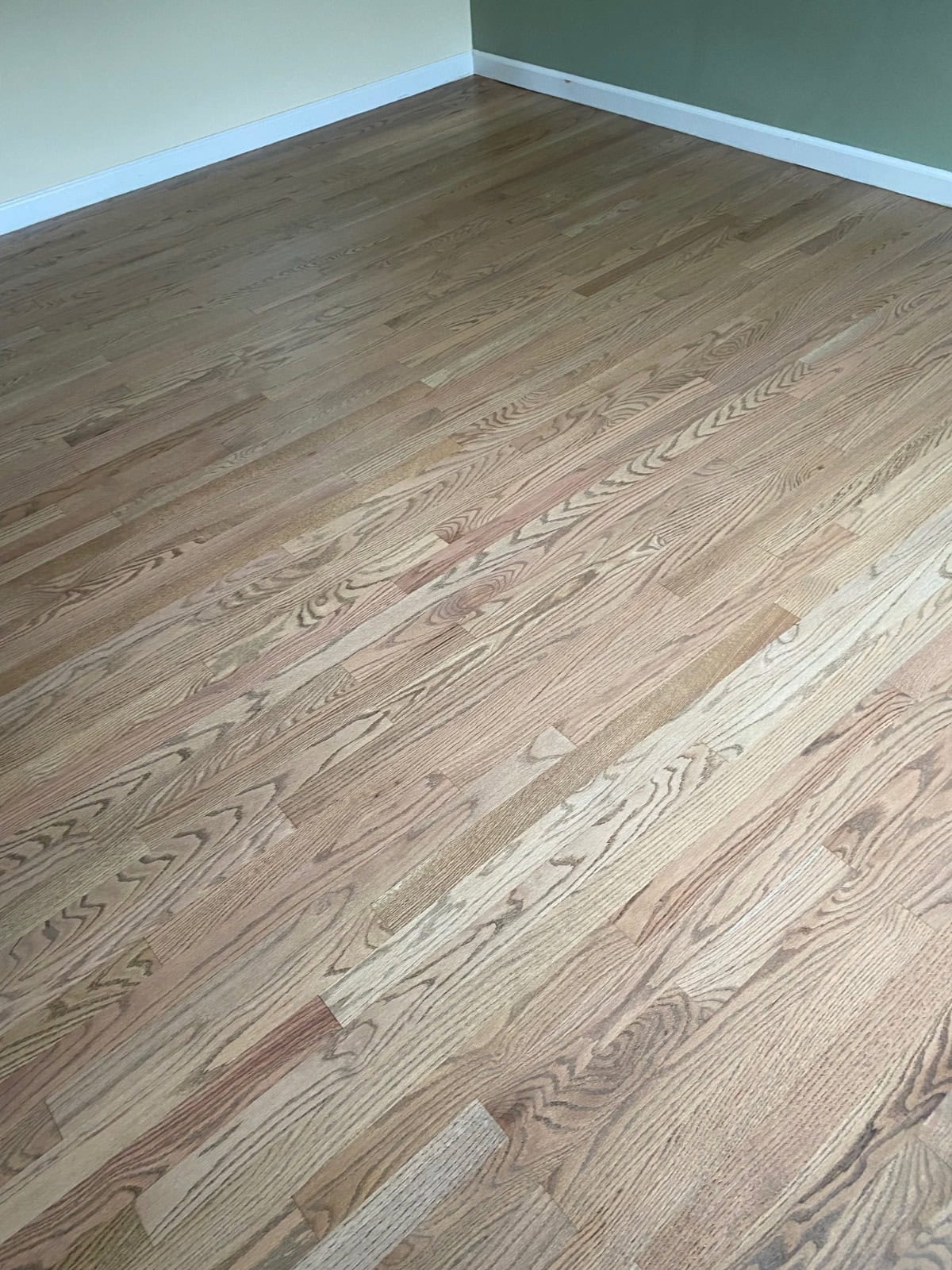
Sometimes one stain color can completely change the personality of a hardwood floor.
That was the case with a recent hardwood floor refinishing project in a condominium in Granby, Connecticut 06035.
The condo had traditional red oak hardwood flooring, but the homeowners were looking for something different. They wanted an updated appearance and didn't want the natural red and pink tones of the red oak to dominate the finished floor.
For this project, we went with DuraSeal Weathered Oak stain followed by a Bona water-based finishing system.
And it's amazing what Weathered Oak can do on red oak.
The stain helped soften and disguise a lot of the red coloration while still allowing the natural grain and character of the oak to remain visible.
The result was a completely different-looking floor—and a great example of why choosing the right stain can sometimes transform a room just as much as installing a new floor.
Red Oak Doesn't Always Have to Look Red
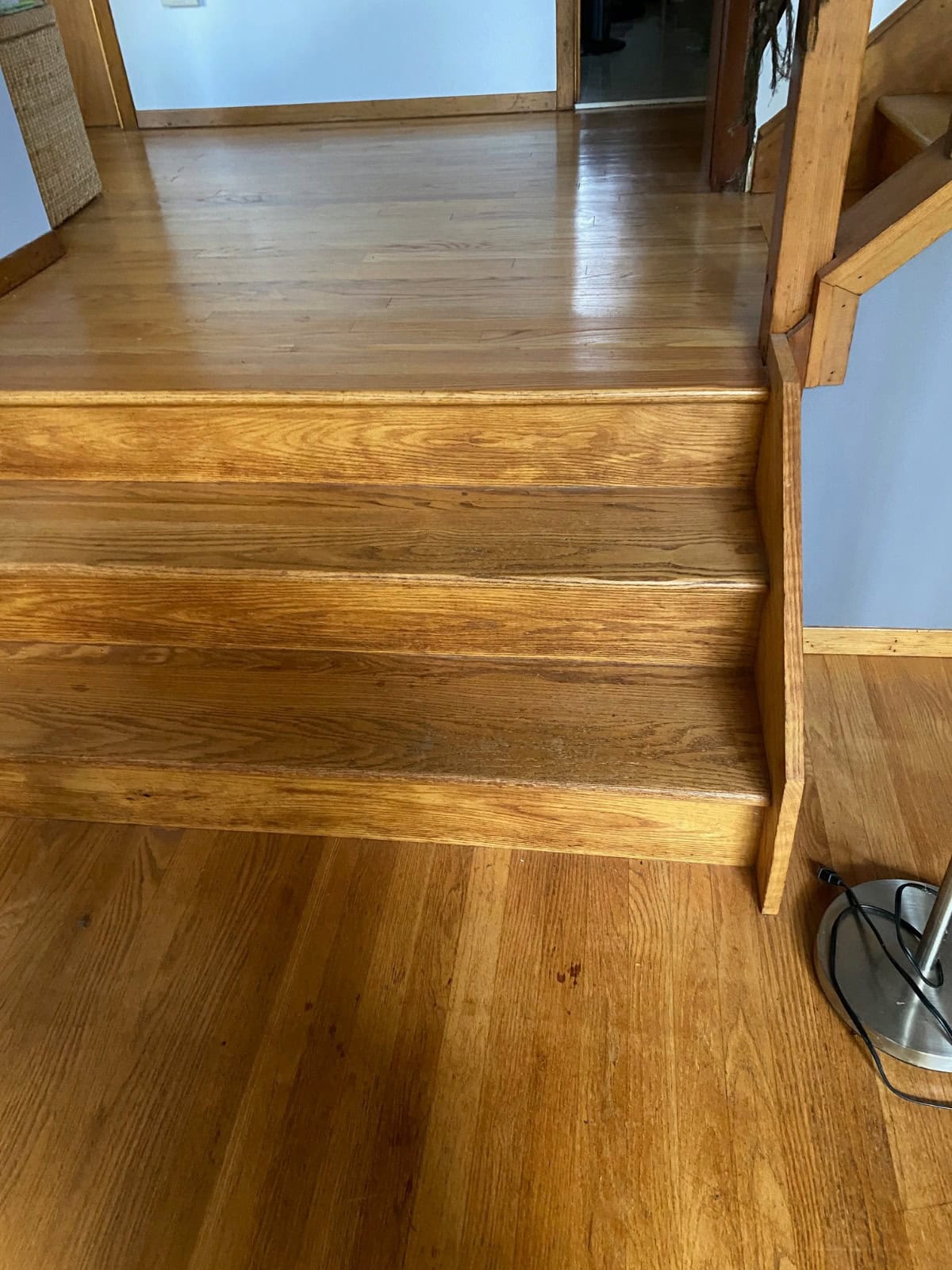
Red oak has been one of the most popular hardwood flooring species in Connecticut homes for generations.
It's durable, beautiful and has a strong, recognizable grain.
But there's one characteristic some homeowners today want to minimize:
The red.
Freshly sanded red oak naturally contains pink and reddish undertones. If you apply a clear finish, you're generally going to continue seeing some of those natural colors.
That's perfectly fine if that's the appearance you want.
But what if it isn't?
That's where stain selection becomes interesting.
DuraSeal Weathered Oak on Red Oak
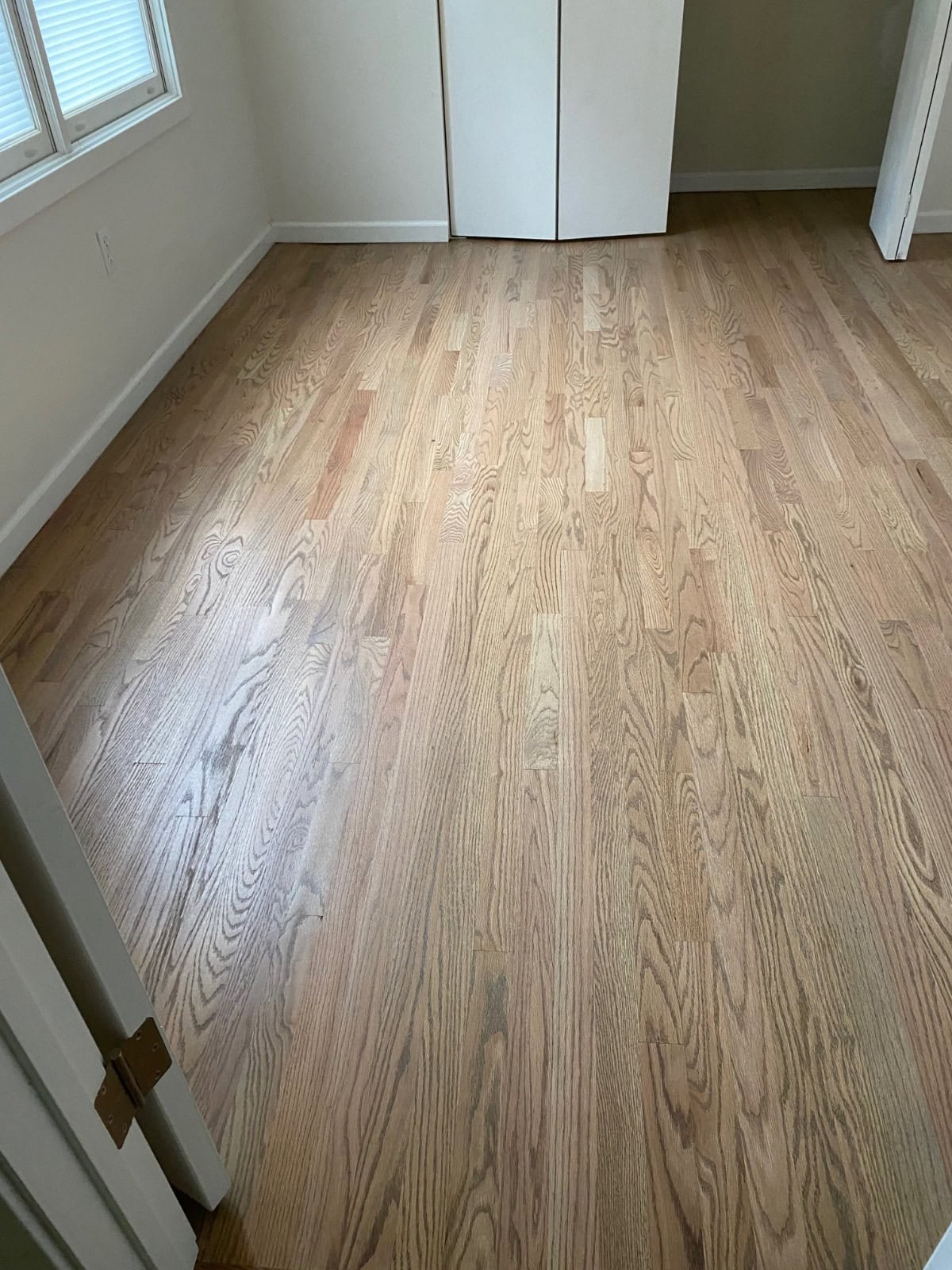
For this Granby condominium, DuraSeal Weathered Oak turned out to be a great choice.
Weathered Oak has a cooler, more muted character than many traditional brown or golden stains.
When we applied it to this particular red oak floor, it helped neutralize a substantial amount of the red appearance.
It didn't magically turn red oak into white oak—and we would never tell a homeowner that it does.
It's still red oak.
But the finished appearance can be surprisingly different.
Less red. Less pink. More muted. More updated.
That's what made this project so interesting.
What Happens After the Stain Matters Too
The stain is only part of the color equation.
What goes over it also matters.
After staining the floor with DuraSeal Weathered Oak, we used a Bona water-based finishing system.
That was an important choice because we didn't want to spend all that effort toning down the red and then introduce a strong amber coloration with the finish.
Waterborne finishes generally allow us to maintain a clearer appearance than traditional oil-based polyurethane.
That allowed the Weathered Oak color to remain much closer to what the homeowners had selected.
The combination worked beautifully.
A Condo Can Feel Completely Different After the Floors Change
This was a fun project because the transformation affected much more than the hardwood itself.
Floors make up one of the largest visual surfaces in a home.
Change their color and suddenly everything around them can look different.
Walls can appear different.
Cabinetry can look different.
Furniture can look different.
Natural light can interact with the room differently.
In this Granby condo, taking the red oak in a cooler Weathered Oak direction gave the entire space a fresher and more updated feeling.
Same red oak. Completely different personality.
Don't Choose a Hardwood Stain From a Picture Alone
This project also demonstrates why we don't like homeowners making an important stain decision based solely on a photograph they saw online.
Weathered Oak doesn't look identical on every floor.
Neither does Natural.
Neither does Golden Oak.
Neither does any other stain.
The underlying species matters.
The age of the wood matters.
The grain matters.
The sanding matters.
And lighting inside the house can make a tremendous difference.
That's why whenever color is particularly important, seeing a sample on the actual flooring is extremely valuable.
A color that looks gray in one photograph might appear warmer on your floor.
A color that dramatically reduces the red in one red oak floor may react somewhat differently on another.
The floor itself gets the final vote.
Working in Granby, Connecticut 06035
Granby is one of those Connecticut towns where you can go from a condominium or newer residential development to historic houses, farms and miles of protected open space in a matter of minutes.
Granby Center itself has a historic district running along Salmon Brook Street, extending toward the Town Green. The town's planning documents describe the Granby Center Historic District as an important part of the community's historic character.
Nearby is Salmon Brook Park, one of the town's major recreation areas.
Granby's municipal maps also identify Holcomb Farm, Ahrens Park, Salmon Brook Park and the Granby Municipal Complex as prominent town facilities and destinations.
Enders Falls and Granby's Open Space
One of Granby's best-known natural destinations is Enders State Forest.
The forest began with a 1,500-acre gift from the Enders family and has since grown to nearly 2,100 acres. Its streams, cascades and waterfalls make it one of the more recognizable outdoor areas in this part of Connecticut.
There's also McLean Game Refuge, another major piece of protected land associated with Granby.
Then, over in West Granby, there's Holcomb Farm, another familiar local destination surrounded by the rural landscape that gives this part of the Farmington Valley its character.
Granby Center and Local Shopping
Granby isn't a town dominated by big malls, and I think that's actually worth keeping authentic in the article.
Around Granby Center, residents have smaller shopping areas such as Granby Village on Hartford Avenue, along with businesses running along Salmon Brook Street and the Routes 10/202 corridor.
There's also Old Mill Pond Village farther north on Salmon Brook Street, with its distinctive old-mill setting and specialty shops.
That combination of a traditional town center, local shopping, historic homes and large areas of open space gives Granby a very different feel from some of the more developed Hartford-area communities.
Granby, North Granby and West Granby
Our hardwood flooring work takes us throughout the Granby area, including:
Granby 06035
North Granby 06060
West Granby 06090
We also regularly work in neighboring Simsbury, East Granby, Suffield, Windsor Locks, Bloomfield, Canton and Avon.
These are communities where you find everything from older traditional hardwood floors to newer homes and condominiums—and homeowners today have far more finishing choices than they did a generation ago.
Four Generations of Hardwood Flooring Experience
At Patrick Daigle Hardwood Flooring, Inc., our family's hardwood flooring tradition dates back to 1927.
The Connecticut business began around 1972, and today we're the fourth generation carrying on that flooring tradition.
We're proud members of the National Wood Flooring Association (NWFA) and combine generations of hands-on hardwood flooring experience with today's professional dust-containment sanding equipment, custom staining techniques and modern waterborne finishing systems.
We're also proud to be ranked #1 in Hartford County by BusinessRate, along with our recognition as #1 in Connecticut.
And this Granby condominium is a good example of why having different finishing options matters.
Not every homeowner wants traditional golden or reddish hardwood.
Sometimes they want something cooler and more subdued.
Want to Tone Down Red Oak in Granby, CT?
If you have red oak flooring in Granby 06035, North Granby 06060 or West Granby 06090 and you're tired of seeing the red or pink tones, don't automatically assume you need to replace your hardwood.
The right stain may give you an entirely different look.
On this Granby condo project, we professionally sanded the existing red oak and applied DuraSeal Weathered Oak stain, followed by a Bona water-based finishing system.
The Weathered Oak did a surprisingly good job of toning down the natural red in this particular floor.
The finished result was cooler, cleaner and much more updated.
It was still red oak.
It just didn't have to look so red anymore.
And that's what made this Granby project such an interesting transformation.