
Hardwood Floor Refinishing in Manchester, CT: Uncovering Beautiful Walnut Parquet Hidden Under an Old Finish
Every once in a while, we walk into a house and know immediately:
This is going to be an interesting project.
That's exactly what happened at a beautiful and very unique home tucked away in the woods off Blue Ridge in Manchester, Connecticut.
When we first looked at the hardwood floors, we knew they had been refinished before. Years ago, someone had apparently taken on the sanding and refinishing themselves and applied a lower-quality water-based finish.
Unfortunately, the results hadn't been kind to the wood.
The old coating left the floor looking flat, tired and lifeless. In fact, the finish obscured so much of the natural character that we weren't completely certain what species of wood we were looking at.
We knew there was something special underneath.
We just had to uncover it.
What Kind of Wood Is Underneath That Old Finish?
That's one of the fascinating things about restoring older hardwood floors.
What you're looking at before sanding isn't necessarily what you actually have.
Years of coatings, discoloration, wear and previous refinishing can dramatically change the appearance of wood.
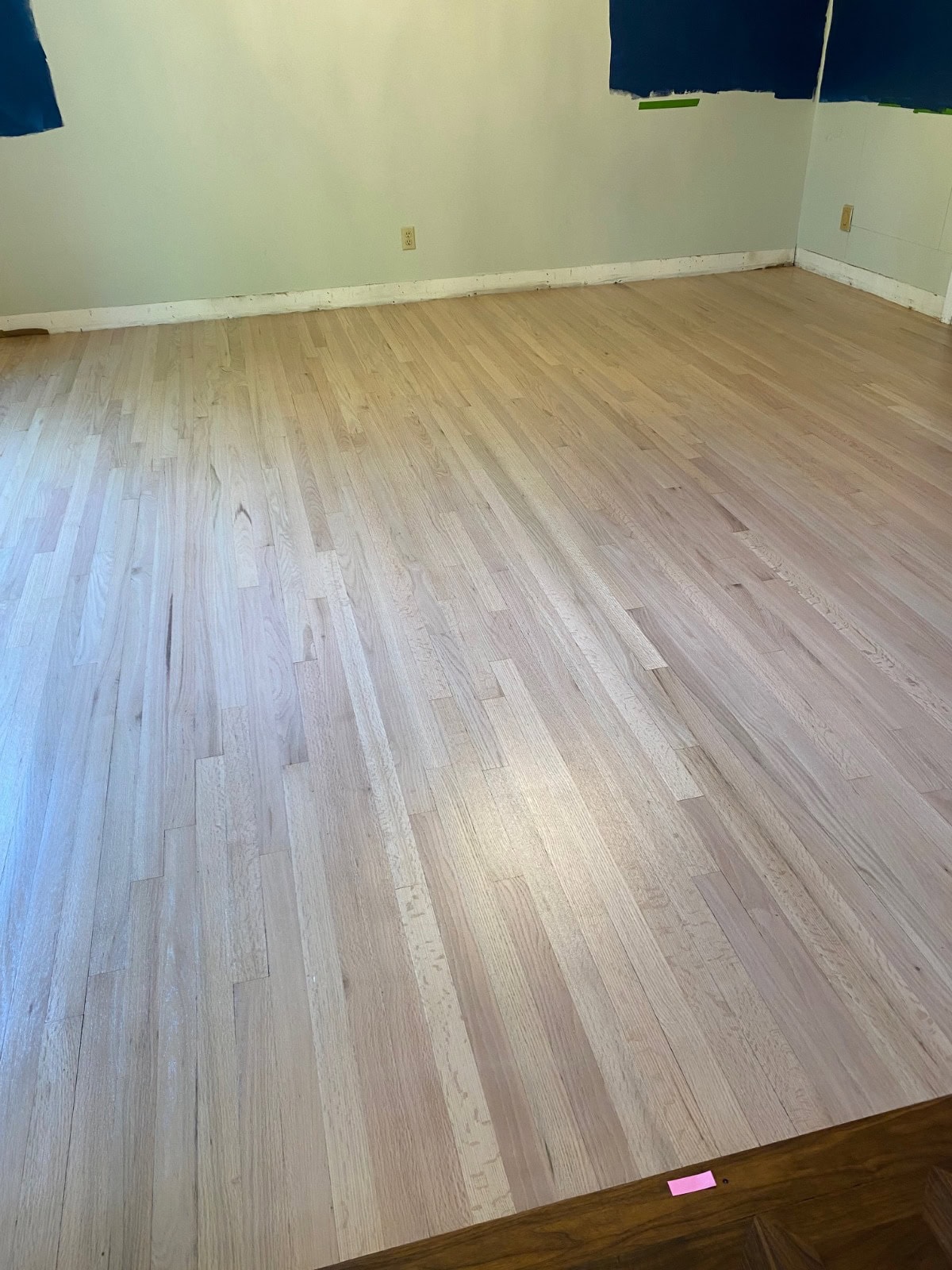
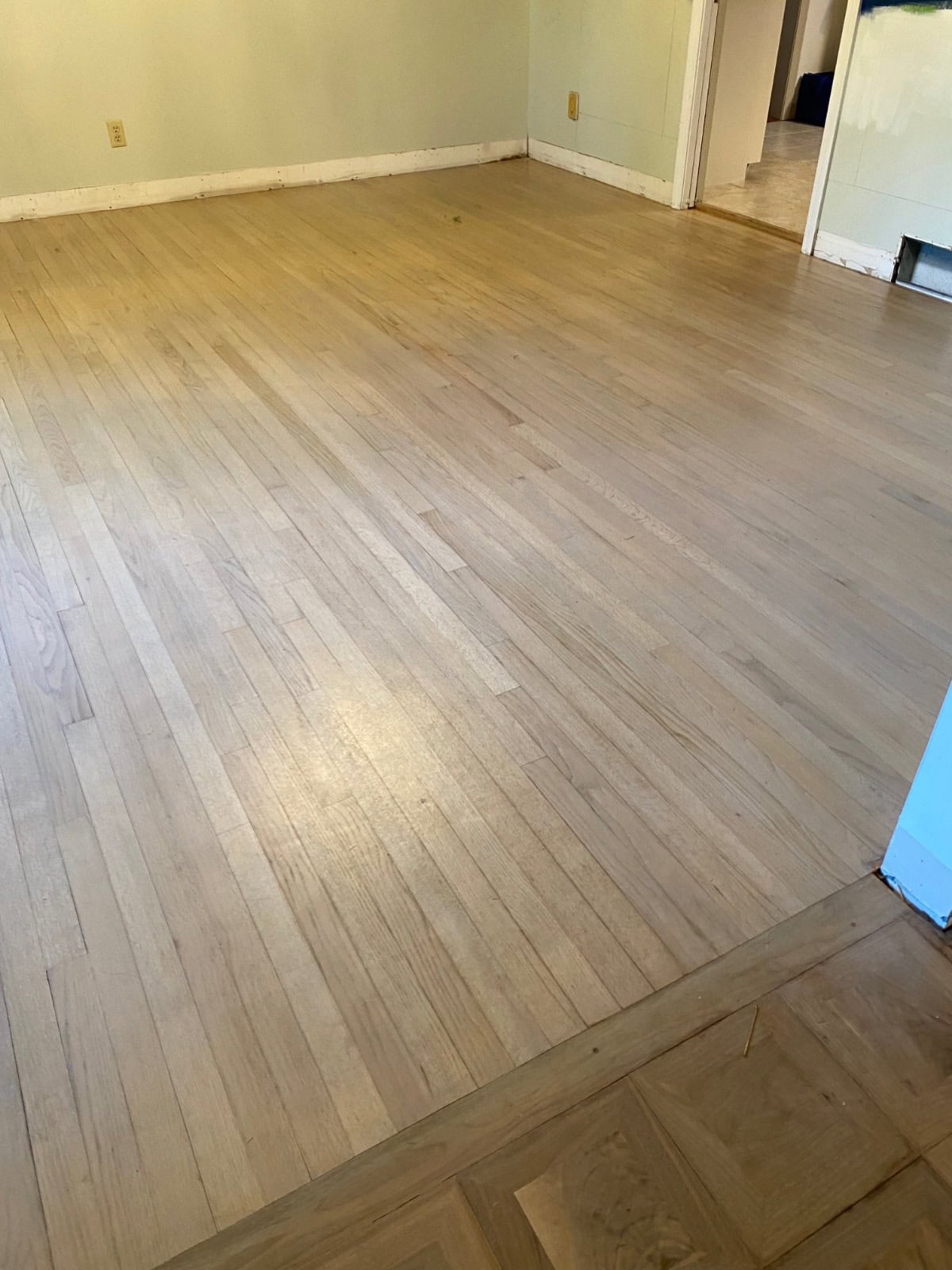
Once we began sanding away the old water-based finish, this Manchester floor started telling us its story.
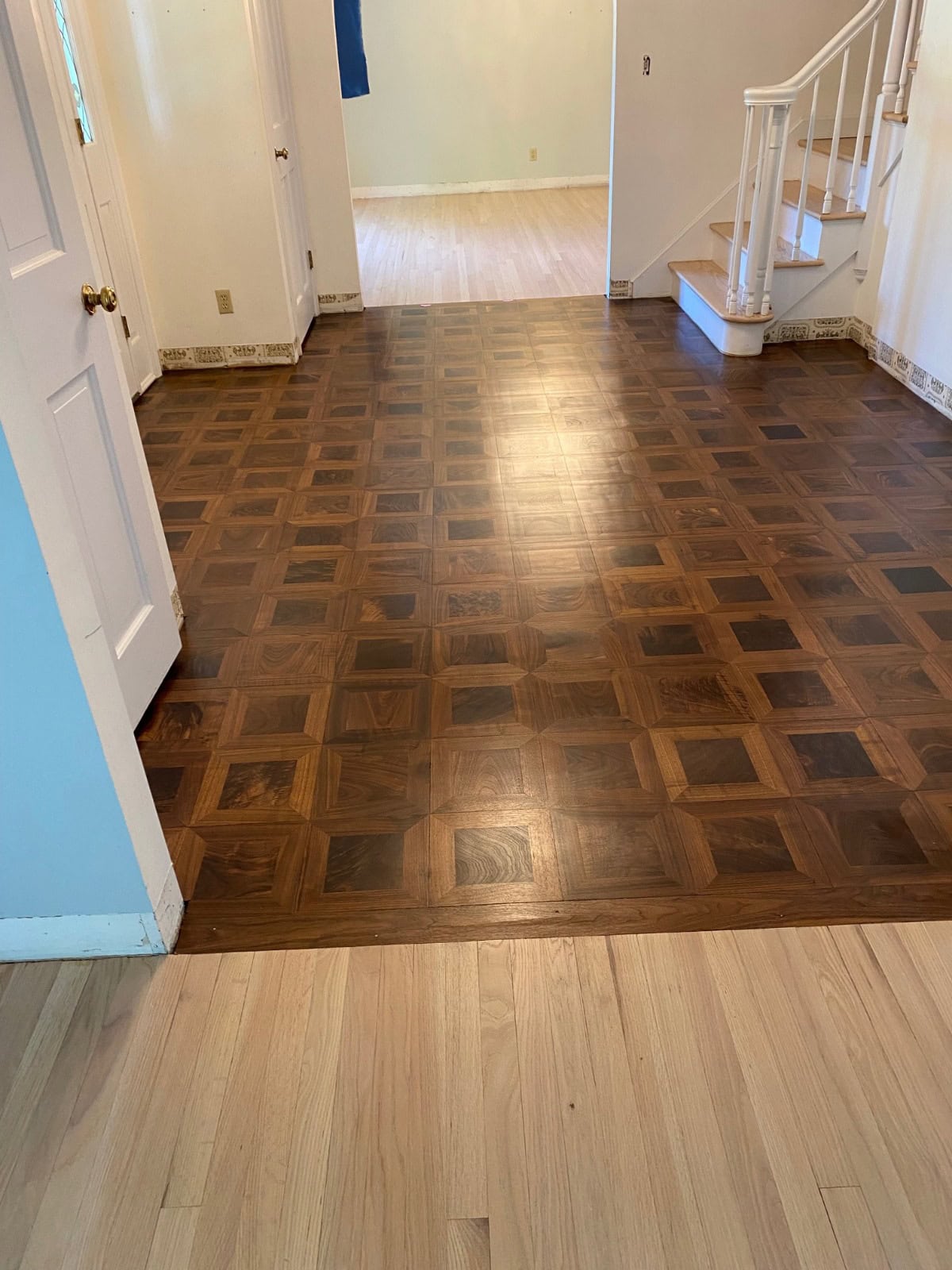
Underneath was a beautiful Monticello-pattern walnut parquet floor.
Now we were excited.
Walnut has a richness and depth that can be spectacular when properly finished, and the geometric Monticello parquet pattern gave this foyer an architectural character that deserved to be seen.
After sanding an area back to raw wood, we put down a finish sample.
The difference was incredible.
On one side was the old, dull water-based appearance.
On the other was the walnut coming back to life.
Same floor. Completely different appearance.
Bringing the Walnut Back With an Oil-Based Finish
For the Monticello walnut parquet in the foyer, the homeowners chose a traditional oil-based finishing system with three coats.
That choice transformed the floor.
Oil-based finishes add warmth and amber character, and on this walnut the effect was beautiful.
The natural variations became richer.
The grain developed depth.
The individual pieces within the Monticello pattern became much more pronounced.
Suddenly, the parquet wasn't disappearing into the room anymore.
It became one of the features of the house.
This is exactly why we don't believe every hardwood floor should receive the same finish.
Different species respond differently.
Different homes call for different appearances.
And sometimes the best way to make an unusual hardwood floor beautiful again is to let the character of the wood determine the direction.
One House — Two Very Different Finishing Systems
Here's where this Manchester project gets even more interesting.
The homeowners didn't want the same appearance everywhere.
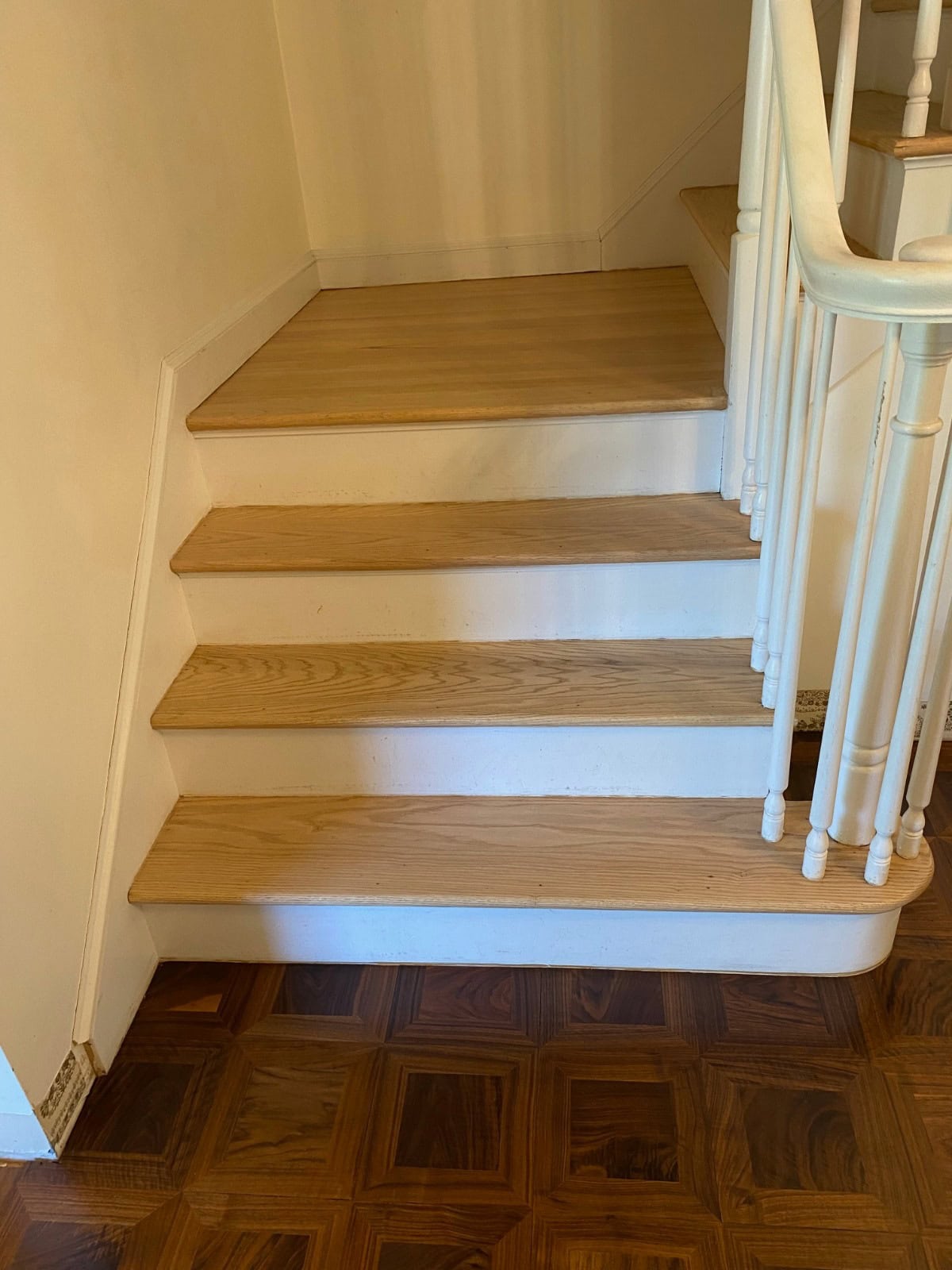
While we gave the walnut parquet foyer the warmth of an oil-based system, the stairs, living room and dining room went in a much lighter direction.
For those areas, we used Bona NordicSeal, followed by one coat of Bona Mega and two coats of Bona Traffic HD.
NordicSeal is designed to give wood a lighter, Scandinavian-inspired appearance. Instead of introducing the amber character associated with an oil-based system, it helps create a cleaner and lighter visual direction.
So within the same house, we were able to demonstrate just how dramatically a finishing system can influence the appearance of hardwood.
Warm and rich in the walnut foyer.
Lighter and cleaner throughout the other living areas.
The objective wasn't to make every room identical.
It was to make the entire house work together.
Bringing the Walnut Back With an Oil-Based Finish
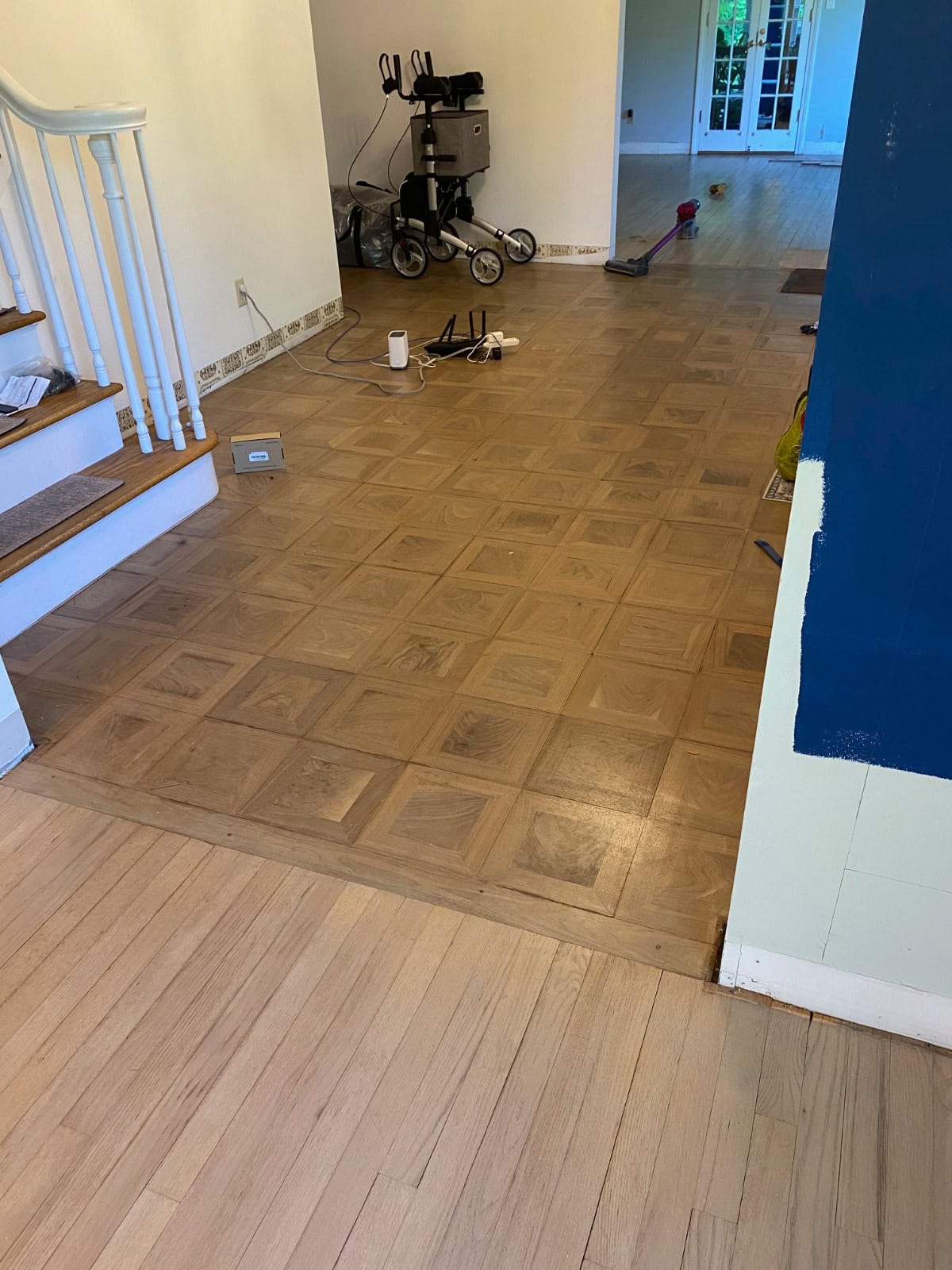
For the Monticello walnut parquet in the foyer, the homeowners chose a traditional oil-based finishing system with three coats.
That choice transformed the floor.
Oil-based finishes add warmth and amber character, and on this walnut the effect was beautiful.
The natural variations became richer.
The grain developed depth.
The individual pieces within the Monticello pattern became much more pronounced.
Suddenly, the parquet wasn't disappearing into the room anymore.
It became one of the features of the house.
This is exactly why we don't believe every hardwood floor should receive the same finish.
Different species respond differently.
Different homes call for different appearances.
And sometimes the best way to make an unusual hardwood floor beautiful again is to let the character of the wood determine the direction.
What Is Bona Traffic HD?
The homeowners also chose to upgrade the final protection in several areas to Bona Traffic HD.
Traffic HD is a professional two-component waterborne hardwood floor finish designed for demanding environments and high durability.
It's the kind of high-performance finish that can be used where floors receive substantial traffic, including commercial environments, but it can certainly be used in residential homes as well.
Do all residential floors require that level of finish?
Not necessarily.
That's something we're straightforward with our customers about.
A quality residential finishing system can provide excellent performance for many homes. Traffic HD is an upgrade that may make sense when a homeowner wants additional durability, has particularly demanding traffic conditions, or simply wants to invest in a higher-performance two-component system.
For this Manchester project, the homeowners decided that was the direction they wanted to go.
So that's what we built into the finishing system.
The Finish Should Complement the Wood — Not Hide It
One of the principles we come back to on project after project is simple:
A hardwood floor should still look like wood.
Whether we're working with walnut, red oak, white oak or maple, we want to see the character underneath the finish.
We don't believe in unnecessarily building coat after coat until a beautiful natural material begins looking like it's covered in plastic.
Proper sanding and preparation are critical.
The appropriate sealer matters.
Intercoat preparation matters.
And the finish needs to be applied according to the product system and conditions of the job.
That's particularly important when working with an architectural parquet pattern like this one.
Why Parquet Requires Experience
Parquet isn't the same as sanding conventional strip flooring.
With strip hardwood, the boards generally run in one primary direction.
In a Monticello parquet pattern, pieces of wood change direction throughout the design.
That means grain direction changes too.
Proper sanding requires understanding what the equipment is doing as it moves across those different pieces.
The National Wood Flooring Association (NWFA) provides professional standards and technical guidance covering sanding, finishing and hardwood floor restoration.
As NWFA members, we believe those industry practices should be combined with something equally important:
Hands-on experience.
We've been working with hardwood for generations, and unusual floors like this are exactly why that experience matters.
The Homeowners Couldn't Believe the Walnut
The best part came when the homeowners saw what had been hiding underneath that old finish.
They were thrilled.
The Monticello walnut parquet that had looked dull and almost unrecognizable now had warmth, depth and richness.
You could finally appreciate the pattern.
You could finally appreciate the walnut.
And you could see why somebody originally chose such a distinctive floor for this unique Manchester home.
That's one of the most rewarding things about hardwood floor restoration.
Sometimes we're not creating something new at all.
We're uncovering something beautiful that was there the whole time.
Four Generations of Hardwood Flooring Craftsmanship
At Patrick Daigle Hardwood Flooring, Inc., our family's hardwood flooring tradition dates back to 1927.
We're proud members of the National Wood Flooring Association (NWFA) and proud to be ranked #1 in Hartford County by BusinessRate, along with our recognition as #1 in Connecticut.
Manchester is also home territory for us.
From unique homes tucked into the woods to traditional neighborhoods and older properties throughout town, we've spent decades sanding, repairing, installing and refinishing hardwood floors throughout this area.
And our work takes us throughout the surrounding Connecticut communities, including East Hartford, Glastonbury, Vernon, South Windsor, Bolton and communities across Hartford County and beyond.
But regardless of the town, the philosophy remains the same.
Look at the wood.
Understand what the homeowner wants.
Choose the appropriate sanding and finishing system.
And don't assume an ugly old floor is an ugly piece of wood.
Have an Unusual Hardwood Floor in Manchester, CT?
If you have an older hardwood floor that's dull, orange, scratched, heavily coated or simply doesn't look like anything special anymore, don't assume replacement is the answer.
You may not even know exactly what's underneath that old finish.
This Manchester homeowner certainly didn't.
What appeared to be a tired old floor turned out to be a beautiful walnut Monticello parquet waiting to be uncovered.
A professional sanding revealed it.
The right finishing system brought it back to life.
And the finished result reminded us why, after four generations, we still enjoy doing this work.
Sometimes the most beautiful floor in the house is the one that's been hiding in plain sight.
Patrick Daigle Hardwood Flooring, Inc.
Fourth-Generation Hardwood Flooring Craftsmanship Since 1927
NWFA Member
Ranked #1 in Hartford County by BusinessRate
Serving Manchester, East Hartford, Glastonbury, Vernon, South Windsor, Bolton, Hartford County and communities throughout Connecticut