
Bringing Two Different Woods Together With a Rich Dark Stain in New Britain
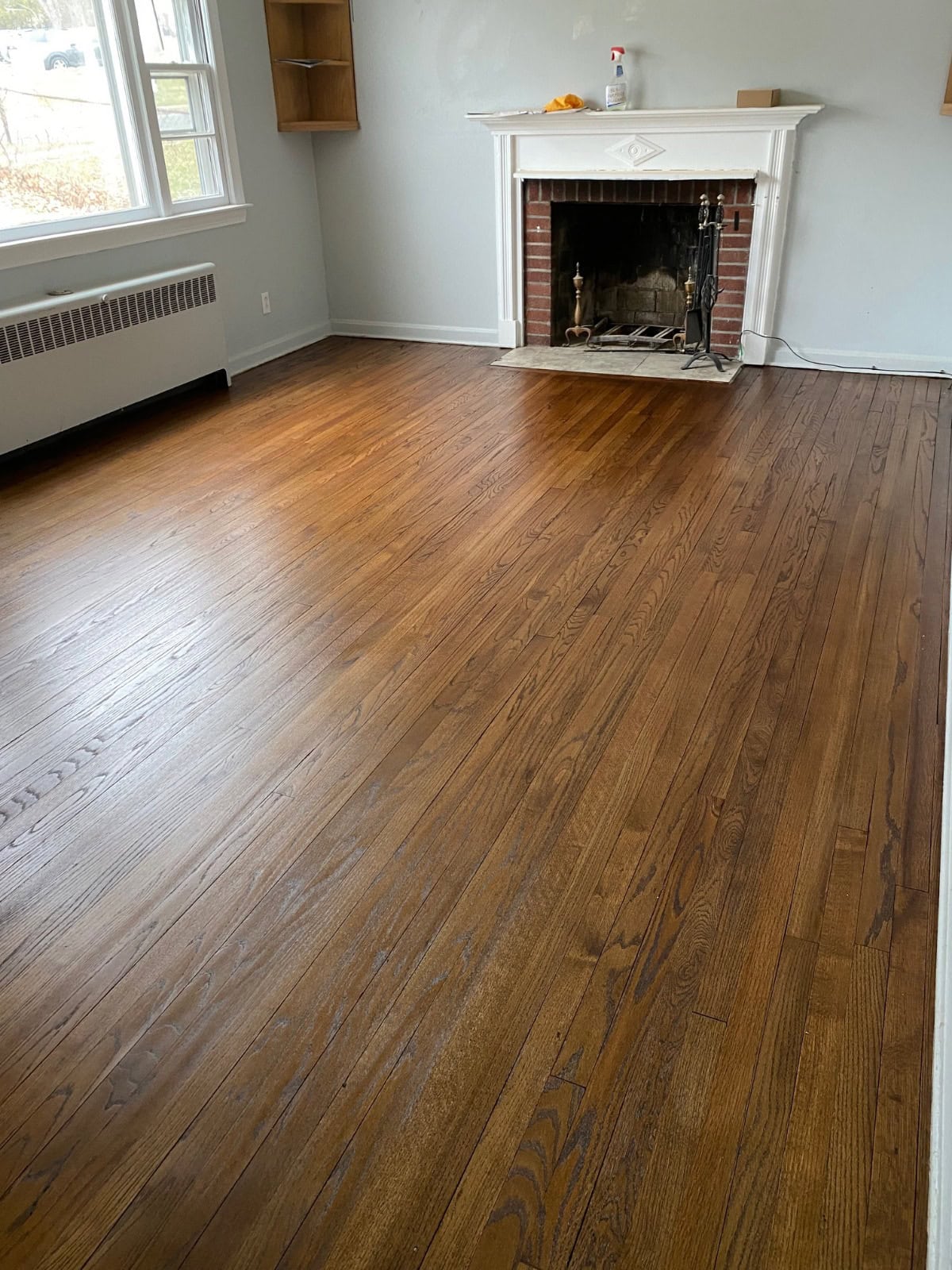
Not every hardwood floor gives you one species of wood and one straightforward surface to work with.
This recent hardwood floor refinishing project in New Britain, Connecticut was definitely one of the more challenging ones.
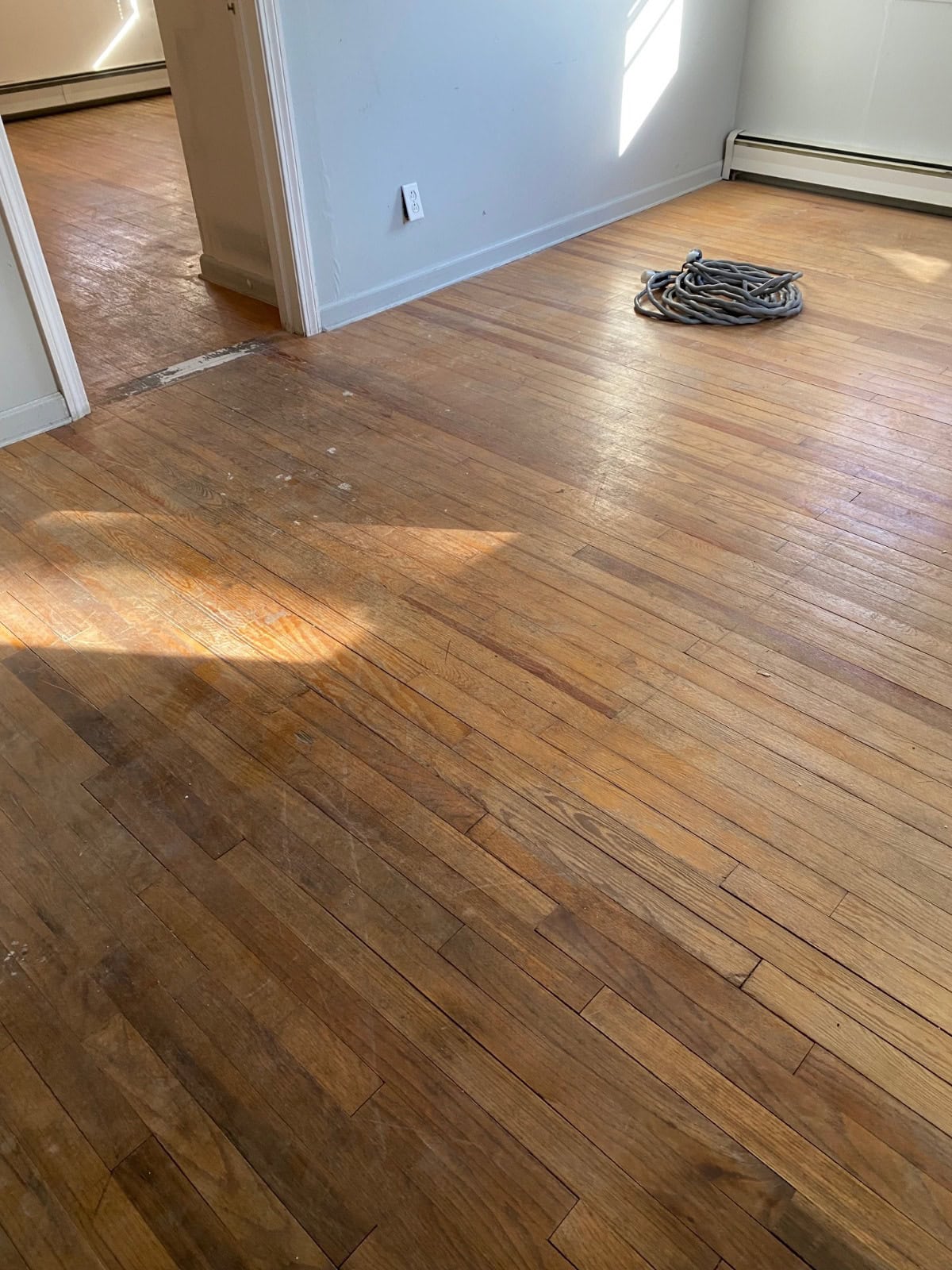
The floor had two different types of wood meeting in the middle of the room. That created an unusual sanding situation and an even more important finishing decision.
We needed to professionally sand both woods while dealing with the differences between them, then find a color that would help pull the entire floor together.
For this project, we went in a darker, more traditional direction with a DuraSeal stain similar to Early American, followed by oil-based polyurethane.
The finished floor had a beautiful richness and warmth—and the darker color helped bring two very different sections of flooring together visually.
Different woods. One room. One finished floor.
Two Woods Make Sanding More Difficult
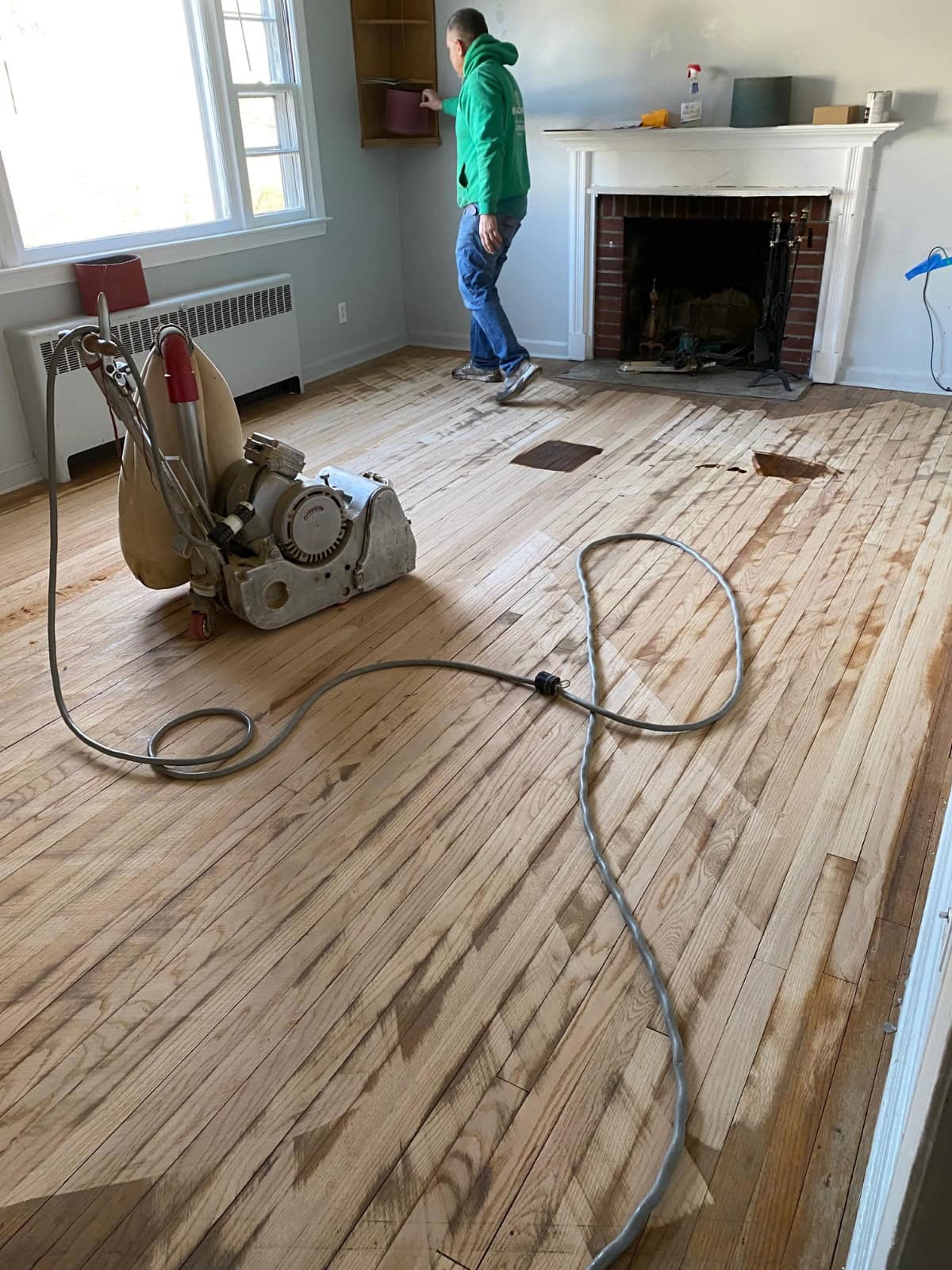
When two different wood species meet in the same floor, you can't necessarily treat them exactly the same.
Different species can vary in hardness, grain and the way they react to sanding.
That's where experience becomes important.
The goal isn't simply to get the old finish off as quickly as possible. We need to properly flatten and prepare the floor while maintaining control where the two woods come together.
This New Britain floor required a very difficult sanding process, but once we got everything properly prepared, we could turn our attention to color.
Using a Darker DuraSeal Stain to Pull It Together
We decided to go with a dark DuraSeal stain in the Early American direction.
That was a good choice for this particular project.
A darker stain can emphasize grain and add richness, but in this case it also helped create more visual continuity between the two different woods.
It didn't make them identical—and we wouldn't want to pretend that two different species are suddenly the same.
Instead, the color helped them work together.
We followed the stain with an oil-based polyurethane system, which added additional warmth and depth to the finished appearance.
The final result was rich, traditional and completely different from where we started.
Sometimes Darker Is Exactly the Right Direction
A lot of our recent projects involve homeowners trying to make hardwood lighter.
That's a very popular look today.
But that doesn't mean light is right for every house.
Sometimes a deeper Early American-type color fits the architecture, furnishings and personality of a room much better.
That's one reason we don't believe every hardwood floor should look the same.
Some floors look fantastic natural.
Some need a subtle stain.
Others come alive with a rich, darker color.
The right floor is the one that works in that particular home.
Hardwood Floor Refinishing in New Britain, CT
New Britain has a long history of craftsmanship and manufacturing, which makes it an interesting place for a project involving unusual woodwork.
Known historically as the “Hardware City,” New Britain became closely associated with manufacturing and companies such as Stanley Works. Today, that industrial history is preserved in places such as the New Britain Industrial Museum.
The city also has a tremendous variety of housing—from older neighborhoods and multifamily properties to larger traditional homes and newer residential areas.
That means we encounter plenty of interesting hardwood floors.
Walnut Hill Park and the New Britain Museum of American Art
One of New Britain's best-known landmarks is Walnut Hill Park on West Main Street.
Right nearby is the New Britain Museum of American Art, one of the city's major cultural landmarks.
New Britain also has Stanley Quarter Park, A.W. Stanley Park and Willow Brook Park, along with its historic downtown and neighborhoods surrounding Central Connecticut State University.
These are familiar parts of a city where we've been providing hardwood flooring services for many years.
Hardwood Floor Refinishing in New Britain, CT
If you have unusual hardwood flooring in New Britain, Connecticut 06051, 06052 or 06053, don't assume differences in wood species, old repairs or previous remodeling mean the entire floor has to be replaced.
Sometimes the solution is careful sanding and the right color.
On this New Britain project, we started with two different woods meeting in the middle of the floor.
It was a difficult sand.
But after properly preparing the wood, we applied a dark DuraSeal stain in the Early American family and finished it with oil-based polyurethane.
The deeper color brought warmth to the room and helped visually tie the two woods together.
Two different woods didn't have to become two different floors.
With the right sanding, color and finishing system, they could become one beautiful room again.