
She Wasn't Sure She'd Like a Lighter Floor — Until She Saw the Finished Result
Sometimes the biggest decision in a hardwood floor refinishing project isn't whether the floor can be sanded.
It's deciding what you want the floor to look like when we're finished.
That's where this project started for a homeowner named Jen in the Brookside neighborhood of Newington, Connecticut 06111.
Jen initially contacted us about sanding and refinishing several areas of hardwood flooring in her home. We were able to discuss the project and give her an initial idea of pricing over the phone, but choosing the finish was something we wanted to do together at the house.
So I went out to Newington, looked at the floors and stairs with her, and brought samples.
Her existing oak flooring had the darker, orange-honey appearance commonly associated with an older finish. There were worn areas, the stairs needed attention, and the hardwood was ready for refinishing.
But Jen wasn't necessarily looking to reproduce exactly what she already had.
She wanted to know her options.
And that led to a conversation that homeowners ask us about all the time:
Should we stay with a traditional oil-based appearance, or use a modern water-based finishing system and make the floors lighter?
MAKING THE DECISION BEFORE WE SANDED
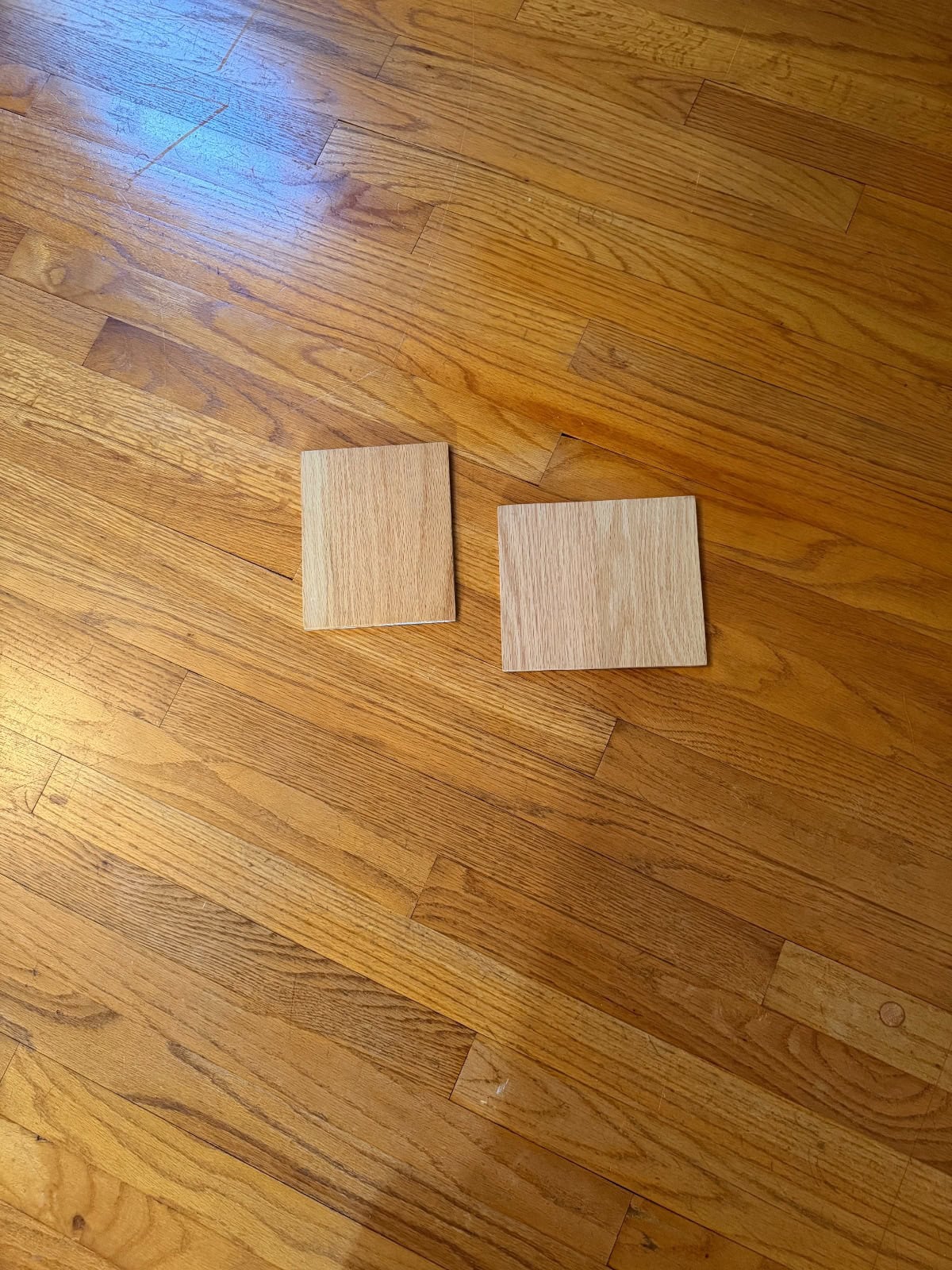
One thing we try not to do is ask a homeowner to choose a floor color from a photograph on a phone.
The lighting in the house matters. The wood matters. The surrounding paint, furniture and other flooring matter.
Most importantly, the homeowner has to live with it.
For Jen, we compared two different directions right on her existing hardwood.
One represented the warmer appearance she could expect using a commercial sealer and oil-based polyurethane.
The other demonstrated the lighter appearance we could achieve with the four-coat water-based system we were recommending for this particular project.
That gave us an opportunity to talk about much more than color.
Oil-Based or Water-Based? We Talked Through Both Options
Years ago, oil-based polyurethane was the system we frequently recommended when homeowners wanted a traditional hardwood-floor finish.
Professional water-based technology has changed considerably.
For this Newington project, we explained that a modern professional water-based system could provide the durability we wanted while keeping the oak substantially lighter and more natural in appearance.
There were practical differences, too.
An oil-based system would give Jen the warmer amber appearance, but it would require a longer project schedule and have a noticeably stronger odor.
The water-based system offered lower odor, lower VOCs, faster drying and a much lighter appearance.
And speed mattered to this homeowner.
Jen wanted the project completed as quickly and safely as practical so she could get her home back.
We explained that with the system selected for this project, we could sand the floors and build the four-coat water-based finish during one long working day.
After talking through both options, she decided to go lighter.
But she still wasn't completely sure how she would feel about such a dramatic color change.
We wouldn't know that part until the end.
These Floors Needed More Than a New Coat of Finish
Looking at the floors before we started, you can see why simply applying another coat over the existing finish wasn't the answer.
There was visible wear and scratching, along with years of use on the existing coating.
This called for complete hardwood floor sanding and refinishing.
Our objective was to remove the old finish, properly prepare the existing oak and get back to clean wood so we could build an entirely new finishing system rather than simply covering the old one.
And the floors weren't the only part of the project.
The staircase needed repair and refinishing as well.
Hardwood Stair Repair Before Refinishing
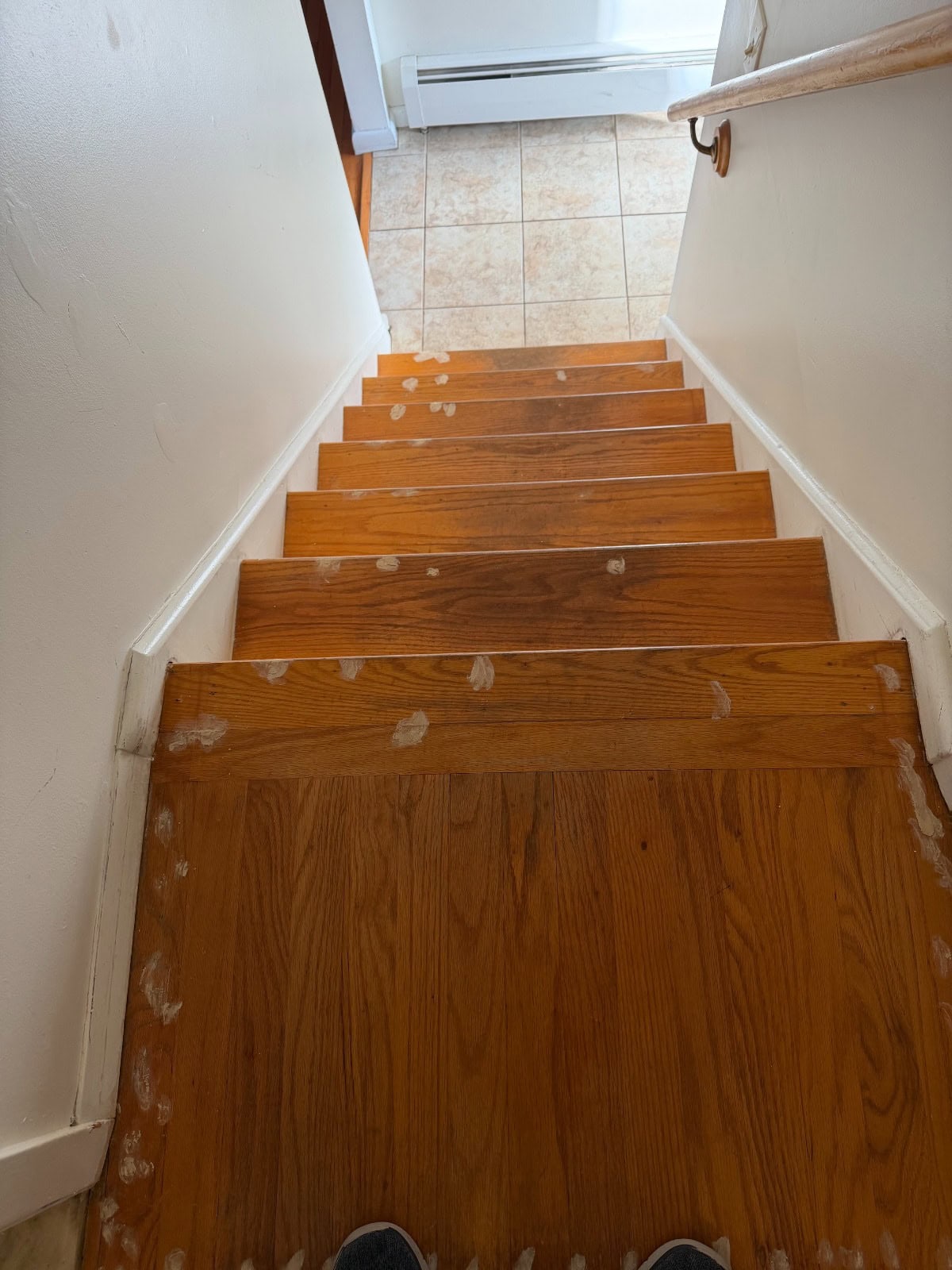
This photograph is important because it shows that hardwood floor repair isn't always about replacing boards.
The stairs had considerable wear along with existing holes and imperfections.
Those areas needed preparation and filling as part of the refinishing process.
We addressed the repairs first and then sanded the stair treads so that the staircase could be refinished along with the adjoining hardwood.
The goal wasn't to make an older staircase into a brand-new staircase.
The goal was to properly repair what could be repaired, remove the worn finish and allow the character of the original wood to come through again.
What Was Hiding Under That Orange Finish?
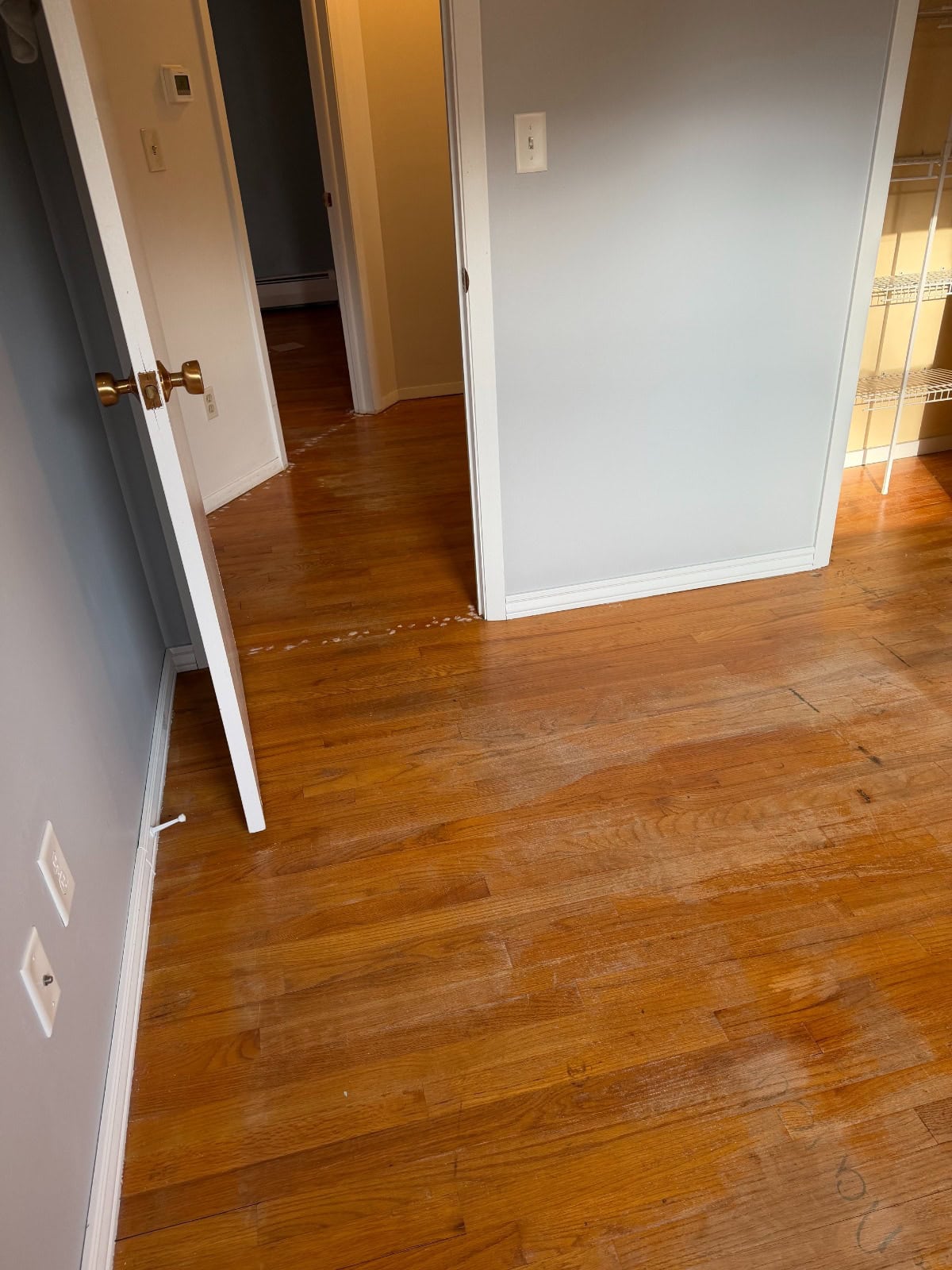
This is the stage of refinishing that surprises many homeowners.
Once we removed the old coating, look at what was underneath.
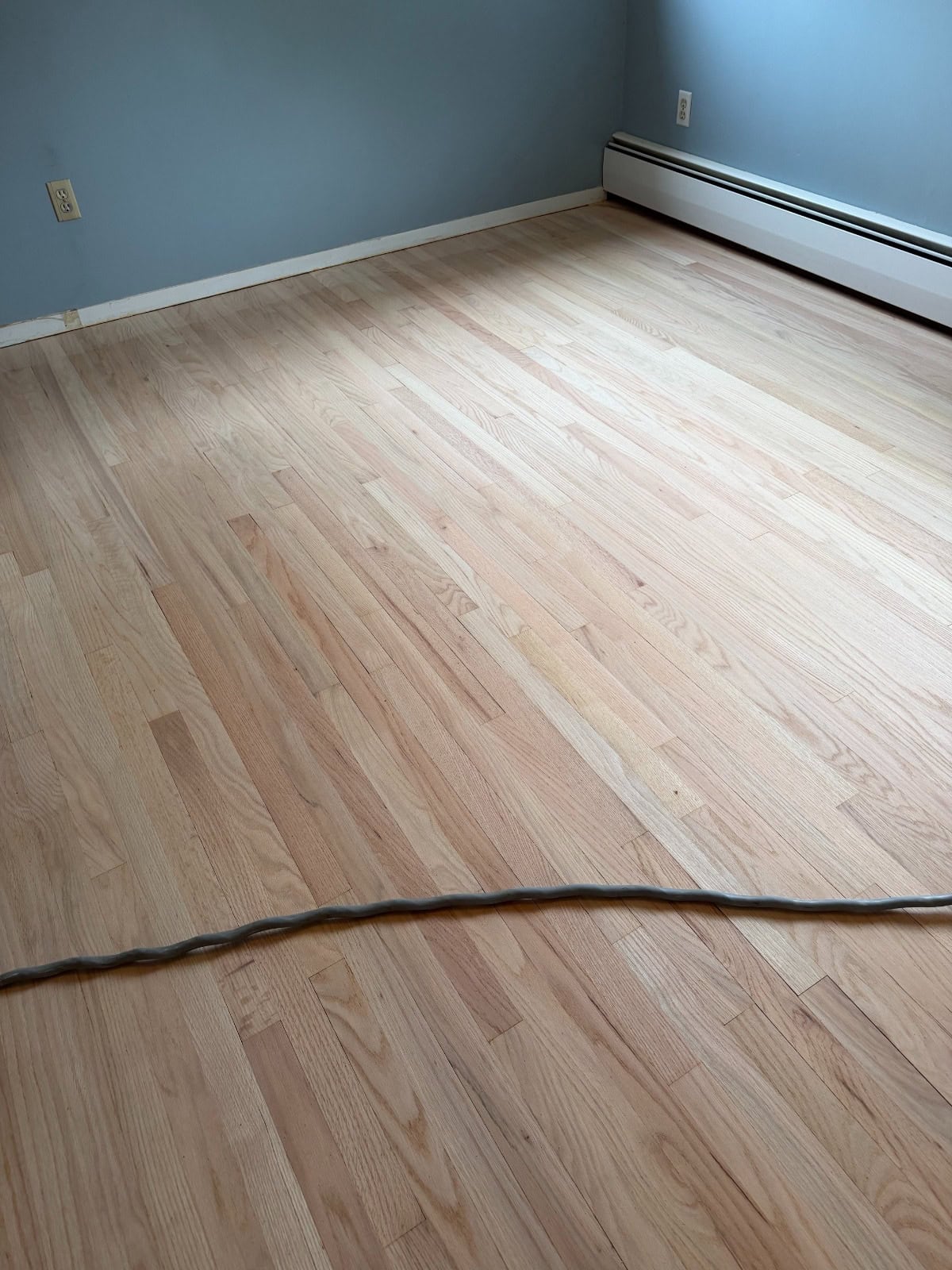
The oak itself was considerably lighter.
Our professional sanding equipment works with dust-containment equipment designed to capture sanding dust at the source, helping us keep the process much cleaner than traditional uncontained floor sanding.
But the photograph also illustrates something else we had discussed with Jen before starting.
The old orange color wasn't simply the color of her wood.
Much of what she had been seeing came from the older finishing system and how it had aged.
Once we brought the flooring back to raw wood, we had a completely different starting point.
Now we could keep it light.
Four Coats in One Long Day
For this particular project, we used a four-coat professional Bona water-based system: Bona IntenseSeal followed by three coats of Bona Mega.
The project took us all day.
But that was one of the reasons this system made sense for Jen.
Instead of stretching the finishing process into another day with the longer drying characteristics of an oil-based system, we were able to sand, seal and build the water-based finish during one extended workday.
We discussed the return-to-use schedule with Jen as part of the process. Although modern water-based products allow for relatively quick light foot traffic under appropriate conditions, we generally prefer that homeowners give the newly finished floors more time whenever possible and wait overnight before returning to normal use.
The important part was that Jen knew before we started what the process would involve.
There weren't surprises at the end of the day.
Except, perhaps, how different the floors were going to look.
The Color Change Brought the House Forward
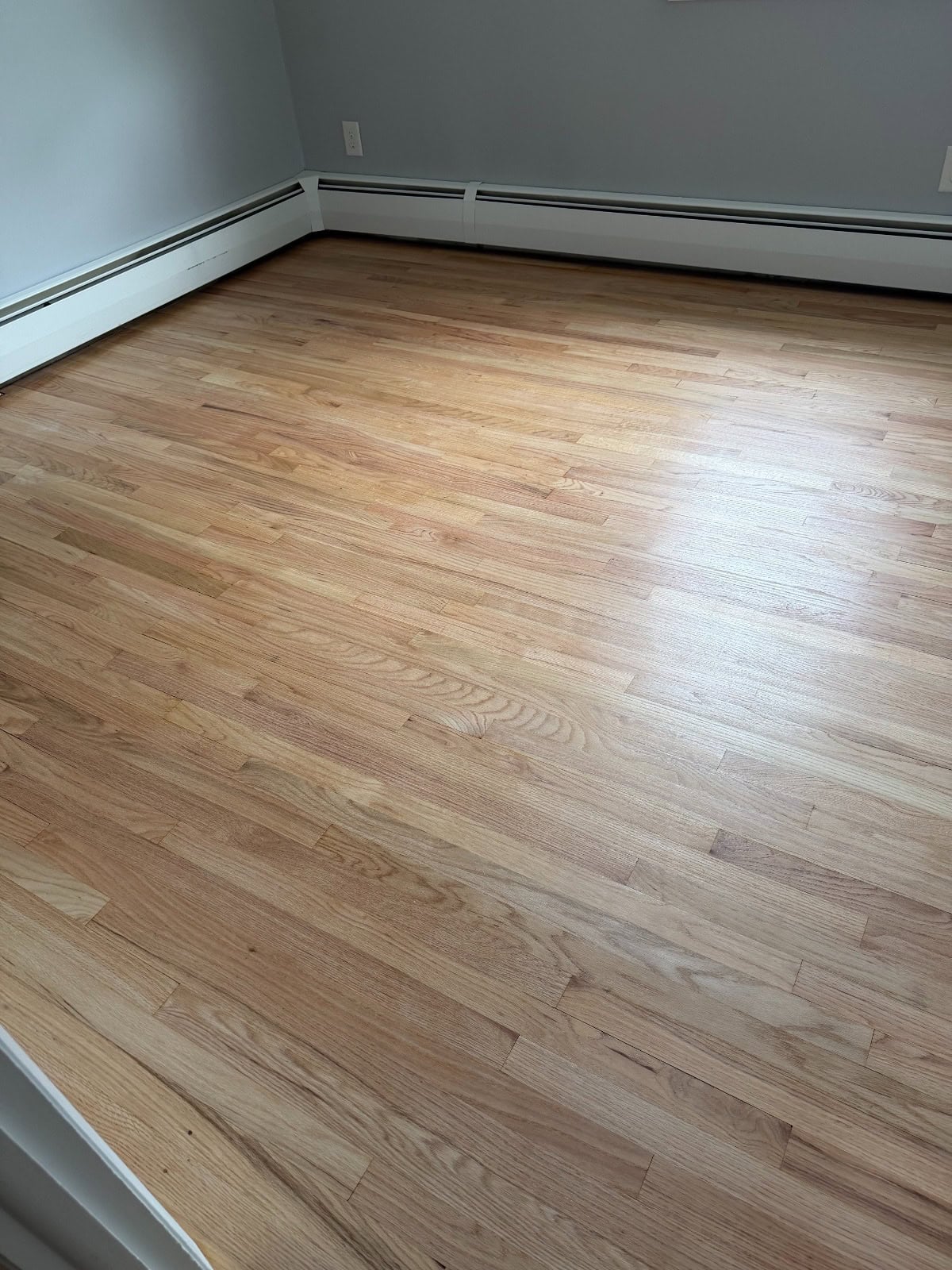
This was the moment that answered Jen's biggest question.
Would she actually like the lighter floor?
She loved it.
The orange-honey appearance was gone. Instead, the individual oak boards and their natural color variation became much more noticeable.
The floor looked brighter.
The room looked lighter.
And without changing the hardwood itself, the appearance of the house felt considerably more current.
Jen later got back to us and told us she couldn't be happier with the project.
That's especially satisfying because she had initially been uncertain about making such a significant color change.
Seeing a sample helps.
Seeing your own finished floor is something completely different.
And We Didn't Forget the Stairs
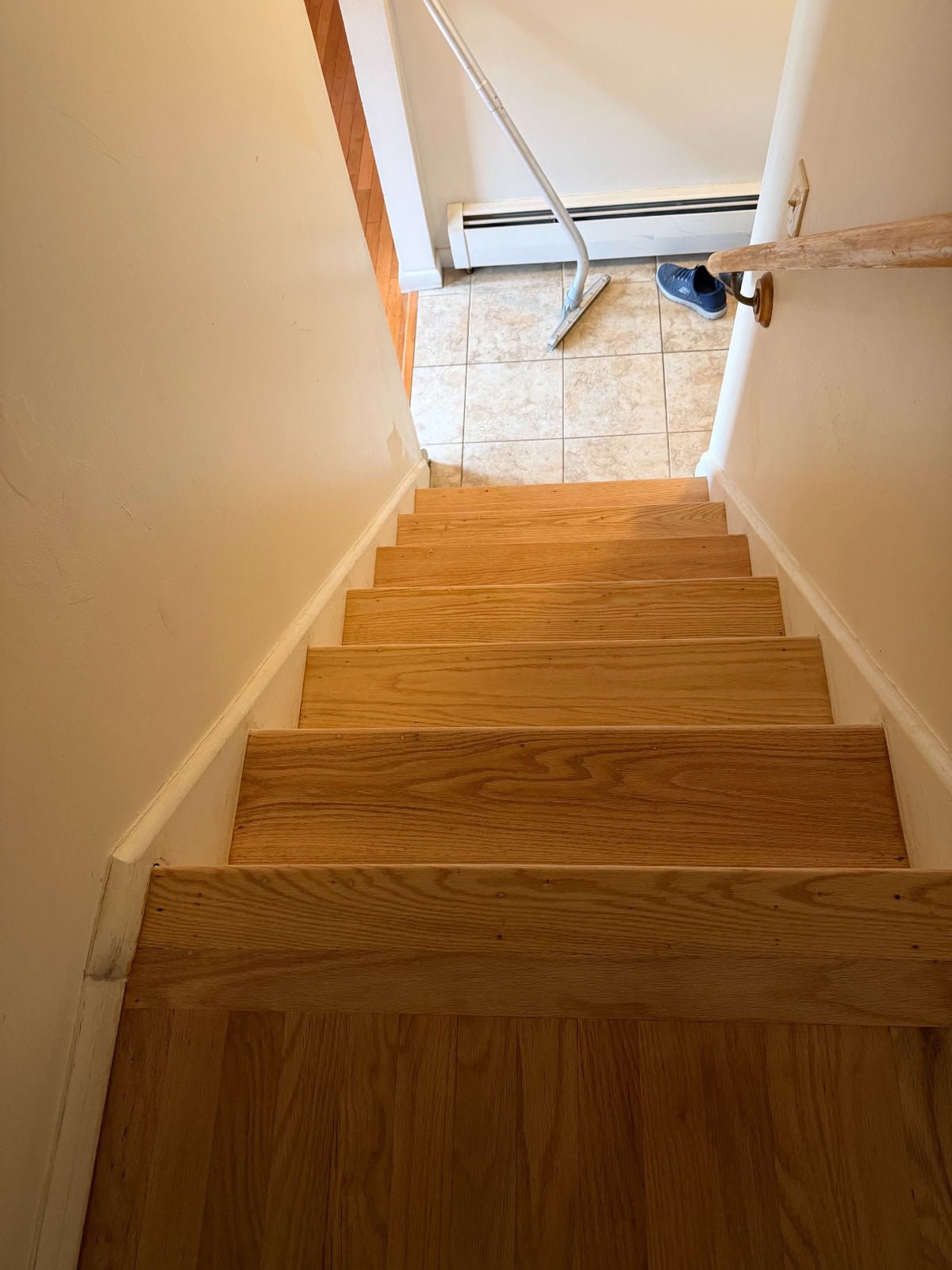
Compare this photograph with the staircase before we started.
The worn finish has been removed. The holes and imperfections were addressed during preparation. And instead of the darker, aged appearance, the natural character of the oak is once again visible.
Including the stairs in the project also helped create continuity between the different levels of the home.
Rather than having newly refinished light floors meet an older orange staircase, the entire area now works together.
What This Newington Project Really Shows
This project started with a phone conversation about hardwood floor sanding and refinishing.
But that's only part of the story.
The important work started when we met Jen at the house.
We looked at the condition of the floors together. We discussed the repairs. We showed her actual finish samples. We compared oil-based and water-based options. We talked about appearance, odor and project timing. And we answered her questions before asking her to make the decision.
Then we followed through with the plan.
The floors were professionally sanded.
The stair repairs were addressed.
The old orange-toned finish was removed.
And the hardwood received a four-coat water-based system that completely changed the appearance of the rooms.
The best part came afterward when Jen told us how much she loved the lighter color she had initially been unsure about.
That's why we bring the conversation into the home before we bring in the sanding machines.
Hardwood Floor Repair, Sanding & Refinishing in Newington, CT
Patrick Daigle Hardwood Flooring, Inc. provides hardwood floor refinishing, wood floor refinishing, hardwood floor repair, hardwood floor sanding and refinishing, stair refinishing and hardwood floor installation throughout Newington, Connecticut 06111.
Our work takes us throughout Newington, including established neighborhoods such as Brookside, as well as areas around the Berlin Turnpike and neighboring communities including West Hartford, Wethersfield, Rocky Hill, Berlin, New Britain and Hartford.
As a fourth-generation family hardwood flooring business, our family's flooring history dates to 1927 in Maine, with our Connecticut operation beginning around 1972.
Whether you're dealing with worn hardwood, scratched floors, small repairs, damaged stair treads or an older orange-toned finish that makes the house feel dated, the first step doesn't have to be choosing a product.
It can simply be sitting down, looking at the floor together and talking through what you want your home to look like when we're finished.