
South Windsor, CT Hardwood Floor Refinishing: Taking Red Oak From Orange to a Natural Raw-Wood Look
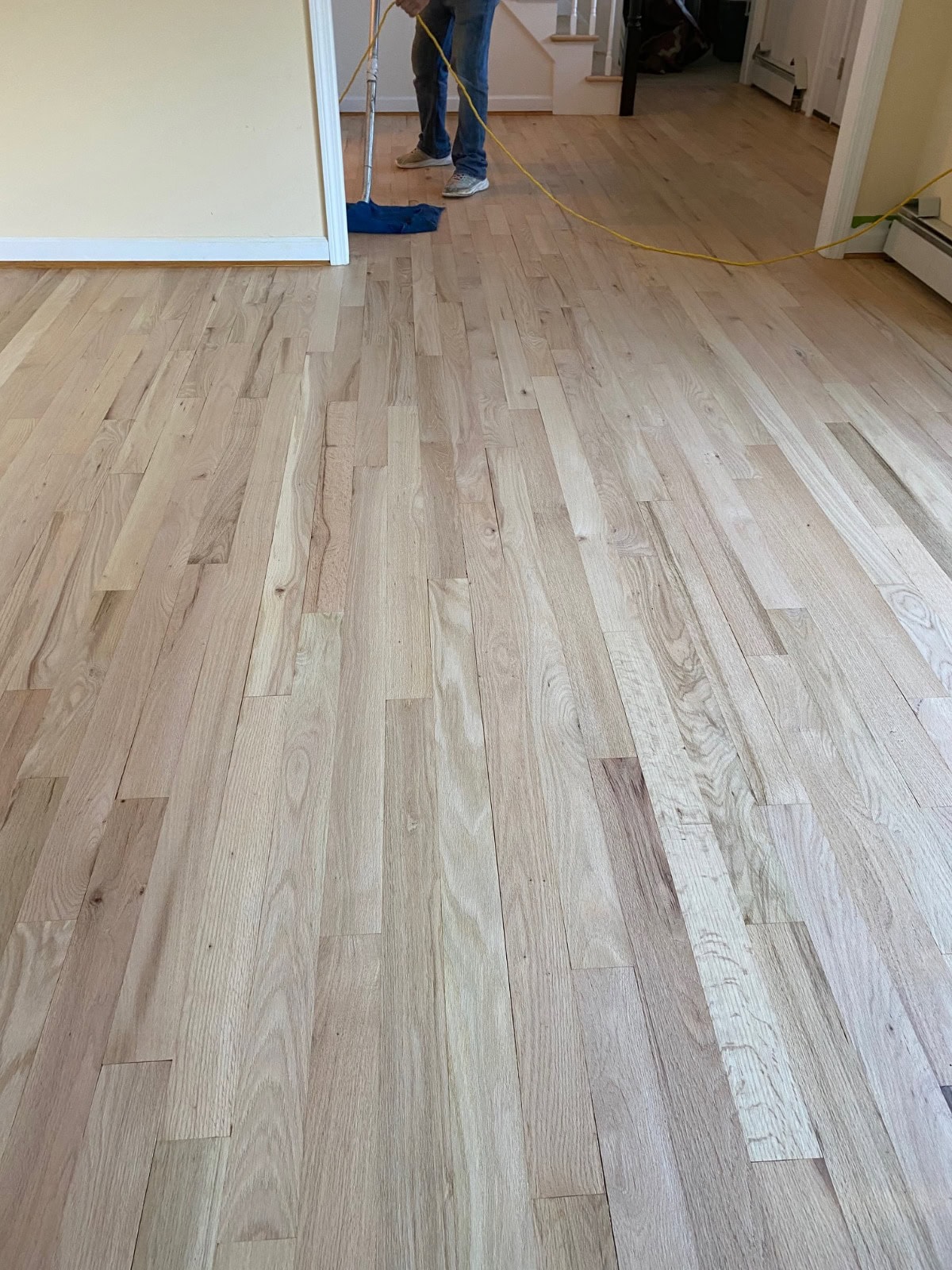
Sometimes the best hardwood floor transformation isn't about making a floor darker.
It's about taking years of color away.
That's exactly what we accomplished on a recent hardwood floor refinishing project in South Windsor, Connecticut.
These red oak floors had the familiar orange, honey-amber appearance that develops with many older traditional finishes. The hardwood itself was still beautiful—but the old finish was making the entire floor look darker, warmer and more dated than the homeowners wanted.
Their goal was simple:
Can you make our finished red oak look almost like the freshly sanded raw wood?
Yes, we can.
And this was a fun one.
Goodbye Orange. Hello Natural Red Oak.
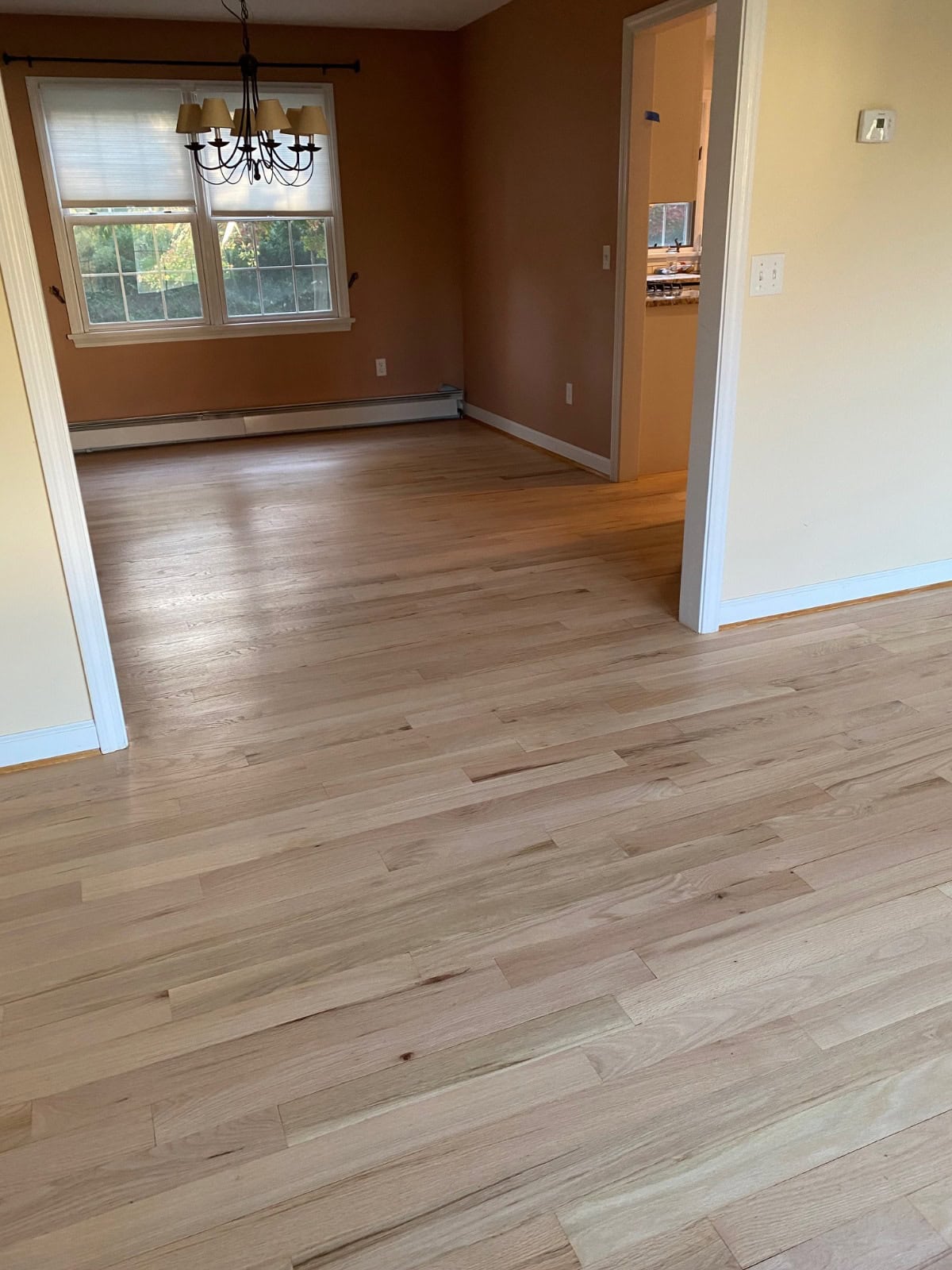
One of our favorite moments during a hardwood floor refinishing project is when the sanding equipment begins removing that old finish.
Pass by pass, years of amber color disappear.
Then suddenly you're looking at the raw red oak underneath.
It's amazing how different it can be.
An older floor that appeared orange, honey-colored or almost pumpkin-toned can become considerably lighter once the old coating is removed.
The grain becomes cleaner. The natural variations in the red oak become visible again. And instead of the old finish determining the color of the room, you're seeing the actual wood.
On this South Windsor project, that's exactly the appearance our customers fell in love with.
So the next challenge was preserving it.
How Do You Keep Red Oak Looking Like Raw Wood?
This is where choosing the right finishing system becomes extremely important.
Traditional oil-based polyurethane naturally develops an amber tone. For many homes, that's a beautiful classic appearance.
But it wasn't what these South Windsor homeowners wanted.
They wanted light, natural and clean.
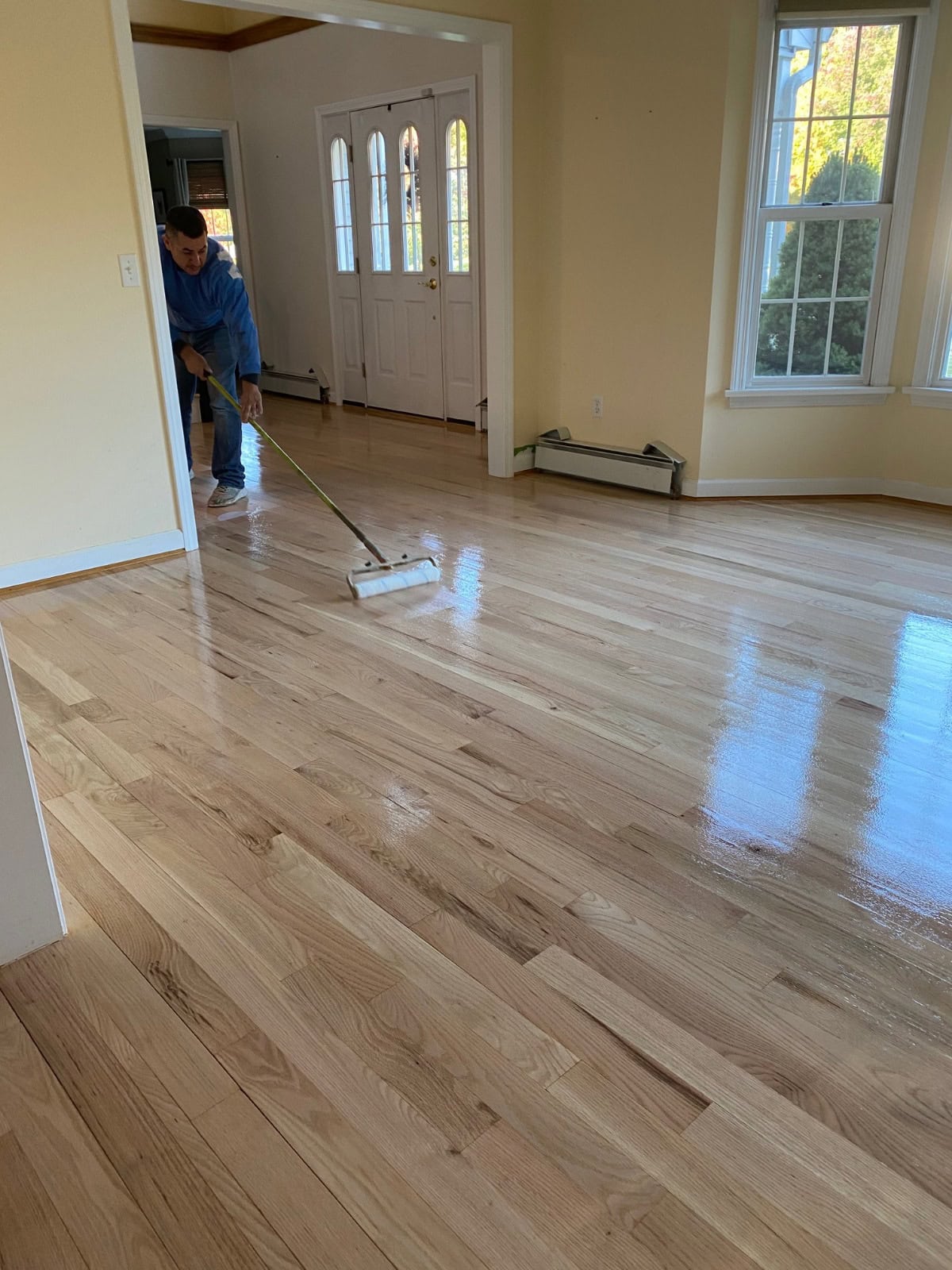
For this floor, we applied Bona NaturalSeal, a waterborne sealer specifically designed to help retain the appearance of freshly sanded wood while reducing the yellowing effect associated with traditional oil-based finishes.
We then protected the floor with three coats of Bona Mega in a satin sheen.
The complete system gave us four water-based applications:
One coat of Bona NaturalSeal + three coats of Bona Mega Satin.
And the finished appearance stayed remarkably close to what attracted the homeowners in the first place—the look of their freshly sanded red oak.
Watching the Floor Transform
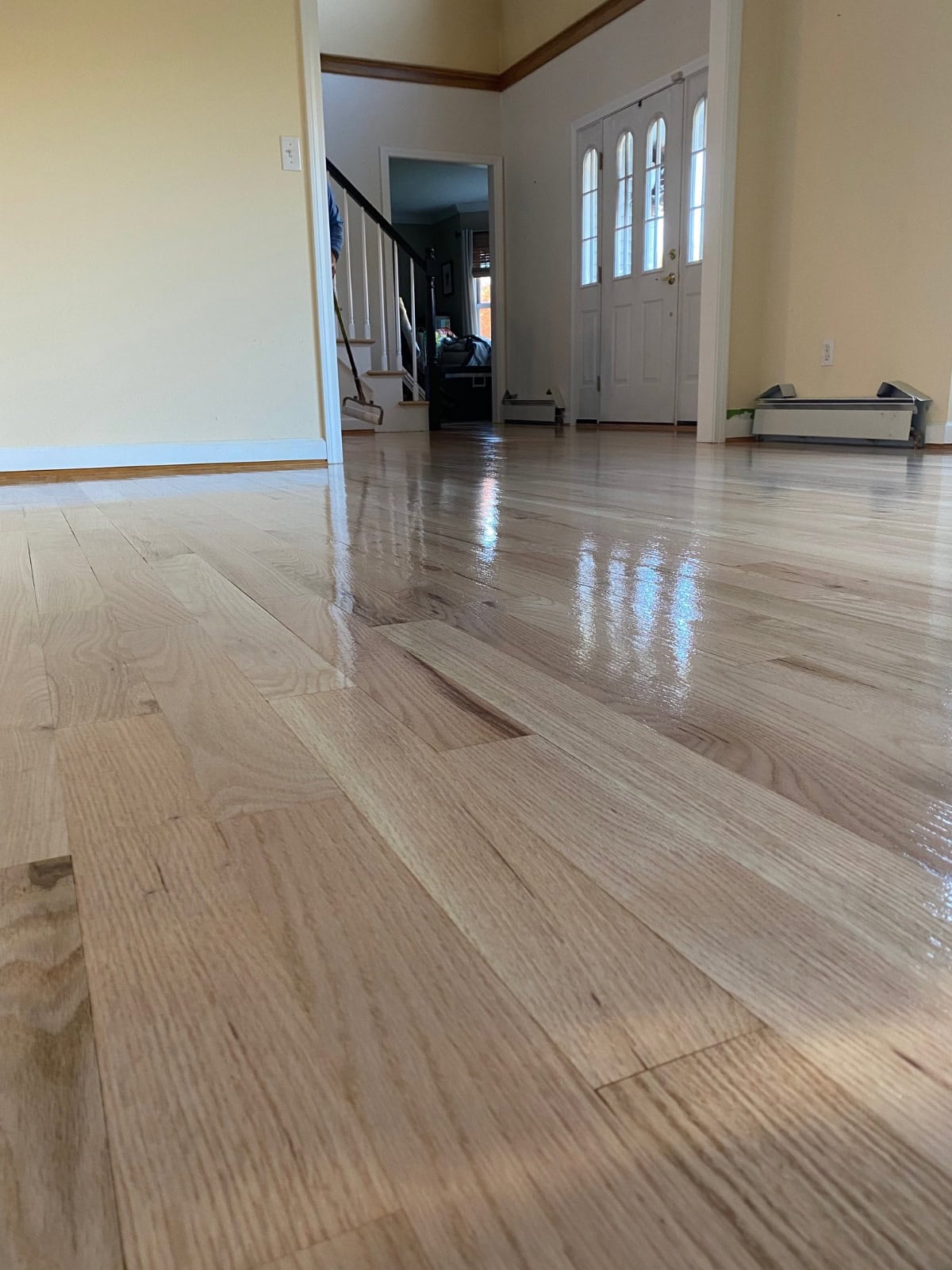
This is why we encourage homeowners to look at the floor during different stages of refinishing.
When we first expose the raw wood, people are sometimes shocked.
“That's my floor?”
Yes!
The beautiful light wood was there all along.
It was simply underneath years of old finish.
Then comes the part we really enjoy: watching the customer's reaction when the new water-based system goes down and they realize we're not bringing all that old orange and honey color back.
Instead, the floor retains a much lighter, more natural appearance.
That's what happened in South Windsor.
The customers were thrilled.
And after four generations in the hardwood flooring trade, that's still one of the best parts of our job.
Water-Based vs. Oil-Based: Why the Floor Looks So Different
The National Wood Flooring Association (NWFA) recognizes different types of wood-floor finishing systems, and one of the biggest visual differences homeowners notice is the effect a finish has on the natural color of the wood.
Oil-based finishes traditionally add warmth and amber character.
Modern water-based systems generally remain much clearer.
That makes water-based finishes an excellent option when the objective is to maintain a lighter, more natural-looking floor.
It doesn't mean oil-based polyurethane is bad. We still use oil-based finishing systems when that's the appearance and performance system appropriate for the project.
It's about selecting the right product for the look the homeowner wants.
On this South Windsor red oak floor, there was no question.
The homeowners wanted the orange gone.
A Floor Should Still Look Like Wood
After the sealer application, the floor goes through the appropriate drying and preparation process before subsequent coats are applied.
Between finish coats, proper intercoat preparation helps address minor surface texture and prepares the previous coat for the next application according to the finishing system.
Detailed areas around walls, edges, transitions and other difficult locations require careful attention as well.
Then the next coat goes down.
And gradually we're building protection without trying to bury the natural appearance of the hardwood.
That's important to us.
We don't want a beautiful red oak floor to look like it's underneath a sheet of plastic.
We want you to see the wood.
The grain, natural variations and character of genuine hardwood should remain part of the finished floor.
There's Only One Problem...
There was one unexpected consequence of making these South Windsor floors look so good.
Now the homeowners say they have to repaint the walls!
That's actually something we see more often than you might think.
Changing an orange or heavily ambered hardwood floor to a lighter natural appearance can change the feeling of the entire room.
Wall colors that were selected to complement the old orange floor can suddenly look completely different next to clean, natural-looking red oak.
We may have created a little more work for the painter.
But we'll take the blame for that one.
The homeowners were extremely excited about their finished floors, and we were equally happy with the transformation.
Four Generations of Hardwood Flooring Craftsmanship
At Patrick Daigle Hardwood Flooring, Inc., our family's hardwood flooring tradition dates back to 1927.
Today, we continue that tradition throughout South Windsor, Manchester, Hartford County and communities across Connecticut.
We're proud members of the National Wood Flooring Association (NWFA), and we believe generations of hands-on experience should go hand-in-hand with today's professional sanding equipment and modern water-based finishing technology.
We're also proud to be ranked #1 in Hartford County by BusinessRate and proud of our recognition as #1 in Connecticut.
But projects like this South Windsor floor are what really make us proud.
You don't need a trophy to know when you've gotten it right.
Sometimes you just have to see the expression on a homeowner's face when they walk in and see their “old” hardwood floor for the first time.
Thinking About Lightening Your Hardwood Floors in South Windsor, CT?
If your red oak floors have become orange, yellow, honey-colored or darker than you remember, don't assume that's the actual color of your hardwood.
It may be the old finish you're looking at.
Professional hardwood floor sanding can remove those old coatings and expose the raw wood underneath. From there, today's water-based sealers and finishes can give homeowners options that simply weren't common generations ago.
Your old red oak doesn't necessarily have to look old.
It doesn't have to be orange.
And it certainly doesn't have to look like a pumpkin.
Sometimes the most dramatic transformation comes from doing something very simple:
Let the natural beauty of the wood show again.
That's what we accomplished on this South Windsor, Connecticut hardwood floor refinishing project—and we couldn't have been happier with the result.
Patrick Daigle Hardwood Flooring, Inc.
Fourth-Generation Hardwood Flooring Craftsmanship Since 1927
NWFA Member
Ranked #1 in Hartford County by BusinessRate
Serving South Windsor, Manchester, Hartford County and communities throughout Connecticut